Venezuela’s Deadliest Prison Riot Provokes Outrage
Courtesy of: CNN
Conditions in Venezuelan prisons have long been known as dangerous and ruthless, among the worst in the hemisphere. But this weekend, in one of the deadliest prison clashes in the nation’s history, the world found out just how mismanaged Venezuela’s prison system really is. According to medical officials, 61 people were killed and 120 injured after violence erupted at the Uribana prison complex, located near the city of Barquisimeto in northwest Venezuela.
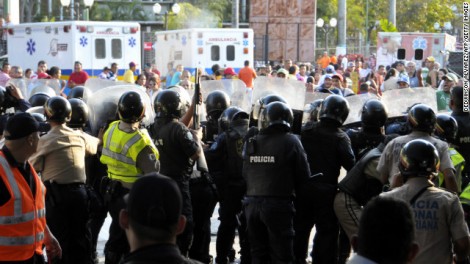
The fighting began early Friday morning after troops entered the complex to search for and confiscate illegal weapons. Just two hours into the incursion, the well-armed inmates mounted a resistance; refusing to allow officials to enter the wards. Chaos quickly followed. Venezuelan Penitentiary Service Minister Iris Varela announced the closure of the jail, but it was not until Sunday – two full days later – that authorities finished removing inmates and relocating them among 19 penitentiaries throughout the country. In the meantime, relatives of inmates were left desperately awaiting information from authorities.
Inaugurated in 1999, during Hugo Chávez’s first year in office, Uribana is Venezuela’s largest prison. At that time, the facility was held up as the model of a modern Venezuelan prison. The notion quickly faded, however, as the complex fast became an exemplar of Venezuela’s egregiously overcrowded and poorly-supervised prison system. Minister Varela even admitted on Sunday that 2,459 inmates resided in the prison, in a space built for only 850.
The Uribana tragedy has sparked outrage among human rights watchdogs. The United Nations High Commissioner for Human Rights (UNHCHR) called for a “prompt investigation” to identify those accountable and compensate the relatives of the victims. Direct blame has fallen on Varela, who has failed to make any real progress in curbing violence or reducing the rampant overcrowding of the nation’s prisons.
Already, the Venezuelan government’s response to the tragedy is fraught with political favoritism. Only members of Chávez’s party were allowed to participate in the National Assembly subcommittee charged with investigating the riot. Opposition parties, who have been denied input into the process, have called for the resignation of Varela. Vice President and acting president Nicolás Maduro gave the minister his full support. The ailing Chávez, ensconced in Cuba for nearly two months, remains completely silent on the issue.
Violence in Venezuelan prisons – particularly among rival gangs – has become essentially routine. Overcrowding is at epidemic levels, as thirty-three jails, originally built for 12,000 inmates, now house nearly 47,000 people. Weapons including guns and knives are common and widespread in these prisons, while guards remain absent or ineffectual, allowing lucrative illegal activities to take place. The 61 Venezuelans who died this weekend were hardly the first fatalities of Venezuela’s growing prison crisis. NGOs and human rights watchdogs reported that 560 people were killed in Venezuelan prisons in 2011. According to a Venezuelan rights group, more than 300 people were killed in 2012 as well, including the 25 Venezuelans killed during the highly-publicized standoff at the El Yare I prison facility. So far, however, the government’s response has been marred by political patronage, making it unlikely that the crisis will soon stop.