Nov
30
2012
Posted by
admin
Comments

In Case You Missed It… Articles Roundup Week of 11/30/12

 In Case You Missed It… Articles Roundup Week of 11/30/12

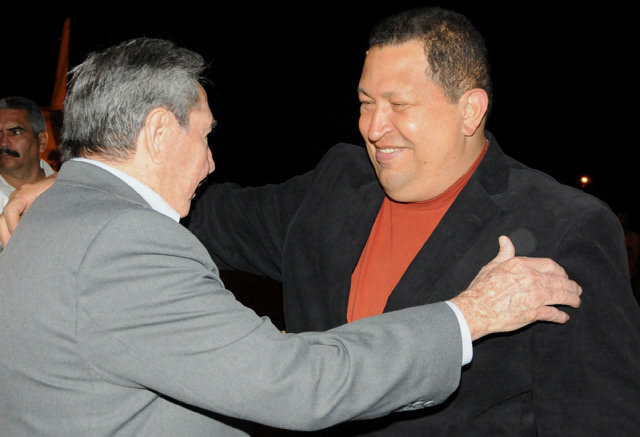
Courtesy of: Raul Abreu / AP

This week: the Bolivar’s value hits a record low as Chávez feels the pressure to increase bond sales; the Venezuelan opposition seeks amnesty for political prisoners and opponents of Chávez living in exile; and Venezuelan Judge Afiuni says she was raped while in prison, after she was jailed for issuing a ruling that irked Chávez. Chávez’s recent medical trip to Cuba causes many Venezuelans to question his longevity and the viability of his socialist regime; the central bank of Venezuela reports that non-oil exports are at their worst level since 1997; Henri Falcón, the opposition governor of Lara, says he and supporters were attacked with tear gas and stones during a political event. Meanwhile, Chávez continues to advance his plan for communes in Venezuela; the UN Economic Commission for Latin America and the Caribbean registered an escalation of poverty in Venezuela, despite the decrease in poverty in other Latin American countries. Lastly, the Economist reports that Chávez’s nationalization of Venezuelan ports has led to inefficient, congested wharves and a dramatic increase in imports.

Chavez Choking on Bolivars to Spur Venezuelan Bond Sales, Bloomberg

The bolivar’s plunge to a record on the black market is pressuring Venezuelan President Hugo Chavez to end the longest drought of dollar-bond sales in five years.

Venezuela opposition seeks amnesty for prisoners and return home for Chavez opponents in exile, Washington Post

CARACAS, Venezuela — Venezuelan opposition lawmakers have drawn up a list of prisoners they consider to be wrongly jailed and want freed, and are also demanding that dozens of government opponents living in exile should be allowed to return home.

Venezuelan Judge Who Angered Chávez Says She Was Raped While in Prison, New York Times

CARACAS, Venezuela — An arrested judge at the center of one of Venezuela’s most prominent human rights cases was raped while in prison and then had an abortion behind bars after becoming pregnant, according to the judge’s lawyer and a book published last week in Caracas that has stirred new controversy around the case.

Venezuelan non-oil exports at the worst level since 1997, El Universal

Venezuela’s entry into the Common Market of the South (Mercosur) took place amidst the worst moment of the local industry. Dependence on oil revenues, higher imports, and small export capacity are just some of the aspects defining the country’s current economy.

Chavez’s return to Cuba for treatment rattles Venezuela, Reuters

(Reuters) – Venezuelan President Hugo Chavez flew into Cuba on Wednesday for cancer-linked medical treatment that revived questions about the viability of his socialist rule and left Venezuelans again guessing about his exact condition.

Venezuela Opposition Gov Says Supporters Attacked, ABC News

The opposition governor of Lara state in central Venezuela says he and his followers were attacked with guns, tear gas and stones during a political event, presumably by rival ruling party supporters.

Communal state advances in Venezuela, Buenos Aires Herald

Barely a wink after the October presidential elections, Venezuelans will once again be returning to the polls on Sunday, December 16. With Hugo Chávez re-elected for another six years with 54 percent of the vote, but absent and silent for the last 12 days and now heading to Cuba for more medical treatment, in the coming elections Venezuelans will now choose 23 governors and 233 state lawmakers.

Venezuela Raises Prices on Corn Flour, Rice, Coffee, Loyo Says, Bloomberg

Venezuela raised price caps on pre- cooked corn flour, white rice and ground coffee by as much as 46 percent, Agriculture Minister Juan Carlos Loyo said today. The cost of a kilogram of pre-cooked corn flour rose 46 percent to 5.93 bolivars ($1.38) from 4.06 bolivars and a kilogram of white rice rose 28 percent to 7.2 bolivars from 5.62 bolivars, Loyo said on state television.

ECLAC: Poverty and indigence escalate in Venezuela, El Universal

According to the UN Economic Commission for Latin America and the Caribbean (ECLAC), based on information compiled until 2011, seven out of 12 countries in Latin America reported a drop in poverty.

Cancelling Christmas, The Economist

THOSE who claim to deplore the commercialisation of Christmas should move to Venezuela. Seasonal products, from Christmas trees to toys, trinkets and delicacies, are piled up in the country’s ports, thanks to inefficient, congested wharves and a dramatic increase in imports.
 
Nov
28
2012
Posted by
admin
Comments

ICYMI: Chavez’s return to Cuba for treatment rattles Venezuela

Reuters
November 28, 2012
By Andrew Cawthorne and Jeff Franks

chavez returns to cuba 300x200 ICYMI: Chavezs return to Cuba for treatment rattles Venezuela

Courtesy of: Reuters / Jorge Silva

Venezuelan President Hugo Chavez flew into Cuba on Wednesday for cancer-linked medical treatment that revived questions about the viability of his socialist rule and left Venezuelans again guessing about his exact condition.

After weeks of scarce public appearances, Chavez, 58, announced in a letter on Tuesday that he was going to Havana for therapy known as “hyperbaric oxygenation” – a method used to reduce bone decay caused by radiation therapy.

Communist Party daily Granma confirmed his arrival in Cuba.

In Havana, Chavez enjoys the friendship of past and present Cuban leaders Fidel and Raul Castro, plus guaranteed privacy on the tightly controlled Caribbean island.

Venezuelans, who have been endlessly speculating about Chavez’s cancer since it was discovered in mid-2011, were not sure what to make of the latest twist – debating whether it was normal post-radiation treatment or a serious downturn.

“I really don’t know what he has,” Chavez’s cousin, Guillermo Frias, told Reuters from the president’s rural hometown state Barinas. “But anyway, I always pray for him every night. I stop at a shrine on the corner and always remember him.

“I hope he recovers fine. I’m sure he will. The election campaign was tough for him. He went too far.”

Though he had declared himself cured, Chavez appeared exhausted at the end of his successful presidential re-election bid in October. He later admitted radiation had taken its toll.

“INVISIBLE MAN”

The normally garrulous and omnipresent leader has made only a few, relatively short public appearances, mainly on state TV, at his presidential palace since his October 7 win. One opposition newspaper dubbed him “The Invisible Man”.

Unlike multiple past trips to Cuba, during treatment for three operations on two tumors in his pelvic area, state TV did not show images of Chavez departing or arriving this time.

Chavez has an open-ended authorization from Congress to travel, but aims to be back at least for the January 10 start of his new term, if not for a couple of regional summits before.

His absence leaves newly appointed Vice President Nicolas Maduro, 49 – a former bus driver and union leader – in a prominent position amid speculation among Venezuelans over who could replace Chavez should he leave power.

Congress head Diosdado Cabello, a former military comrade of Chavez’s, also is frequently touted as a possible successor to lead the ruling Socialist Party. Under the constitution, an election would have to be held if Chavez leaves office within the first four years of his new six-year term.

Chavez’s return to Cuba overshadowed the buildup to state elections on December 16, where the opposition aims to overcome disappointment at the presidential loss to make inroads.

A prolonged absence could potentially postpone major policy decisions, such as a widely expected devaluation of the bolivar currency after heavy pre-election state spending.

After removal of a first cancerous tumor, Chavez wrongly declared himself cured in late 2011. He again pronounced himself cancer-free in mid-2012 after removal of a second tumor.

BONDS RISE

The hyperbaric oxygenation therapy, or HBOT, he was due to receive involves breathing pure oxygen in a pressurized chamber.

In addition to the bone-weakening side effects of radiation on cancer sufferers, experts say HBOT is used to treat conditions including infections, abscesses and decompression sickness – or the “bends” – that can afflict deep sea divers.

Nelson Bocaranda, a prominent pro-opposition journalist, said Chavez had been suffering intense pain in his bones and waist area of late, forcing him to rest and take pain-killers.

In his widely read “Rumors” column on Wednesday, Bocaranda published a supposed medical report from Havana’s Cimeq hospital, with a relatively uninflammatory diagnosis.

“It’s a matter of giving him therapy for pain and stabilization so he has a better quality of life,” said the report, which could not be confirmed.

“His physical state is normal; loss of weight reasonable; high tension constant; abdominal nausea and pains; good emotional state but with variable depression; tolerable pain thresholds and reaction to treatment applied. He’s rested in recent days and had little pressure from government functions.”

Venezuelan officials, who frequently decry Bocaranda as a gossip and liar, gave no details of Chavez’s health. One medical source with knowledge of Chavez’s treatment said the HBOT may last several months and was a common “palliative treatment.”

An opposition leader, Henry Ramos Allup, demanded transparency from the government. “The president’s illness is a matter of state. The country has the right to know how exactly how serious it is,” he said.

Given investor hopes for a more market-friendly government, Venezuela’s widely traded bonds not surprisingly have risen.

On the streets, there was both solidarity and skepticism concerning Chavez.

“He exploited this thing of going to Cuba during the election campaign,” motorbike taxi driver Omar Rivas, 55, said, noting the wave of sympathy Chavez received in the past.

“That man doesn’t have anything. He was never sick.”

Teacher Ana Maria Garcia, 26, had a kinder reading.

“I don’t understand what he has, but I hope he recovers quickly. He’s a winner,” she said.

(Additional reporting by Mario Naranjo and Diego Ore; Editing by Bill Trott)

To read this article on Reuters, please click here.

 
Nov
16
2012
Posted by
admin
Comments

In Case You Missed It… Articles Roundup Week of 11/16/12

propiedad comunal In Case You Missed It… Articles Roundup Week of 11/16/12

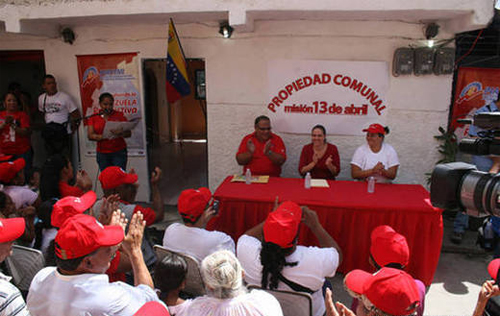
Courtesy of: AVN

In the news this week, Venezuela won a seat on the United Nations Human Rights Council despite international criticism; regulators of the securities industry had tough questions for U.S. broker-dealers regarding practices used to mitigate money laundering and sanctions risks related to their involvement in a Venezuelan government-run exchange system; Venezuela’s crumbling infrastructure remains in the news as the electric energy minister admits the nation’s electrical system has been out of date for twenty years; and government takeovers continue as PDVSA seizes control of the Loma de Niquel mine from the Anglo American mining and natural resource company. Meanwhile, Chávez continues to lay the foundations for a communal state as forty communes await authorization by the Venezuelan government; Capriles looks to the regional December elections to legitimize the opposition coalition not only to a weary electorate but also to its own fractious members; problems persist in Venezuela’s industrial sector as the lack of raw materials reaches 83 percent; and the Venezuelan government continues to violate collective bargaining agreements, causing protests among workers. Lastly, the ADEN Competitiveness Institute ranks Venezuela among countries with the lowest competitiveness index, citing “problems of macroeconomic instability and institutional mishaps.”

Venezuela, the bane of human rights, The Washington Post

ON MONDAY, new members will be selected for the United Nations Human Rights Council, the top-level group for the protection and promotion of human rights. Its members have not always been paragons of respect for human dignity.

U.S. broker-dealers scrutinized for anti-laundering compliance in Venezuelan currency swaps, Reuters

NEW YORK, Nov. 13 (Thomson Reuters Accelus) -Securities industry regulators are beginning to ask U.S. broker-dealers tough questions about how they are mitigating money laundering and sanctions risks associated with their involvement in a 2-year-old currency exchange system run by the Venezuelan government, sources familiar with the issue said.

Some 71% of Venezuela’s electric energy system is outdated, El Universal

Venezuela’s Electric Energy Minister Héctor Navarro stated that 71% of the national electric system has been out of date for 20 years.

Venezuelan gov’t takes over Loma de Níquel mine, El Universal

Last Saturday, at 12 a.m., multinational Anglo American handed over to the Venezuelan State the control of Loma de Níquel mine, upon the expiration of the concession and failure to get a renewed term for the operation.

Communes await authorization by Venezuelan Government, El Universal

The Venezuelan National Assembly (AN) continues laying the foundations for the communal State. On October 20, during a meeting of ministers, President Hugo Chávez urged his cabinet to speed up the establishment of communes.

Capriles, Opposition Seek to Solidify Gains in Venezuela, World Politics Review

CARACAS — With campaigning for Venezuela’s December gubernatorial races now officially under way, the country’s political opposition finds itself in a tough spot. Still licking its wounds from its loss in October’s presidential election, the Democratic Unity Coalition (MUD) must get quickly off the mat to prove its credibility not only to a weary electorate but also to its own fractious members.

Lack of raw materials hits 83% of Venezuelan industries, El Universal

Obstacles are hitting the Venezuelan industrial sector, as lingering barriers continue to undermine their performance, according to data provided by the Venezuelan Confederation of Industries (Conindustria).

Government allegedly trying to uproot collective bargaining agreements, El Universal

In recent years, numerous labor protests by different sectors have sparked in Venezuela. Only in October, some 521 demonstrations were reported, 204 of which were labor-related, said the NGO Venezuelan Observatory of Social Unrest.

Venezuela among the countries with lower competitiveness index, El Universal

Chile is the leader of competitiveness among 18 Latin American countries, based on the Competitiveness Index established in October 2012 by the ADEN Competitiveness Institute. The information was disclosed by the higher studies institution based in Argentina, Efe quoted.