Nov
13
2012
Posted by
admin
Comments

ICYMI: Venezuela, the bane of human rights

The Washington Post
November 11, 2012
By Editorial Board
Hugo Chavez Frias 300x197 ICYMI: Venezuela, the bane of human rights

Courtesy of: Reuters

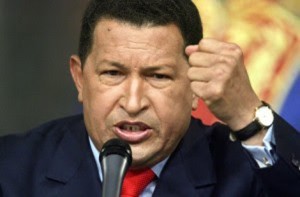
ON MONDAY, new members will be selected for the United Nations Human Rights Council, the top-level group for the protection and promotion of human rights. Its members have not always been paragons of respect for human dignity. Those leaving the 47-member council at the end of this year include China, Cuba and Russia. But up for a seat this time is a truly unqualified candidate, Venezuela. Its strongman president, Hugo Chávez, has brazenly trampled human rights in his quest for power and political control.

A new member must get at least a majority, or 97 votes, from the General Assembly, and while the assembly could prevent Venezuela from joining, it probably won’t. Since the council was created in 2006, the assembly has never voted down a candidate, according to Freedom. Some candidates, such as Sudan, have dropped their bids in the face of opposition. But the assembly selected Moammar Gaddafi’s Libya.

In choosing members, according to the founding resolution for the council, the General Assembly is supposed to “take into account the contribution of candidates to the promotion and protection of human rights and their voluntary pledges and commitments” to do so. Moreover, the “members elected to the council shall uphold the highest standards in the promotion and protection of human rights.”

Venezuela under Mr. Chávez has no place at this table. According to Human Rights Watch, the judiciary has largely ceased to function as an independent branch of government. A human rights travesty has been evident in the case of Judge Maria Lourdes Afiuni. In 2009, she angered Mr. Chávez with a ruling that gave conditional release to a businessman who was a prominent critic of the president. The businessman had been awaiting trial for almost three years. Soon after her ruling, the judge was arrested, and Mr. Chávez denounced her as a “bandit” on national television. She was held for more than a year in a two-by-four-meter cell in a Caracas prison that included 20 women she had sentenced as a judge. They confronted her with death threats. After she underwent surgery for cancer in 2011, she was released to house arrest but under onerous terms, including that she not be allowed to step outside for exposure to the sun.

Mr. Chávez has an equally poor record on freedom of expression. He has bullied and punished the news media for critical reporting on the government’s handling of such things as water pollution, violent crime, a prison riot and an earthquake.

In its bid to become a member, Venezuela offered pledges to respect human rights, including to take action “to protect freedom of expression and opinion.” But the words are hollow. By deeds, Mr. Chávez has shown what he stands for, and it is not the protection of human rights. In 2009 the Obama administration announced plans to join the Human Rights Council and engage from the inside rather than criticize from without. Secretary of State Hillary Rodham Clinton declared last year, “Membership on this council should be earned through respect for human rights.” By that standard, Mr. Chávez should not be allowed in the door.

To read this article on The Washington Post, please click here.
 
Nov
12
2012
Posted by
admin
Comments

Having Secured a Third Term, Chávez pushes Commune System

chavez Having Secured a Third Term, Chávez pushes Commune System

Courtesy of: Reuters

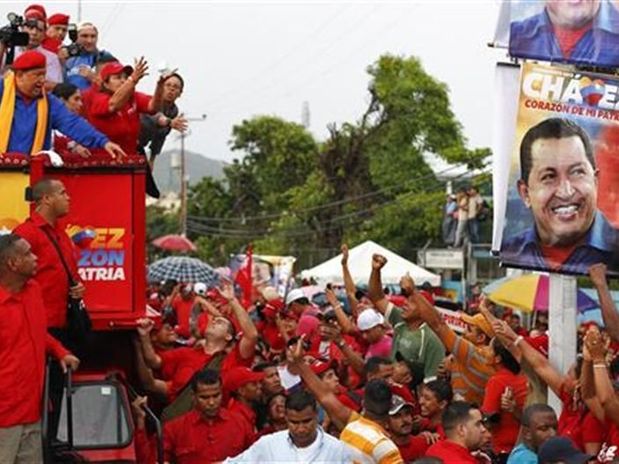
On the night of his reelection, Hugo Chávez said in his acceptance speech that he planned to advance his vision of “21st century socialism” in the next term of his presidency. Now, just one month later, it has become clear that the plan involves the massive expansion of the “commune” system, which experts say is a plot to diminish the power of the opposition.

Communes are a standard feature of the socialist model of government. Chávez touts them as essential to his agenda, as he claims they will give people the power to manage their own resources. But many believe that his renewed interest in them – following an election in which he was victorious by a narrower margin than ever before – is not as ideological as he claims. Instead, many characterize the push for communes as motivated by a desire to reclaim power for his own party on the state and local levels.

To date, Chávez has attempted to weaken the power of state and municipal authorities merely by withholding the share of the national budget they are guaranteed by the constitution. He’s effectively accomplished this by significantly underreporting oil revenue, which limits the amount paid to municipal leaders, many of which are his political foes. But the commune proposal now on the table has been criticized as an offensive to further destabilize the country’s pluralist constitution and decimate any remaining shreds of capitalism.

The implementation of communes could prove disastrous for the opposition by absorbing and ultimately diminishing much of the power of mayors and governors. Already, as part of its most recent budget proposal, Chávez’s party proposed a far greater increase (37 percent) in the amount of funding going to the communes than to either the state or municipal governments (22 and 23 percent, respectively). A logical next step could potentially involve the assignment of the few remaining political responsibilities from local authorities to the communes.

In 2007, the people of Venezuela rejected an amendment to the constitution that would have provided for the legal establishment of the communes. However, in December of 2010 the National Assembly passed the Enabling Law, which granted the president broad authority to mandate by decree following the flooding that left approximately 100,000 Venezuelans homeless. The law gave Chávez unchecked power for eighteen months, through which he created a ministry charged with setting up the communes. However, creation of communes had stalled until October 20 – just 13 days after his reelection – when he urged the National Assembly to implement of the Communes Law.

But implementation has been slow because the act is unconstitutional. It illegally changes the very nature of Venezuela’s government by shifting responsibilities from democratically-elected local officials to a central authority. According to the constitution, the deadline has passed for making such dramatic changes this year.

If realized, millions of Venezuelans would be affected by these changes. By the numbers, Chávez is looking to grow the communes at a record-breaking pace: 3,000 between 2013 and 2019 at the rate of 450 per year. Ultimately this will incorporate more than 21 million citizens – nearly 68 percent of the country’s population. By consolidating local power into the communes, the president is ensuring that these Venezuelans are largely controlled by the central government – not their locally elected officials.

 
Nov
9
2012
Posted by
admin
Comments

In Case You Missed It… Articles Roundup Week of 11/9/12

ABN 22 03 2009 chavez giordani In Case You Missed It… Articles Roundup Week of 11/9/12

Courtesy of: ABN

After Chávez’s reelection, the Venezuelan opposition seeks electoral victory in the upcoming gubernatorial elections; Venezuela is expected to devalue the Bolivar next year as inflation rises 1.7 percent in October; and according to the National Institute of Statistics, Venezuela’s employment rate has declined from 2011. Meanwhile, Venezuela’s agricultural imports rise to 99.6 percent in one year as the government is unable to meet domestic demand; on Thursday, Venezuelan Finance Minister Jorge Giordani announced the government’s plan to design a new financial and budgetary structure to deepen socialism within the country; and Chávez is criticized for ignoring the indigenous people he once championed. Additionally, Venezuelan Central Bank aid to PDVSA reaches $29 billion and arbitration rulings are expected in late 2013 in the multi-billion dollar claims against the Chávez government for its expropriation of both Exxon Mobil and Conono. Lastly, Al Jazeera reports without Chávez, Venezuela would have pursued a more level-headed approach toward Syria.

Venezuela opposition seeks morale boost, Financial Times

The Venezuelan government and its supporters may still feel euphoric. But Hugo Chávez’s triumph in October’s presidential election has left the opposition and swaths of the country in gloom, wondering if there will ever be an end to “21st century socialism”.

Venezuela: Chávez contemplates bolívar devaluation, EuroMoney

PDVSA, Venezuela’s state-owned oil company, might issue up to $3 billion in bonds before the end of the year and the country is expected to devalue the bolívar next year, according to bankers. This follows the October 7 re-election of Hugo Chávez as president for a third term, obtaining 54.4% of the vote, 9.5% ahead of the opposition nominee, Henrique Capriles Radonski

UPDATE 1-Venezuela October inflation rises 1.7 pct, Reuters

Nov 6 (Reuters) – Venezuela’s consumer prices rose 1.7 percent in October, compared with 1.6 percent the previous month, the central bank said on Tuesday. Twelve-month inflation to October was 17.9 percent, while the accumulated rise in the first 10 months of 2012 was 13.4 percent.

Formal employment declines in Venezuela, El Universal

Despite data recorded by the National Institute of Statistics (INE), Venezuela’s employment rate slumped in the first half of 2012 compared to 2011, according to a report compiled by the United Nations Economic Commission for Latin America and the Caribbean (ECLAC) and the International Labor Organization (ILO).

Agricultural imports spike to 99.6% in one year, El Universal

Minister of Food Carlos Osorio told El Universal last July that the priority of the Venezuelan government is to ensure ready access to foodstuffs wherever they come, “even imported.” Official numbers show that such strategy is in full swing.

Venezuelan gov’t to create new financial structure, El Universal

Venezuelan Finance Minister Jorge Giordani has asserted that in the next six-year presidential term a new financial and budgetary structure will be designed.

Venezuelan President Hugo Chávez Turning His Back on the Indigenous Peoples He Once Championed, Indian Country Today Media Network

It was a Friday in early July when Venezuelan authorities reportedly barged into the Caracas apartment of Ana Maria Abreu, a doctor who had been working in the presidential palace under Chávez since 2000. She was accused of leaking political or military state secrets, although little more is known.

Central bank assistance to state-run Pdvsa stands at USD 29 billion, El Universal

Financial assistance to state-owned oil company Pdvsa by the Central Bank of Venezuela (BCV) continues its upward trend. BCV’s data shows that by the end of October, the financial institution’s aid to the oil company increased by 79% over the last 12 months.

Exclusive: Venezuela sees Exxon, Conoco arbitration rulings in late 2013, Reuters

Venezuela expects international arbitration rulings by late 2013 in multi-billion-dollar claims by Exxon Mobil and ConocoPhillips over nationalizations by President Hugo Chavez’s government, the oil minister said.

How Hugo Chavez botched the Arab Spring, AlJazeera

Nearly two years ago, as unrest spread throughout the Arab world, many wondered what trajectory future revolutions might take. As we now know, Islamists were able to wrest control and capitalise on the Arab Spring and later shaped much of the political and social agenda to their liking.