Nov
13
2012
Posted by
admin
Comments

ICYMI: Venezuela, the bane of human rights

The Washington Post
November 11, 2012
By Editorial Board
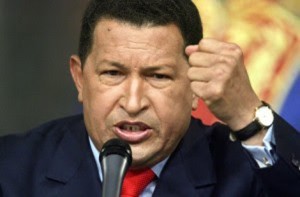
Hugo Chavez Frias 300x197 ICYMI: Venezuela, the bane of human rights

Courtesy of: Reuters

ON MONDAY, new members will be selected for the United Nations Human Rights Council, the top-level group for the protection and promotion of human rights. Its members have not always been paragons of respect for human dignity. Those leaving the 47-member council at the end of this year include China, Cuba and Russia. But up for a seat this time is a truly unqualified candidate, Venezuela. Its strongman president, Hugo Chávez, has brazenly trampled human rights in his quest for power and political control.

A new member must get at least a majority, or 97 votes, from the General Assembly, and while the assembly could prevent Venezuela from joining, it probably won’t. Since the council was created in 2006, the assembly has never voted down a candidate, according to Freedom. Some candidates, such as Sudan, have dropped their bids in the face of opposition. But the assembly selected Moammar Gaddafi’s Libya.

In choosing members, according to the founding resolution for the council, the General Assembly is supposed to “take into account the contribution of candidates to the promotion and protection of human rights and their voluntary pledges and commitments” to do so. Moreover, the “members elected to the council shall uphold the highest standards in the promotion and protection of human rights.”

Venezuela under Mr. Chávez has no place at this table. According to Human Rights Watch, the judiciary has largely ceased to function as an independent branch of government. A human rights travesty has been evident in the case of Judge Maria Lourdes Afiuni. In 2009, she angered Mr. Chávez with a ruling that gave conditional release to a businessman who was a prominent critic of the president. The businessman had been awaiting trial for almost three years. Soon after her ruling, the judge was arrested, and Mr. Chávez denounced her as a “bandit” on national television. She was held for more than a year in a two-by-four-meter cell in a Caracas prison that included 20 women she had sentenced as a judge. They confronted her with death threats. After she underwent surgery for cancer in 2011, she was released to house arrest but under onerous terms, including that she not be allowed to step outside for exposure to the sun.

Mr. Chávez has an equally poor record on freedom of expression. He has bullied and punished the news media for critical reporting on the government’s handling of such things as water pollution, violent crime, a prison riot and an earthquake.

In its bid to become a member, Venezuela offered pledges to respect human rights, including to take action “to protect freedom of expression and opinion.” But the words are hollow. By deeds, Mr. Chávez has shown what he stands for, and it is not the protection of human rights. In 2009 the Obama administration announced plans to join the Human Rights Council and engage from the inside rather than criticize from without. Secretary of State Hillary Rodham Clinton declared last year, “Membership on this council should be earned through respect for human rights.” By that standard, Mr. Chávez should not be allowed in the door.

To read this article on The Washington Post, please click here.

 
Jul
27
2012
Posted by
admin
Comments

Facing election, Hugo Chávez ruthlessly consolidates his power

The Washington Post
July 26, 2012
By Editorial Board

chavez fiesta venezuela 644x362 Facing election, Hugo Chávez ruthlessly consolidates his power

Courtesy of: Reuters

NOT FOR THE first time, Venezuelan President Hugo Chávez has declared himself cancer-free and ready to resume a full schedule. The announcement should be treated dubiously; the government has refused to release details of the strongman’s illness, and numerous reports have said he suffers from an incurable malignancy. But Mr. Chávez’s claim does make clear that he intends an all-out push to win reelection in an Oct. 7 vote.

Having the caudillo at the top of the ticket makes a big difference: While most polls show Mr. Chávez leading opposition candidate Henrique Capriles Radonski, they also indicate that the opposition would trounce any of Mr. Chávez’s potential successors. The president’s personal popularity lingers with some Venezuelans, who do not fault him for the soaring inflation, power and food shortages and world-beating murder rate that have emerged during his 13 years in office.

Mr. Chávez, however, is leaving little to chance. He is pouring tens of billions of dollars, much of it borrowed from China, into the economy, producing a preelection boomlet. More significantly, he is employing all the leverage of a legal system and mass media that he has politicized and subordinated to his personal control. Just how far that process of corruption has advanced is illuminated in a report by Human Rights Watch, which concludes that “the accumulation of power in the executive, the removal of institutional safeguards, and the erosion of human rights guarantees have given the Chávez government free rein to intimidate, censor and prosecute Venezuelans who criticize the president or thwart his political agenda.”

Since 2010, the report says, Mr. Chávez has “repacked” the Supreme Court with followers who “have openly rejected the principle of separation of powers and publicly pledged their commitment to advancing the political agenda of President Chávez.” He has increased the number of state-run TV channels from one to six while relentlessly pressuring the two remaining independent networks, one of which was pushed off the air. He has “targeted media outlets for sanction and/or censorship for their critical reporting” on “issues such as water pollution, violent crime, a prison riot, and an earthquake.”

One of the most disturbing accounts in the report is of Maria Lourdes Afiuni, a judge who courageously granted conditional release to a Chávez opponent who had spent nearly three years in prison while awaiting trial on corruption charges. Though her ruling complied with Venezuelan law and a recommendation by U.N. human rights monitors, Ms. Afiuni was arrested and ordered to stand trial by a provisional judge who had loudly proclaimed his loyalty to Mr. Chávez. She has now spent 21 / 2 years in prison or under house arrest while awaiting trial.

The Obama administration has done its best to ignore Mr. Chávez and his domestic offenses; Mr. Obama recently told an interviewer dismissively that Venezuela “has not had a serious national security impact on us.” That may be true, but Mr. Chávez certainly has had an impact on democratic freedoms in his country and in the hemisphere. While he lives, the United States should be doing what it can to preserve and protect Venezuela’s democrats; they will be needed for what, at best, will be a long and painful rebuilding process.

To read this article on The Washington Post, please click here.

 
Jul
27
2012
Posted by
admin
Comments

ICYMI: Facing election, Hugo Chávez ruthlessly consolidates his power

The Washington Post
July 26, 2012
By Editorial Board

chavez fiesta venezuela 644x362 ICYMI: Facing election, Hugo Chávez ruthlessly consolidates his power

Courtesy of: Reuters

NOT FOR THE first time, Venezuelan President Hugo Chávez has declared himself cancer-free and ready to resume a full schedule. The announcement should be treated dubiously; the government has refused to release details of the strongman’s illness, and numerous reports have said he suffers from an incurable malignancy. But Mr. Chávez’s claim does make clear that he intends an all-out push to win reelection in an Oct. 7 vote.

Having the caudillo at the top of the ticket makes a big difference: While most polls show Mr. Chávez leading opposition candidate Henrique Capriles Radonski, they also indicate that the opposition would trounce any of Mr. Chávez’s potential successors. The president’s personal popularity lingers with some Venezuelans, who do not fault him for the soaring inflation, power and food shortages and world-beating murder rate that have emerged during his 13 years in office.

Mr. Chávez, however, is leaving little to chance. He is pouring tens of billions of dollars, much of it borrowed from China, into the economy, producing a preelection boomlet. More significantly, he is employing all the leverage of a legal system and mass media that he has politicized and subordinated to his personal control. Just how far that process of corruption has advanced is illuminated in a report by Human Rights Watch, which concludes that “the accumulation of power in the executive, the removal of institutional safeguards, and the erosion of human rights guarantees have given the Chávez government free rein to intimidate, censor and prosecute Venezuelans who criticize the president or thwart his political agenda.”

Since 2010, the report says, Mr. Chávez has “repacked” the Supreme Court with followers who “have openly rejected the principle of separation of powers and publicly pledged their commitment to advancing the political agenda of President Chávez.” He has increased the number of state-run TV channels from one to six while relentlessly pressuring the two remaining independent networks, one of which was pushed off the air. He has “targeted media outlets for sanction and/or censorship for their critical reporting” on “issues such as water pollution, violent crime, a prison riot, and an earthquake.”

One of the most disturbing accounts in the report is of Maria Lourdes Afiuni, a judge who courageously granted conditional release to a Chávez opponent who had spent nearly three years in prison while awaiting trial on corruption charges. Though her ruling complied with Venezuelan law and a recommendation by U.N. human rights monitors, Ms. Afiuni was arrested and ordered to stand trial by a provisional judge who had loudly proclaimed his loyalty to Mr. Chávez. She has now spent 21 / 2 years in prison or under house arrest while awaiting trial.

The Obama administration has done its best to ignore Mr. Chávez and his domestic offenses; Mr. Obama recently told an interviewer dismissively that Venezuela “has not had a serious national security impact on us.” That may be true, but Mr. Chávez certainly has had an impact on democratic freedoms in his country and in the hemisphere. While he lives, the United States should be doing what it can to preserve and protect Venezuela’s democrats; they will be needed for what, at best, will be a long and painful rebuilding process.

To read this article on The Washington Post, please click here.