Apr
5
2013
Posted by
admin
Comments

In Case You Missed It… Articles Roundup Week of 4/05/13

12630596 copia1.jpg.520.360.thumb 1 e1365195898833 In Case You Missed It… Articles Roundup Week of 4/05/13

Courtesy of: El Universal

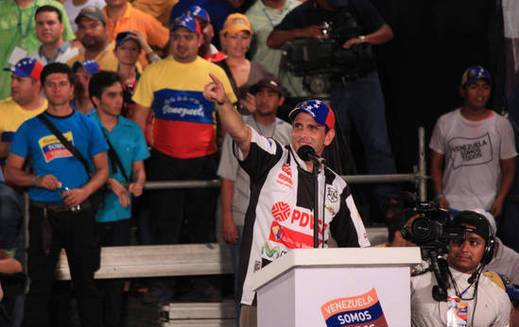
This week: A month after his death, Hugo Chávez continues to cast a shadow on the Venezuelan presidential election; amid personal attacks against opposition candidate Henrique Capriles, the official presidential campaign begins in Venezuela; Capriles leads a march with supporters in Caracas to kick off his presidential campaign; and Maduro steps up insults and slurs, this time calling the country’s opposition “heirs of Hitler.” Maduro bizarrely claims Chávez appeared to him in the form of a “little bird” and blessed him; Venezuela’s opposition warns that the military should not take sides in the upcoming election; Capriles points out the Venezuelan state media’s overwhelming bias toward Maduro; and Venezuela tries to weaken the influence of the respected Inter-American Commission on Human Rights. Cuba throws its support behind Maduro in the Venezuelan elections, hoping his victory will allow them more control over the country and its resources; dollar scarcity and an inflation rate of 22 percent continue to take their toll on the Venezuelan people, as businesses in Venezuela foresee only tough times ahead;  a decade of currency controls leave Venezuelans desperate for money and vulnerable to fraudsters; and crop numbers in Venezuela show that 2012 production fell behind the already-low 2010 levels.

Chávez casts shadow on Venezuela poll, Financial Times

Last year, Henrique Capriles proved no match for the electoral juggernaut of Hugo Chávez, who won over a dozen nationwide polls in as many years.

Venezuela presidential race begins amid personal attacks and tension, The Miami Herald

Drugs, lies and murder plots. Venezuela’s compressed presidential campaign officially begins Tuesday in a race that will determine the future of the Andean nation after the death of President Hugo Chávez, who led the country for 14 years.

Venezuela Opposition Marches as Presidential Campaign Kicks Off, Bloomberg

Venezuela opposition leader Henrique Capriles Radonski led a march of supporters last night in Caracas to mark today’s formal start to the presidential campaign against Hugo Chavez’s hand-picked successor.

Maduro calls Venezuela opposition “heirs of Hitler”, Reuters

Venezuela’s acting President Nicolas Maduro on Saturday called the country’s opposition “heirs of Hitler,” accusing them of persecuting Cuban doctors working in the South American country the way Jews were persecuted in Nazi Germany.

Venezuela: Ruling Party Candidate Said ‘Little Bird’ Told Him He’ll Become President, Fox News Latino

A little birdie whistled in his ear that he’s ready to become the next president of Venezuela.

Venezuela Opposition: Military Can’t Take Sides, TIME

Venezuela’s presidential campaign on Wednesday veered between warnings of military meddling in the April 14 vote and opposition mirth at the acting president’s suggestion that the spirit of Hugo Chavez visited him as “a little bird” while he prayed.

Henrique Capriles accuses Venezuelan state media of bias in favouring political rival, The Independent

Henrique Capriles has hit out at the overwhelming bias of the Venezuelan state media, claiming that the VTV channel alone has given 46 hours and 43 minutes of coverage to Nicolas Maduro since the former bus driver became acting President after the death of Hugo Chavez on 8 March.

Venezuela Tries to Weaken Human Rights Watchdog, The Heritage Foundation

A group of populist Latin American states—led by Bolivia, Ecuador, and Venezuela—hopes to reduce the role of an international human rights commission and watchdog.

Cuba’s Venezuelan Pawn, The Wall Street Journal

Venezuela’s military government will hold what it refers to as a presidential “election” on April 14, and one of the candidates on the ballot will be Hugo Chávez’s handpicked successor, Nicólas Maduro.

Tough times ahead in post-Chavez Venezuela as dollar scarcity takes its toll, The Washington Post

Doing business in post-Hugo Chavez Venezuela is not for the faint of heart. Thousands of companies suffer under currency controls that all but deny them the U.S. dollars they need to import vital items into this oil-rich country, from food to cars to spare parts — even gasoline.

Dollar-Desperate Venezuelans Get Defrauded on Internet, Bloomberg

The retired Venezuelan teacher says he was so desperate for dollars that he wired his life savings to a front company posing as a Margarita Island inn.

Crop area in 2012 lags behind 2010 levels in Venezuela, El Universal

The results provided by the Venezuelan Ministry of Agriculture and Lands (MAT) reveal that in 2012, the agricultural activity recovered, featuring an important upturn in several highly demanded agricultural items.
 
Feb
1
2013
Posted by
admin
Comments

ICYMI: Chavez-run government holds total power: rights group

Agence France-Presse
February 1, 2013

hugochavez ICYMI: Chavez run government holds total power: rights group

Courtesy of: Marcello Casal Jr.

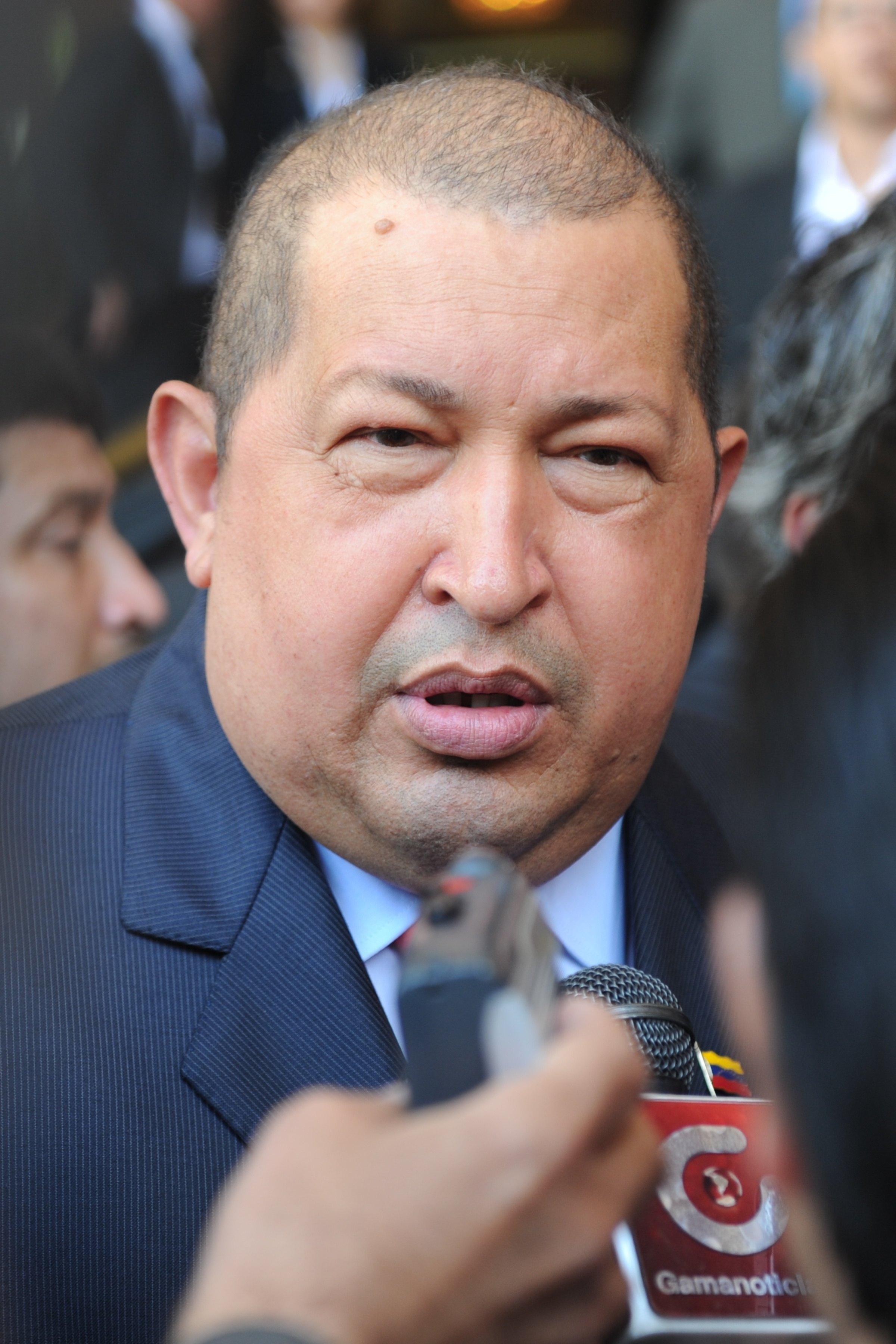
Venezuela’s government, headed by ailing and absent President Hugo Chavez, holds “total” power while the country’s Supreme Court lacks all credibility, Human Rights Watch said Thursday.

“In Venezuela, there is what one would call a total concentration of power,” Jose Miguel Vivanco, HRW’s America’s director told reporters at the presentation of the group’s annual global rights report.

“What should constitute a democratic regime with separation of powers does not exist,” Vivanco said, adding that the state’s Supreme Court has lacked “the absolute minimum credibility” since it was “captured” by the Chavez government in 2004.

The Supreme Court played a central role recently in upholding the constitutionality of the government’s decision to indefinitely delay Chavez’s swearing in to a new term six year term on January 10.

Chavez, who is convalescing from a fourth round of cancer surgery in Cuba, was too sick to make it back for the inauguration. But the delay allows him and his government to stay in office until he is well enough to take the oath.

Meanwhile, Chavez, who won reelection in October, has not been seen in public since December 10, the day before he underwent surgery.

Vivanco called the Supreme Court’s decision “quite surprising,” saying it left Venezuela in a “very abnormal situation” where “the former government still rules.”

“This is very revealing and an excellent example… of what it means to not have an independent judiciary that can preserve and uphold democratic principles and the very constitution devised by President Chavez.”

HRW said in its latest report that during Chavez’s presidency, “the accumulation of power in the executive branch and the erosion of human rights guarantees have enabled his government to intimidate, censor, and prosecute Venezuelans who criticize the president or thwart his political agenda.”

It added that Venezuelans who criticize the government face reprisals and, among other things, “has undercut the ability of judges to adjudicate politically sensitive cases.”

While the Chavez government has “abused its powers to regulate the media,” its prisons are among the most violent in the region.

Earlier this month, a riot at a prison in the country’s northwest left 58 dead and twice as many wounded.

The Venezuelan government regularly dismisses HRW’s reports.

To read this article on Global Post, please click here.

 
Nov
13
2012
Posted by
admin
Comments

ICYMI: Venezuela, the bane of human rights

The Washington Post
November 11, 2012
By Editorial Board

Hugo Chavez Frias 300x197 ICYMI: Venezuela, the bane of human rights

Courtesy of: Reuters

ON MONDAY, new members will be selected for the United Nations Human Rights Council, the top-level group for the protection and promotion of human rights. Its members have not always been paragons of respect for human dignity. Those leaving the 47-member council at the end of this year include China, Cuba and Russia. But up for a seat this time is a truly unqualified candidate, Venezuela. Its strongman president, Hugo Chávez, has brazenly trampled human rights in his quest for power and political control.

A new member must get at least a majority, or 97 votes, from the General Assembly, and while the assembly could prevent Venezuela from joining, it probably won’t. Since the council was created in 2006, the assembly has never voted down a candidate, according to Freedom. Some candidates, such as Sudan, have dropped their bids in the face of opposition. But the assembly selected Moammar Gaddafi’s Libya.

In choosing members, according to the founding resolution for the council, the General Assembly is supposed to “take into account the contribution of candidates to the promotion and protection of human rights and their voluntary pledges and commitments” to do so. Moreover, the “members elected to the council shall uphold the highest standards in the promotion and protection of human rights.”

Venezuela under Mr. Chávez has no place at this table. According to Human Rights Watch, the judiciary has largely ceased to function as an independent branch of government. A human rights travesty has been evident in the case of Judge Maria Lourdes Afiuni. In 2009, she angered Mr. Chávez with a ruling that gave conditional release to a businessman who was a prominent critic of the president. The businessman had been awaiting trial for almost three years. Soon after her ruling, the judge was arrested, and Mr. Chávez denounced her as a “bandit” on national television. She was held for more than a year in a two-by-four-meter cell in a Caracas prison that included 20 women she had sentenced as a judge. They confronted her with death threats. After she underwent surgery for cancer in 2011, she was released to house arrest but under onerous terms, including that she not be allowed to step outside for exposure to the sun.

Mr. Chávez has an equally poor record on freedom of expression. He has bullied and punished the news media for critical reporting on the government’s handling of such things as water pollution, violent crime, a prison riot and an earthquake.

In its bid to become a member, Venezuela offered pledges to respect human rights, including to take action “to protect freedom of expression and opinion.” But the words are hollow. By deeds, Mr. Chávez has shown what he stands for, and it is not the protection of human rights. In 2009 the Obama administration announced plans to join the Human Rights Council and engage from the inside rather than criticize from without. Secretary of State Hillary Rodham Clinton declared last year, “Membership on this council should be earned through respect for human rights.” By that standard, Mr. Chávez should not be allowed in the door.

To read this article on The Washington Post, please click here.