Jul
9
2013
Posted by
admin
Comments

ICYMI: With Snowden offer, Venezuela’s Maduro is on world stage

The Washington Post
July 8, 2013
By Juan Forero and Will Englund

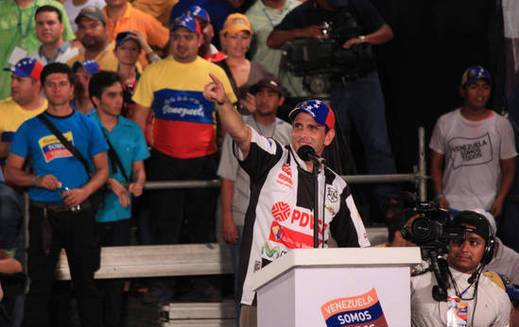
Venezuela Independence Day 00ff7 7787 e1373389435305 ICYMI: With Snowden offer, Venezuela’s Maduro is on world stage

Courtesy of: AFP

BOGOTA, Colombia —American fugitive Edward Snowden’s diminishing possibilities of remaining free to continue releasing information about secret U.S. surveillance programs increasingly appear to hinge on Venezuela, which awaited word Monday on whether the former National Security Agency contractor would accept its offer of asylum and fly to the oil-rich country.

Bolivia and Nicaragua also say they could give refuge to Snowden, who is on the run from American officials and is thought to be marooned in the vast transit zone of Moscow’s Sheremetyevo International Airport. And the president of communist Cuba, Raúl Castro, on Sunday expressed support for Latin American allies that might take in the 30-year-old computer expert, opening the possibility that Snowden could fly through Havana as a first leg on his flight to asylum.

Among those offering sanctuary to Snowden, anti-imperialist Venezuela stands out: a country with an intense antipathy toward the United States and just enough muscle to make his escape from American law enforcement a possibility. It also appears that Russian officials, eager to end the diplomatic fallout of having Snowden in Moscow, see their close ally, Venezuela, as offering the clearest solution.

“The situation with Snowden is creating additional tension in relations with Washington that are complex as they are,” Alexei Pushkov, head of the foreign affairs committee of the lower house of the Russian parliament, told the newspaper Kommersant on Monday.

Pushkov, whose comments dependably reflect the Kremlin’s position on foreign affairs, said the Snowden saga needed to be settled before President Obama arrives in September to meet with his Russian counterpart, Vladimir Putin. “And judging by the way things are unfolding,” Pushkov told the newspaper, “this is how it’s going to be.”

Over the weekend, Pushkov had also said that giving asylum to Snowden in Venezuela could not damage Venezuelan President Nicolás Maduro, because his government’s relations with Washington are already in tatters. “It can’t get worse,” Pushkov said in a Twitter message.

Late Tuesday afternoon, Pushkov said on Twitter that Snowden, “as expected,” had accepted Maduro’s offer of asylum, but he didn’t address the question of how Snowden might get to Caracas. Shortly afterward, the tweet was deleted.

Pushkov then tweeted again, claiming he had heard the news about Snowden on Russian television. “Direct all your questions to them,” he wrote.

By Tuesday evening, Pushkov had issued yet a third tweet: “According to News 24 [a TV news program], with reference to Maduro, Snowden accepted his offer of asylum. If so, he has found that to be the safest option.”

Newly elected and facing staggering economic problems at home despite the country’s oil wealth, Maduro appears to have made a high-pitched, openly hostile position against the Obama administration a cornerstone of his government’s foreign policy. He took his most provocative stand Friday in announcing that Venezuela would take in Snowden. On Monday, Maduro said that a letter from Snowden requesting asylum had been received and that the young American would simply have to decide when to fly to Caracas.

Maduro has accused the United States of fomenting protests against his government after his disputed April 14 election victory, which gave him the presidency his predecessor, Hugo Chávez, had held for 14 turbulent years until his death from cancer.

The Snowden saga — a young American revealing secrets the U.S. government wants to contain — provided the perfect opportunity for Maduro to take on the Obama administration, said Eduardo Semtei, a former Venezuelan government official.

“To figure internationally, to show that he is a player among big powers, he offered asylum to Snowden,” said Semtei, who had been close to Chávez’s brother, Adán, a leading ideologue in the late president’s radical movement. “This grabs headlines, and it shows that he’s a strong president, one with character, and that he’s capable of challenging the United States.”

Maduro and Venezuela came late to the Snowden saga, as tiny Ecuador, an ally also committed to opposing American initiatives, heaped praise on Snowden and expressed a willingness to help him after he had flown from Hong Kong to Moscow on June 23 to avoid American justice. When
Ecuador backed away from its initial enthusiasm over Snowden, Venezuela stepped in last week as Maduro arrived in Moscow for an energy summit.

The 50-year-old Maduro, who found his political calling as a socialist activist with close ties to Cuba, took a sharply anti-
imperialist stand in embracing Snowden. He said the United States had “created an evil system, half Orwellian, that intends to control the communications of the world,” and characterized Snowden as an antiwar activist and hero who had unmasked the dastardly plans of America’s ruling elite.

Political analysts say the opportunity to take sides against Washington was simply irresistible for a government that has for years characterized itself as a moral force speaking out for the weak against “the empire,” as the United States is known in Caracas. And the fact that the secrets Snowden divulged were embarrassing to the Obama administration only gave more fuel to Venezuela, former Venezuelan diplomats and political analysts in Caracas said.

“Edward Snowden became the symbol for the anti-imperialist rhetoric, for progressivism, for international radicalism,” said Carlos Romero, an analyst and author who closely tracks Venezuela’s international diplomacy.

Venezuela helped channel the fury of Argentina, Bolivia, Ecuador, Uruguay and Suriname after Bolivian President Evo Morales’s plane was apparently refused entry into the airspace of as many as four European countries last Tuesday because of the belief that Snowden was hiding aboard. And on Monday, Venezuela’s state media apparatus seemed to take more offense than the Brazilian government over revelations that the NSA had collected data on countless telephone and e-mail conversations in Brazil.

But former diplomats familiar with Venezuela say that there are other aspects to consider in deciphering Maduro’s support for Snowden.

Ignacio Arcaya, a diplomat who served the Chávez government in the United States in the early part of his presidency, said Maduro has had the challenge of trying to ease the concerns of radicalized sectors in his movement that have been worried about a resumption of relations with Washington now that Chávez is gone. Indeed, until recently, Maduro was spearheading an effort at rapprochement, as shown by a meeting in Guatemala on June 5 between Secretary of State John F. Kerry and his Venezuelan counterpart, Elías Jaua.

“What Maduro is doing is aimed at quieting the radical sectors of his party who think he is negotiating with the United States and think that he’s talking to private industry,” Arcaya said.

Maduro also has to consider his own unstable political position after the April 14 election, which is being contested by his challenger, Henrique Capriles, who says the vote was stolen from him. At the same time, Maduro faces millions of Venezuelans tired of the country’s sky-high inflation, rampant homicide rate and serious shortages of everything from chicken to toilet paper.

Myles R.R. Frechette, a retired American diplomat who served in Venezuela and other Latin American countries, said Maduro is using a tried-and-true strategy: loudly oppose the United States to distract from domestic problems.

“It plays very well,” said Frechette. “It’s the card to play. It’s what you’ve always got in your drawer. You open your drawer and play to your most radical elements.”

To read this article at The Washington Post, please click here.

 
May
3
2013
Posted by
admin
Comments

In Case You Missed It… Articles Roundup Week of 5/03/13

ay 108972837 e1367612866751 In Case You Missed It… Articles Roundup Week of 5/03/13

Courtesy of: EPA

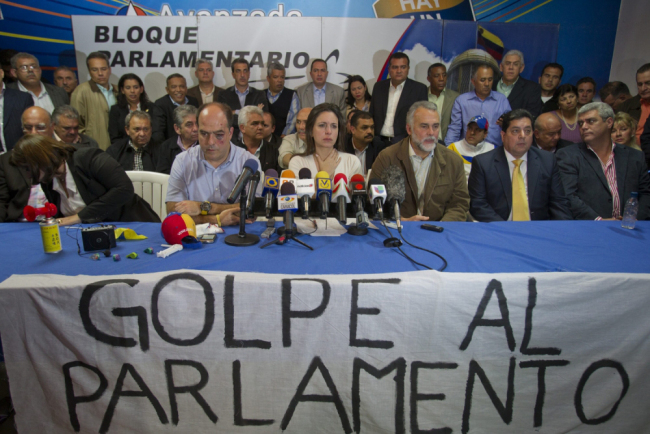
This week: Venezuela stumbles deeper into political chaos after a bloody brawl in Congress; Venezuela’s opposition asks for an investigation into the brawl on the floor of Congress that injured several of its lawmakers and caused at least one of them to undergo surgery; Venezuela’s government charges a US filmmaker for allegedly trying to incite anti-government violence and charges an ex-general for being critical of president Nicolás Maduro; and Maduro visits Cuba to meet with former leader Fidel Castro and re-pledge Venezuela’s allegiance to the island. The government begins a partial audit of the disputed election, though the opposition rejects the move as insufficient; unable to force a sweeping review of the disputed election, Venezuelan opposition supporters march on International Workers Day; opposition leader Henrique Capriles files a lawsuit in Venezuela’s Supreme Court to overturn the election, alleging fraud in the counting of ballots and voter intimidation; and Venezuelans become increasingly upset with daily power outages, growing food scarcities and a general fear of the government. Venezuelan debt remains severe as tensions continue to rise; homicides in Venezuela reach a record high in 2013, as nearly 58 are killed per day during the first four months of the year, highlighting a dire security situation amid political instability; and the sale of Globovisión, Venezuela’s sole television station critical of the government, hurts free speech in Venezuela even further.

Political Chaos Grips Venezuela After Legislative Brawl and Rival Marches, The New York Times

Venezuela stumbled deeper into political chaos this week as legislators brawled in the National Assembly and government supporters and opponents took to the streets for rival marches amid continuing tensions over the narrow election victory of President Nicolás Maduro.

Venezuela Opposition Wants Probe of Violence, The Associated Press

Venezuela’s opposition on Thursday asked prosecutors to investigate a brawl on the floor of congress that injured several of its lawmakers and forced at least one of them to undergo surgery.

Venezuela Charges U.S. Filmmaker, Arrests Ex-General, The Wall Street Journal

Venezuelan authorities brought criminal charges over the weekend against a U.S. filmmaker for allegedly trying to foment antigovernment violence, and arrested a retired Army general who has become a vocal critic of the government.

Venezuela’s New Leader Visits Cuba, Meets With Castro, The Wall Street Journal

Nicolás Maduro met with former Cuban President Fidel Castro in Havana on Saturday, an indication Venezuela’s new president will maintain the same close relations with the Communist island nation as that of his predecessor Hugo Chávez, who died last month after a battle with cancer.

Contentious Venezuela vote audit begins, AFP

Venezuela began a partial audit of the disputed election won by the late Hugo Chavez’s handpicked successor, as the opposition rejected the move as insufficient.

Venezuelan opposition protests vote, The Washington Post

Unable to force a sweeping review of last month’s disputed presidential election, opposition supporters marched in the streets Wednesday to demonstrate their fury at the ruling party’s efforts to blunt a recount.

Venezuelan Opposition Sues to Overturn Election, The Wall Street Journal

Venezuela opposition leader Henrique Capriles filed a lawsuit Thursday with the Supreme Court that seeks to overturn April’s presidential election, alleging fraud in the counting of ballots and pre-election voter intimidation.

Venezuelans on the Brink, Putting Up With Daily Outages, Growing Scarcity and Fear, Fox News Latino

There’s an old joke about the rabbi who explained to his congregants that Adam and Eve were the first communists, because they wore no clothes, had one apple between them, and thought they lived in paradise.

Venezuelan Debt Under Pressure As Tensions Rise, The Wall Street Journal

Abating a week ago, tensions in Venezuela are fast rising again, and it doesn’t bode well for the country’s debt.

Venezuelan Homicides Reach Record High In 2013, InSight Crime

Murders in Venezuela reached a record high of 58 per day during the first four months of the year, according to police figures contested by the government, highlighting a dire security situation amid political instability.

What the Sale of Venezuela’s Opposition TV Station Means for Free Speech, The Atlantic

Globovision is Venezuela’s last-remaining television station that is openly critical of the government of Hugo Chavez, (and his chosen puppet successor Nicolas Maduro) but on April 15, the majority shareholder Guillermo Zuloaga sold his portion to businessman Juan Domingo Cordero, sending both members of the opposition and some journalist rights groups into a frenzy.

 
Apr
5
2013
Posted by
admin
Comments

In Case You Missed It… Articles Roundup Week of 4/05/13

12630596 copia1.jpg.520.360.thumb 1 e1365195898833 In Case You Missed It… Articles Roundup Week of 4/05/13

Courtesy of: El Universal

This week: A month after his death, Hugo Chávez continues to cast a shadow on the Venezuelan presidential election; amid personal attacks against opposition candidate Henrique Capriles, the official presidential campaign begins in Venezuela; Capriles leads a march with supporters in Caracas to kick off his presidential campaign; and Maduro steps up insults and slurs, this time calling the country’s opposition “heirs of Hitler.” Maduro bizarrely claims Chávez appeared to him in the form of a “little bird” and blessed him; Venezuela’s opposition warns that the military should not take sides in the upcoming election; Capriles points out the Venezuelan state media’s overwhelming bias toward Maduro; and Venezuela tries to weaken the influence of the respected Inter-American Commission on Human Rights. Cuba throws its support behind Maduro in the Venezuelan elections, hoping his victory will allow them more control over the country and its resources; dollar scarcity and an inflation rate of 22 percent continue to take their toll on the Venezuelan people, as businesses in Venezuela foresee only tough times ahead;  a decade of currency controls leave Venezuelans desperate for money and vulnerable to fraudsters; and crop numbers in Venezuela show that 2012 production fell behind the already-low 2010 levels.

Chávez casts shadow on Venezuela poll, Financial Times

Last year, Henrique Capriles proved no match for the electoral juggernaut of Hugo Chávez, who won over a dozen nationwide polls in as many years.

Venezuela presidential race begins amid personal attacks and tension, The Miami Herald

Drugs, lies and murder plots. Venezuela’s compressed presidential campaign officially begins Tuesday in a race that will determine the future of the Andean nation after the death of President Hugo Chávez, who led the country for 14 years.

Venezuela Opposition Marches as Presidential Campaign Kicks Off, Bloomberg

Venezuela opposition leader Henrique Capriles Radonski led a march of supporters last night in Caracas to mark today’s formal start to the presidential campaign against Hugo Chavez’s hand-picked successor.

Maduro calls Venezuela opposition “heirs of Hitler”, Reuters

Venezuela’s acting President Nicolas Maduro on Saturday called the country’s opposition “heirs of Hitler,” accusing them of persecuting Cuban doctors working in the South American country the way Jews were persecuted in Nazi Germany.

Venezuela: Ruling Party Candidate Said ‘Little Bird’ Told Him He’ll Become President, Fox News Latino

A little birdie whistled in his ear that he’s ready to become the next president of Venezuela.

Venezuela Opposition: Military Can’t Take Sides, TIME

Venezuela’s presidential campaign on Wednesday veered between warnings of military meddling in the April 14 vote and opposition mirth at the acting president’s suggestion that the spirit of Hugo Chavez visited him as “a little bird” while he prayed.

Henrique Capriles accuses Venezuelan state media of bias in favouring political rival, The Independent

Henrique Capriles has hit out at the overwhelming bias of the Venezuelan state media, claiming that the VTV channel alone has given 46 hours and 43 minutes of coverage to Nicolas Maduro since the former bus driver became acting President after the death of Hugo Chavez on 8 March.

Venezuela Tries to Weaken Human Rights Watchdog, The Heritage Foundation

A group of populist Latin American states—led by Bolivia, Ecuador, and Venezuela—hopes to reduce the role of an international human rights commission and watchdog.

Cuba’s Venezuelan Pawn, The Wall Street Journal

Venezuela’s military government will hold what it refers to as a presidential “election” on April 14, and one of the candidates on the ballot will be Hugo Chávez’s handpicked successor, Nicólas Maduro.

Tough times ahead in post-Chavez Venezuela as dollar scarcity takes its toll, The Washington Post

Doing business in post-Hugo Chavez Venezuela is not for the faint of heart. Thousands of companies suffer under currency controls that all but deny them the U.S. dollars they need to import vital items into this oil-rich country, from food to cars to spare parts — even gasoline.

Dollar-Desperate Venezuelans Get Defrauded on Internet, Bloomberg

The retired Venezuelan teacher says he was so desperate for dollars that he wired his life savings to a front company posing as a Margarita Island inn.

Crop area in 2012 lags behind 2010 levels in Venezuela, El Universal

The results provided by the Venezuelan Ministry of Agriculture and Lands (MAT) reveal that in 2012, the agricultural activity recovered, featuring an important upturn in several highly demanded agricultural items.