May
8
2013
Posted by
admin
Comments

Nicolás Maduro off to an inauspicious start as Venezuela’s dubiously-elected president

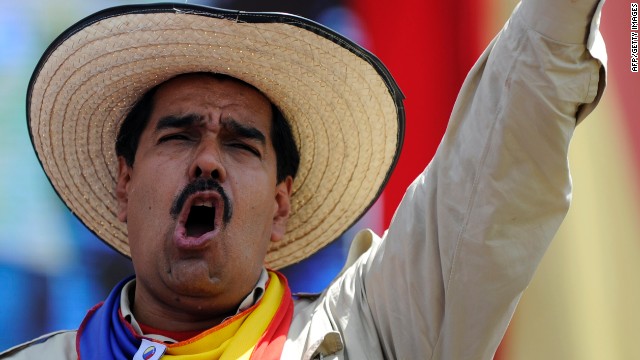
Nicolas Maduro e1368042661461 Nicolás Maduro off to an inauspicious start as Venezuela’s dubiously elected president

Courtesy of: Agence France Presse

Almost immediately after Venezuela’s partisan electoral authority declared Nicolás Maduro the winner of last month’s presidential election, he and his ruling PSUV party faced a choice that may yet define Venezuela’s future for years to come. Reports of thousands of irregularities in the voting process, including suspicions of fraud, sparked fears about the election’s legitimacy. The actions of Maduro – who first consented to the opposition’s calls for a full and transparent recount, later issued a hasty retraction, and then began a crackdown on peaceful opposition protestors – has only deepened those fears.

Maduro’s desperation is perhaps well-founded: a poll today found that a majority of Venezuelans believe the country is on the wrong track and, if given the chance, most would now choose Henrique Capriles for president over Maduro. The uncertainty and repression surrounding the Venezuelan election has grown so egregious that President Obama has abstained from recognizing Maduro as the winner. The President observed that the “entire hemisphere has been watching the violence, the protests, the crackdowns on the opposition.” ABC reports:

President Barack Obama avoided recognizing the government of Venezuela during an interview with Univision, explaining that he was concerned about recent “crackdowns” against members of the Venezuelan opposition. He also said that recent reports suggest that basic principles of democracy and human rights are not being fully observed by Venezuela’s government.

Obama and the U.S. State Department are among a growing chorus calling for a full and transparent recount of the Venezuelan election, a chorus that now includes the Organization of American States, former Colombian president Alvaro Uribe, and internationally-respected human rights watchdog groups. Though Maduro may lack Hugo Chávez’s charisma and support among Venezuelans, he evinces the same contempt for the international community.  That contempt, combined with Maduro’s increasingly flagrant repression of his own people, mean that recent weeks for Venezuela have been turbulent indeed.

It’s hard to deny that Maduro’s “election” lacks legitimacy, before the eyes of both Venezuelans and the world. The partial audit the government agreed to is viewed as little more than a public relations gesture, and hardly sufficient to investigate the serious voting irregularities that led many to wonder whether Capriles was the election’s true winner.

As those doubts grow, Maduro has flexed the government’s authoritarian muscle to stifle dissent and cow the opposition into obedience. The state-run media – which recently tightened its grip on the airwaves by purchasing the previously-independent TV station Globovision – has dutifully propagandized on behalf of Maduro; the government recently severed the video feed of a Capriles speech, preventing the opposition leader from making his case to Venezuelans.

Such tactics haven’t prevented the opposition from making their voice heard. The din of “Cacerola” protests resounds throughout the country. Capriles has filed an official protest with the country’s Supreme Court which, comprised of Maduro’s political allies, is unlikely to intervene. Maduro and the PSUV have met these peaceful expressions of dissent, however, with strongman tactics. Capriles called off an opposition March after the government issued a veiled-threat of violence against the protestors. Opposition lawmakers have been barred from speaking in the National Assembly. And a bloody brawl in the National Assembly injured 17 opposition lawmakers. Now the government has intimated it may throw Capriles in jail.

Such tactics, though they fly in the face of democracy and human rights, at least demonstrate that Maduro is feeling the pressure. The Economist opined after the election that “without Chávez at the helm, chavismo, a noxious cocktail of populism, incompetence and repression, is a far less potent force.” Nicolas Maduro cannot strong-arm his way to legitimacy. But that hasn’t stopped him trying.
 
May
3
2013
Posted by
admin
Comments

In Case You Missed It… Articles Roundup Week of 5/03/13

ay 108972837 e1367612866751 In Case You Missed It… Articles Roundup Week of 5/03/13

Courtesy of: EPA

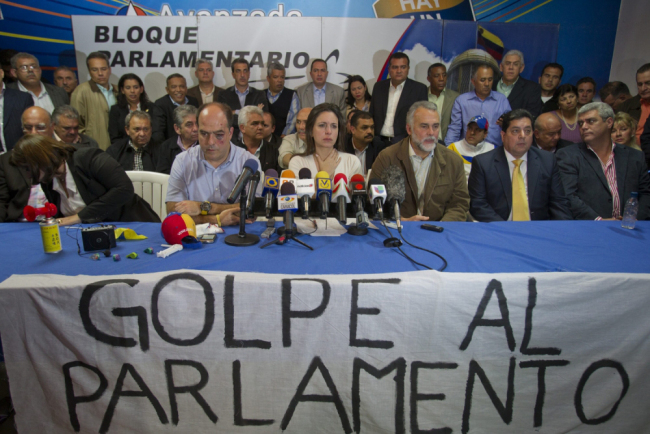
This week: Venezuela stumbles deeper into political chaos after a bloody brawl in Congress; Venezuela’s opposition asks for an investigation into the brawl on the floor of Congress that injured several of its lawmakers and caused at least one of them to undergo surgery; Venezuela’s government charges a US filmmaker for allegedly trying to incite anti-government violence and charges an ex-general for being critical of president Nicolás Maduro; and Maduro visits Cuba to meet with former leader Fidel Castro and re-pledge Venezuela’s allegiance to the island. The government begins a partial audit of the disputed election, though the opposition rejects the move as insufficient; unable to force a sweeping review of the disputed election, Venezuelan opposition supporters march on International Workers Day; opposition leader Henrique Capriles files a lawsuit in Venezuela’s Supreme Court to overturn the election, alleging fraud in the counting of ballots and voter intimidation; and Venezuelans become increasingly upset with daily power outages, growing food scarcities and a general fear of the government. Venezuelan debt remains severe as tensions continue to rise; homicides in Venezuela reach a record high in 2013, as nearly 58 are killed per day during the first four months of the year, highlighting a dire security situation amid political instability; and the sale of Globovisión, Venezuela’s sole television station critical of the government, hurts free speech in Venezuela even further.

Political Chaos Grips Venezuela After Legislative Brawl and Rival Marches, The New York Times

Venezuela stumbled deeper into political chaos this week as legislators brawled in the National Assembly and government supporters and opponents took to the streets for rival marches amid continuing tensions over the narrow election victory of President Nicolás Maduro.

Venezuela Opposition Wants Probe of Violence, The Associated Press

Venezuela’s opposition on Thursday asked prosecutors to investigate a brawl on the floor of congress that injured several of its lawmakers and forced at least one of them to undergo surgery.

Venezuela Charges U.S. Filmmaker, Arrests Ex-General, The Wall Street Journal

Venezuelan authorities brought criminal charges over the weekend against a U.S. filmmaker for allegedly trying to foment antigovernment violence, and arrested a retired Army general who has become a vocal critic of the government.

Venezuela’s New Leader Visits Cuba, Meets With Castro, The Wall Street Journal

Nicolás Maduro met with former Cuban President Fidel Castro in Havana on Saturday, an indication Venezuela’s new president will maintain the same close relations with the Communist island nation as that of his predecessor Hugo Chávez, who died last month after a battle with cancer.

Contentious Venezuela vote audit begins, AFP

Venezuela began a partial audit of the disputed election won by the late Hugo Chavez’s handpicked successor, as the opposition rejected the move as insufficient.

Venezuelan opposition protests vote, The Washington Post

Unable to force a sweeping review of last month’s disputed presidential election, opposition supporters marched in the streets Wednesday to demonstrate their fury at the ruling party’s efforts to blunt a recount.

Venezuelan Opposition Sues to Overturn Election, The Wall Street Journal

Venezuela opposition leader Henrique Capriles filed a lawsuit Thursday with the Supreme Court that seeks to overturn April’s presidential election, alleging fraud in the counting of ballots and pre-election voter intimidation.

Venezuelans on the Brink, Putting Up With Daily Outages, Growing Scarcity and Fear, Fox News Latino

There’s an old joke about the rabbi who explained to his congregants that Adam and Eve were the first communists, because they wore no clothes, had one apple between them, and thought they lived in paradise.

Venezuelan Debt Under Pressure As Tensions Rise, The Wall Street Journal

Abating a week ago, tensions in Venezuela are fast rising again, and it doesn’t bode well for the country’s debt.

Venezuelan Homicides Reach Record High In 2013, InSight Crime

Murders in Venezuela reached a record high of 58 per day during the first four months of the year, according to police figures contested by the government, highlighting a dire security situation amid political instability.

What the Sale of Venezuela’s Opposition TV Station Means for Free Speech, The Atlantic

Globovision is Venezuela’s last-remaining television station that is openly critical of the government of Hugo Chavez, (and his chosen puppet successor Nicolas Maduro) but on April 15, the majority shareholder Guillermo Zuloaga sold his portion to businessman Juan Domingo Cordero, sending both members of the opposition and some journalist rights groups into a frenzy.