Jan
30
2013
Posted by
admin
Comments

Venezuela’s Deadliest Prison Riot Provokes Outrage

130126021907 venezuela prison riot story top1 e1359577489113 Venezuela’s Deadliest Prison Riot Provokes Outrage

Courtesy of: CNN

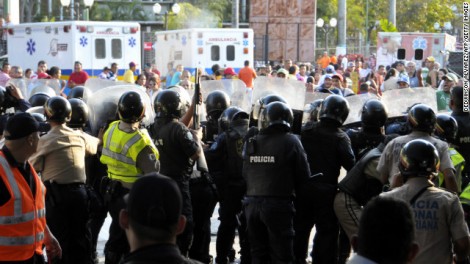
Conditions in Venezuelan prisons have long been known as dangerous and ruthless, among the worst in the hemisphere. But this weekend, in one of the deadliest prison clashes in the nation’s history, the world found out just how mismanaged Venezuela’s prison system really is. According to medical officials, 61 people were killed and 120 injured after violence erupted at the Uribana prison complex, located near the city of Barquisimeto in northwest Venezuela.

The fighting began early Friday morning after troops entered the complex to search for and confiscate illegal weapons. Just two hours into the incursion, the well-armed inmates mounted a resistance; refusing to allow officials to enter the wards. Chaos quickly followed. Venezuelan Penitentiary Service Minister Iris Varela announced the closure of the jail, but it was not until Sunday – two full days later – that authorities finished removing inmates and relocating them among 19 penitentiaries throughout the country. In the meantime, relatives of inmates were left desperately awaiting information from authorities.

Inaugurated in 1999, during Hugo Chávez’s first year in office, Uribana is Venezuela’s largest prison. At that time, the facility was held up as the model of a modern Venezuelan prison. The notion quickly faded, however, as the complex fast became an exemplar of Venezuela’s egregiously overcrowded and poorly-supervised prison system. Minister Varela even admitted on Sunday that 2,459 inmates resided in the prison, in a space built for only 850.

The Uribana tragedy has sparked outrage among human rights watchdogs. The United Nations High Commissioner for Human Rights (UNHCHR) called for a “prompt investigation” to identify those accountable and compensate the relatives of the victims. Direct blame has fallen on Varela, who has failed to make any real progress in curbing violence or reducing the rampant overcrowding of the nation’s prisons.

Already, the Venezuelan government’s response to the tragedy is fraught with political favoritism. Only members of Chávez’s party were allowed to participate in the National Assembly subcommittee charged with investigating the riot. Opposition parties, who have been denied input into the process, have called for the resignation of Varela. Vice President and acting president Nicolás Maduro gave the minister his full support. The ailing Chávez, ensconced in Cuba for nearly two months, remains completely silent on the issue.

Violence in Venezuelan prisons – particularly among rival gangs – has become essentially routine. Overcrowding is at epidemic levels, as thirty-three jails, originally built for 12,000 inmates, now house nearly 47,000 people. Weapons including guns and knives are common and widespread in these prisons, while guards remain absent or ineffectual, allowing lucrative illegal activities to take place. The 61 Venezuelans who died this weekend were hardly the first fatalities of Venezuela’s growing prison crisis. NGOs and human rights watchdogs reported that 560 people were killed in Venezuelan prisons in 2011. According to a Venezuelan rights group, more than 300 people were killed in 2012 as well, including the 25 Venezuelans killed during the highly-publicized standoff at the El Yare I prison facility. So far, however, the government’s response has been marred by political patronage, making it unlikely that the crisis will soon stop.
 
Jan
25
2013
Posted by
admin
Comments

In Case You Missed It… Articles Roundup Week of 1/25/13

el pais newspaper In Case You Missed It… Articles Roundup Week of 1/25/13

Courtesy of: Reuters

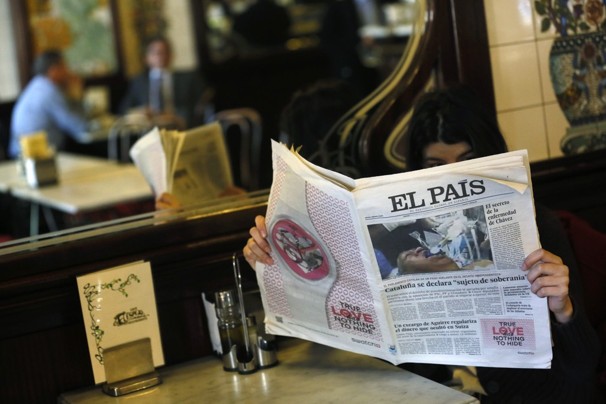
This week: With Hugo Chávez still absent, Venezuela considers a US proposal to return DEA agents kicked out of the country eight years ago; Venezuelan state-run oil company PDSVA’s debt spikes 150% in five years; Venezuela’s high court dismisses request for medical board to assess Chávez’s health condition; and allies and adversaries of Chávez hold separate rallies to mark the anniversary of Venezuela’s democracy. Venezuelan Vice President Nicolás Maduro travels again to Cuba to visit ailing Chávez; amidst uncertainty over Chávez’s health, dozens of nations with favorable oil ties to Venezuela worry about their future; leading Spanish newspaper El País withdraws front-page exclusive photo of Chávez in Cuba saying it’s fake; and Maduro claims to be the target of an assassination plot, but fails to provide proof of the claim. Lastly, trying to fill the void of Chávez’s 45-day absence, the government churns out images, slogans and sound bites of the president; Foreign Minister Elías Jaua admits that Chávez still faces the most complex phase of his recovery after cancer surgery; the Venezuelan government tries to crack down on used cars, one of the last refuges against its growing inflation; and the IMF forecasts a drop in Venezuela’s oil revenue and a reduction of its economic growth.

Envoy says Venezuela open to better ties with U.S., Reuters

Venezuela’s government is open to improving troubled ties with Washington and is considering a U.S. proposal for the return of anti-drug agents kicked out of the country eight years ago by President Hugo Chavez, a senior official said.

Pdvsa’s debt spikes 150% in five years, El Universal

Venezuelan state-run oil company Pdvsa is under significant pressure, amidst its obligations with the central Government and the need to invest in core activities, which has translated into higher debt.

High court president dismisses request for a medical board, El Universal

“We have standing information about the health condition of the Venezuelan president,” Luisa Estella Morales, the president of the Venezuelan Supreme Tribunal of Justice (TSJ), told state-run TV channel Venezolana de Televisión (VTV) on Monday evening during an interview.

Allies and adversaries of Chavez hold separate rallies to mark Venezuela democracy anniversary, Associated Press

Allies of President Hugo Chavez took to the streets of Venezuela’s capital by the thousands on Wednesday to commemorate the anniversary of Venezuela’s democracy amid uncertainty about the president’s health more than six weeks after he underwent cancer surgery in Cuba.

Venezuela VP Maduro Arrives in Havana to Visit Ailing Chavez, Businessweek

Venezuelan Vice President Nicolas Maduro arrived in Havana yesterday to receive instructions from cancer-stricken President Hugo Chavez on a regional summit taking place this week.

Venezuela oil deals: Poor nations worry about future, BBC News

As Venezuela’s President Hugo Chavez continues to receive medical care in Cuba after a fourth cancer operation, many small countries across the region have their own reasons for carefully monitoring his health.

Leading Spanish newspaper El Pais pulls back edition with fake photo of Chavez, Associated Press

Leading Spanish newspaper El Pais says it withdrew and reprinted Thursday’s edition after discovering its front-page exclusive photograph supposedly showing ailing Venezuelan President Hugo Chavez being treated in Cuba was a fake.

Venezuela’s vice president says he’s target of assassination plot, Reuters

Venezuelan Vice President Nicolas Maduro said unidentified groups had entered the country with the aim of assassinating him and the head of the National Assembly as President Hugo Chavez recovers from cancer in Cuba.

Hugo Chavez a potent symbol in Venezuela as cult of personality flourishes during long absence, Associated Press

While Venezuela’s sick president recuperates from surgery behind closed doors in Cuba, at home he is more visible than ever.

Chavez Faces Most Complex Phase of Cancer Recovery, Businessweek

Venezuelan President Hugo Chavez still faces the “most complex” phase of his recovery after cancer surgery last month in Cuba, Foreign Minister Elias Jaua said yesterday after returning from a trip to Havana.

Venezuela Ready to Crack Down on Clunker Car Inflation Refuge, Bloomberg

Venezuela’s government is preparing to crack down on one of the last refuges against the fastest inflation in Latin America — used cars.

IMF forecasts drop in Venezuela’s oil revenues, El Universal

In its World Economic Outlook Update report for 2013, the International Monetary Fund (IMF) cut by 0.3% its growth projection for Latin America and the Caribbean, and estimated growth in the region at 3.6%, AP cited.

 
Jan
23
2013
Posted by
admin
Comments

ICYMI: The Missing President

The New York Times
January 22, 2013
By Alberto Barrera Tyszka and Cristina Marcano

hugo chavez life support coma1 ICYMI: The Missing President

Courtesy of: Associated Press

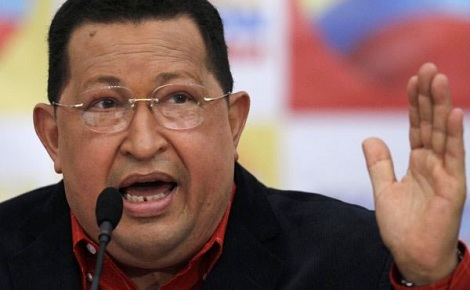
ON Jan. 10, while Hugo Chávez lay in a hospital bed in Havana, he was symbolically sworn in as Venezuela’s new president in a ceremony here. The crowd that attended his virtual inauguration was moved to tears by a recording of Mr. Chávez’s singing the national anthem. The country is experiencing the very odd circumstance of being both with and without its leader; he is not here, but his voice endures.

From the intensive care unit, the president “continues to perform his duties”; he gives orders and sends kisses to children. This is what his vice president says. According to the Supreme Court, the Congress cannot consider him absent, for no matter how ill he is, only Mr. Chávez himself has the authority to declare himself absent. The opposition is demanding a “fe de vida” — proof that he is still alive, as if he were a kidnapping victim. Day after day, on the street, on Twitter, our president dies and comes back to life. But this is not a magical realist novel.

After 14 years as president, Mr. Chávez controls all public powers: the legislative body, the Supreme Court, the public prosecutor’s office, to say nothing of the oil industry. Of all those who have held office since the end of the military dictatorship in 1958, none has concentrated power quite as Mr. Chávez has.

From the moment he won his first election, he knew that he had not made it to the presidency in order to run a sound government. He had come to change the course of history. In the name of the dispossessed, he revived the ghost of the South American military caudillo, creating a new version of that traditional strongman. He sings ranchera songs on Sunday and negotiates with Iran on Monday. He is a child of the telenovela who invokes the old-fashioned left. As president he deftly combines power with melodrama.

He astutely took advantage of the failure of neoliberalism and the traditional elites, as well as the antipolitical climate at the time, promising to democratize the country’s oil income and eliminate deep social inequalities. And riding the wave of an oil boom, he secured the loyalty of the poor.

But his “21st century socialism” is a populist, patronage-oriented model that depends less on ideology than it does on the price of a barrel of crude. He has managed to revive the illusion of a sustainable society that distributes rather than creates wealth. And thanks to this illusion, he has been able to maintain his ironclad grip on power.

Last October’s elections gave him the chance to complete, “democratically,” 20 years as president. “Veinte años no es nada,” he said — a line from a famous tango song meaning “20 years is nothing.” More than eight million voters seemed to agree with him; probably around the number of people who have benefited from his administration’s social programs, which are called, rather religiously, “missions.” (Though the government says the number is much higher.)

Venezuelans today are less poor than they once were. But they are also far more dependent on the state, and more susceptible to a propaganda machine that attributes this “miracle” to Mr. Chávez. Over the past decade, his government has invested around $400 billion in social spending, an oil-infused luxury that few countries in the region have ever been able to indulge in.

There is one element of the Chávez leadership, however, that is no different from any of Latin America’s other personality-driven authoritarian regimes: its messianic nature. “With Chávez, everything; without Chávez, nothing,” is the government’s official slogan. “We are all Chávez” is its battle cry and love song. Over time, the state has built a powerful industry around the cult of personality. Few Venezuelans will ever forget the moment when Mr. Chávez, in a televised event at a church, implored Jesus Christ for more days on earth. Now, following an uncertain convalescence in Cuba that is being closely monitored by the Castro brothers, the president of Venezuela is already a myth on his way to consecration.

When he does go, many will feel orphaned. He fashioned himself into the axis around which the life of the country revolved, and his unique brand of authority will, without his physical presence, be very difficult to maintain. His absence will create a void in a society that was forced to divide and organize itself in two blocks: for or against Chávez. The propaganda machine that has turned Mr. Chávez into a religious talisman will not necessarily serve to legitimize the many pretenders, including his chosen successor, Vice President Nicolás Maduro, who are waiting to inherit his charismatic legacy.

That legacy, of course, is more than pure messianic zeal. Mr. Chávez will leave behind a country plagued with problems. With deep political divisions. With an appalling level of violence, including around 21,000 homicides last year. With the wild economic distortions that come from having some of the highest inflation on the continent and the cheapest gasoline on the planet. With dwindling productivity, an overvalued currency and an enormous foreign debt load. With unchecked public spending, and still one great dream that has yet to be fulfilled: the illusion of eliminating poverty forever.

To this end, absence might be just what Hugo Chávez needs to save him from his own failure. Myths survive only when they rise above the miseries of reality.

To read this article at The New York Times, please click here.