Jan
23
2013
Posted by
admin
Comments

ICYMI: The Missing President

The New York Times
January 22, 2013
By Alberto Barrera Tyszka and Cristina Marcano
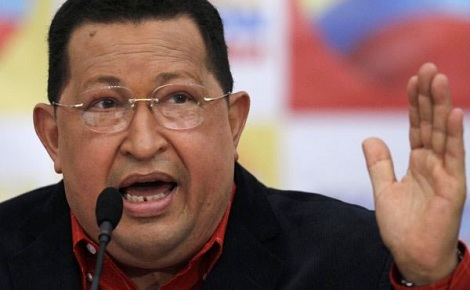
hugo chavez life support coma1 ICYMI: The Missing President

Courtesy of: Associated Press

ON Jan. 10, while Hugo Chávez lay in a hospital bed in Havana, he was symbolically sworn in as Venezuela’s new president in a ceremony here. The crowd that attended his virtual inauguration was moved to tears by a recording of Mr. Chávez’s singing the national anthem. The country is experiencing the very odd circumstance of being both with and without its leader; he is not here, but his voice endures.

From the intensive care unit, the president “continues to perform his duties”; he gives orders and sends kisses to children. This is what his vice president says. According to the Supreme Court, the Congress cannot consider him absent, for no matter how ill he is, only Mr. Chávez himself has the authority to declare himself absent. The opposition is demanding a “fe de vida” — proof that he is still alive, as if he were a kidnapping victim. Day after day, on the street, on Twitter, our president dies and comes back to life. But this is not a magical realist novel.

After 14 years as president, Mr. Chávez controls all public powers: the legislative body, the Supreme Court, the public prosecutor’s office, to say nothing of the oil industry. Of all those who have held office since the end of the military dictatorship in 1958, none has concentrated power quite as Mr. Chávez has.

From the moment he won his first election, he knew that he had not made it to the presidency in order to run a sound government. He had come to change the course of history. In the name of the dispossessed, he revived the ghost of the South American military caudillo, creating a new version of that traditional strongman. He sings ranchera songs on Sunday and negotiates with Iran on Monday. He is a child of the telenovela who invokes the old-fashioned left. As president he deftly combines power with melodrama.

He astutely took advantage of the failure of neoliberalism and the traditional elites, as well as the antipolitical climate at the time, promising to democratize the country’s oil income and eliminate deep social inequalities. And riding the wave of an oil boom, he secured the loyalty of the poor.

But his “21st century socialism” is a populist, patronage-oriented model that depends less on ideology than it does on the price of a barrel of crude. He has managed to revive the illusion of a sustainable society that distributes rather than creates wealth. And thanks to this illusion, he has been able to maintain his ironclad grip on power.

Last October’s elections gave him the chance to complete, “democratically,” 20 years as president. “Veinte años no es nada,” he said — a line from a famous tango song meaning “20 years is nothing.” More than eight million voters seemed to agree with him; probably around the number of people who have benefited from his administration’s social programs, which are called, rather religiously, “missions.” (Though the government says the number is much higher.)

Venezuelans today are less poor than they once were. But they are also far more dependent on the state, and more susceptible to a propaganda machine that attributes this “miracle” to Mr. Chávez. Over the past decade, his government has invested around $400 billion in social spending, an oil-infused luxury that few countries in the region have ever been able to indulge in.

There is one element of the Chávez leadership, however, that is no different from any of Latin America’s other personality-driven authoritarian regimes: its messianic nature. “With Chávez, everything; without Chávez, nothing,” is the government’s official slogan. “We are all Chávez” is its battle cry and love song. Over time, the state has built a powerful industry around the cult of personality. Few Venezuelans will ever forget the moment when Mr. Chávez, in a televised event at a church, implored Jesus Christ for more days on earth. Now, following an uncertain convalescence in Cuba that is being closely monitored by the Castro brothers, the president of Venezuela is already a myth on his way to consecration.

When he does go, many will feel orphaned. He fashioned himself into the axis around which the life of the country revolved, and his unique brand of authority will, without his physical presence, be very difficult to maintain. His absence will create a void in a society that was forced to divide and organize itself in two blocks: for or against Chávez. The propaganda machine that has turned Mr. Chávez into a religious talisman will not necessarily serve to legitimize the many pretenders, including his chosen successor, Vice President Nicolás Maduro, who are waiting to inherit his charismatic legacy.

That legacy, of course, is more than pure messianic zeal. Mr. Chávez will leave behind a country plagued with problems. With deep political divisions. With an appalling level of violence, including around 21,000 homicides last year. With the wild economic distortions that come from having some of the highest inflation on the continent and the cheapest gasoline on the planet. With dwindling productivity, an overvalued currency and an enormous foreign debt load. With unchecked public spending, and still one great dream that has yet to be fulfilled: the illusion of eliminating poverty forever.

To this end, absence might be just what Hugo Chávez needs to save him from his own failure. Myths survive only when they rise above the miseries of reality.

To read this article at The New York Times, please click here.

 
Aug
29
2012
Posted by
admin
Comments

Venezuela’s Chávez faces new election threat — a run of calamities

In recent weeks, Venezuelan President Hugo Chávez has faced prison riots, a bridge collapse and the country’s most lethal oil-industry disaster. Some wonder if the woes will stick to the Teflon comandante.

The Miami Herald

August 29, 2012

By Jim Wyss | [email protected]

MDG Venezuela President 008 300x180 Venezuelas Chávez faces new election threat — a run of calamities

Courtesy of: Leo Ramirez / AFP

BOGOTA — It’s been a rough month for Venezuelan President Hugo Chávez. In less than two weeks, he has had to deal with a deadly prison riot, a collapsing bridge, flooding, an embarrassing confrontation with steel workers on live TV and the country’s worst oil-industry disaster, which killed at least 41 and still has families digging through the rubble looking for loved ones.

The avalanche of bad news would be hard on any leader, but this train of troubles comes as Chávez, 58, is heading into an Oct. 7 presidential race that polls suggest is getting tighter.

For the last 14 years in office, Chávez has played the roll of an energetic leader with a common touch. Even when his administration had missteps, voters rarely held their charismatic comandante accountable.

But the scale of this month’s calamities might change that dynamic, said Xavier Rodríguez Franco with Entorno Parlamentario, a legislative watchdog group.

“The events the country has had to face recently clearly show a breakdown in the government’s ability to manage,” he said “And that breakdown is dragging down the president’s image.”

Chávez’s days of discontent started Aug. 15 when a vital bridge connecting Caracas to eastern Venezuela collapsed. Four days later, gangs at the Yare I penitentiary confronted each other with guns and explosives leaving 26 dead, including a visiting family member. It was an embarrassment for an administration that has declared prison security one of its top concerns but has been unable to staunch the bleeding. During the first half of this year, 304 inmates have been killed and 572 have been injured, according to the Inter-American Commission on Human Rights, which called on the government to step up efforts to disarm prisoners.

The following day, Chávez traveled to the city of Guyana to hold a live broadcast — carried on all TV and radio stations — with workers of the state-run Sidor steel plant. Presidential cadenas are usually tightly scripted and designed to highlight government achievements, and they’re a key part of Chávez reelection strategy.

That’s why Venezuelans were surprised to see steel workers shout over the president and complain that the government hadn’t renewed their labor contract, which expired over two years ago. Amid the commotion, Chávez’s microphone was cut and the broadcast abruptly ended. It was the first time that anyone could recall a cadena being cancelled mid-transmission.

That the outburst took place in a Chávez stronghold (he won 68.8 percent of the vote in Bolivar state in 2006) only underscored the sense of malaise.

Russ Dallen, managing partner at Caracas Capital Markets financial firm, said Chávez appears to be distracted by his battle with an undisclosed form of cancer — which dates back to at least June 2011 — and which the president claims to have beaten.

“This is not the Chávez we have come to know over the last decade and a half,” he said. “Clearly, his illness has affected him and he’s not the maximum leader he has been in the past. And that’s why you see so many things collapsing, and this time the problems are sticking.”

But all the troubles were overshadowed early Saturday, when a huge fireball erupted at the   refinery, part of the nation’s largest refinery complex. The blast left 151 wounded and homes leveled.

The government said the plant would be operating again within two days, but the fire was only subdued on Tuesday and the administration now says it won’t be operational until Friday.

Critics blame Chávez, who they say has used the state-run oil company PDVSA, which operates the refinery, as a cash-cow for his pet projects even as it neglects maintenance and repairs.

In 2011, the company invested $39.6 billion in popular social programs, including $4 billion in the government’s housing program. But seven out of nine maintenance programs planned for Amuay that year were postponed due to lack of materials, wrote Daniel Kerner, with the New York-based Eurasia Group, citing PDVSA’s 2011 annual report.

The Amuay accident “highlights PDVSA’s significant operational problems stemming from both severe mismanagement and underinvestment,” he wrote. “In recent years, the firm has become a key financing arm for President Hugo Chávez’s social programs limiting PDVSA’s investment capacity in a context where crude production… has steadily declined.”

The man fighting Chávez for the presidency, Henrique Capriles, 40, has called for full investigations into Amuay, the jailhouse riot and the bridge collapse. Earlier this week, he likened the string of problems to a disaster film.

“This isn’t a movie that unfolds chapter by chapter,” he said. “It’s unconscionable that the government’s candidate [Chávez] can irresponsibly and insensibly say that the show must go on.”

For the moment, Chávez is leading most polls. Datanalisis, a closely followed pollster, has Capriles with 34.3 percent of the vote and gaining versus Chávez’s 46.8 percent. Consultores 21, another major polling firm, however, shows Capriles with a thin lead, at 47.7 percent versus Chávez’s 45.9 percent.

It’s too early to tell if August’s woes will move those numbers. But Kerner predicted the Amuay disaster is “probably not a game changer…Chavez still remains favored to win, but the accident could sway some undecided voters.”

Chávez has pledged millions in aid and offered to build thousands of new homes for Amuay residents. He’s also trying to turn the tables, accusing opponents of being “vultures” who want to turn disaster into political gain.

“Just as we see streams of foam putting out the fire in Amuay,” he said this week, “the bourgeoisie is also using disgraceful streams to try to put out our patriotic fire and fervor.”

To read this article on The Miami Herald, please click here.

 
Aug
13
2012
Posted by
admin
Comments

What’s Next Venezuela Election Update: August 13, 2012

Venezuelan opposition candidate Capriles Radonski What’s Next Venezuela Election Update: August 13, 2012

Courtesy of: AFP

The CNE’s attack on opposition candidate Henrique Capriles’ use of a hat with the Venezuelan reveals just how far Hugo Chávez is willing to go to tilt the electoral playing field in his favor. More controversy was also stirred up when Chávez accused Capriles, the grandson of a Holocaust survivor, of having ties to Nazi groups, then doubled down on the attack again this weekend. Chávez’s economic policies have disillusioned many of his former supporters, as they have caused food shortages and raised the prices of fruits and vegetables. On the campaign trail, Capriles promises to encourage production to solve these problems. Meanwhile, analysts say that any new government will be faced with the serious task of reforming Venezuela’s bloated and ineffective oil industry — if such reform does not occur, Venezuela will face serious economic consequences.

A Feather in Capriles’s Cap, International Herald Tribune

Venezuela’s campaign for the presidential contest of Oct. 7 descended into farce last week when election officials chastised the opposition for abusing campaign rules.

Venezuela candidate slams Chavez’s Nazi accusations, AFP

Venezuela’s leading opposition candidate — whose grandmother is a Holocaust survivor — on Tuesday slammed President Hugo Chavez’s accusations that he is tied to Nazi groups.

Chavez Reiterates Claim Capriles Was a Member of a Fascist Group, Bloomberg

Venezuelan President Hugo Chavez reiterated his claim that rival Henrique Capriles Radonski is a fascist who belonged to a neo-Nazi group in his youth, days after Capriles asked him to respect his Jewish background.

Venezuelan food shortages bode ill for Chavez’s re-election, USA Today

A year ago, Romero’s fields overlooking the Tacarigua Valley were neatly lined with green onions, peppers and tomatoes. Today, they are knotted with weeds.

Capriles: “Oil is the only income source we rely on”, El Universal

Addressing local residents during a rally in the state of Mérida, west Venezuela, opposition presidential candidate Henrique Capriles Radonski spoke about the Venezuelan economic situation, and stressed that “oil is the only revenue source we rely on.”

The Venezuelan Elections: How Can PDVSA Recover?, Journal of Energy Security

The Venezuelan oil industry can be pictured as a toothless tiger resting on its haunches before a huge slice of raw meat.