May
8
2013
Posted by
admin
Comments

Nicolás Maduro off to an inauspicious start as Venezuela’s dubiously-elected president

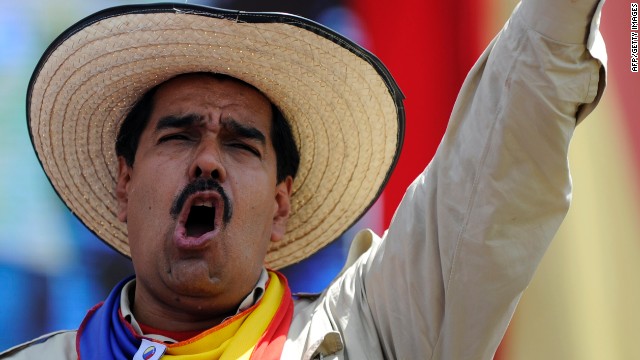
Nicolas Maduro e1368042661461 Nicolás Maduro off to an inauspicious start as Venezuela’s dubiously elected president

Courtesy of: Agence France Presse

Almost immediately after Venezuela’s partisan electoral authority declared Nicolás Maduro the winner of last month’s presidential election, he and his ruling PSUV party faced a choice that may yet define Venezuela’s future for years to come. Reports of thousands of irregularities in the voting process, including suspicions of fraud, sparked fears about the election’s legitimacy. The actions of Maduro – who first consented to the opposition’s calls for a full and transparent recount, later issued a hasty retraction, and then began a crackdown on peaceful opposition protestors – has only deepened those fears.

Maduro’s desperation is perhaps well-founded: a poll today found that a majority of Venezuelans believe the country is on the wrong track and, if given the chance, most would now choose Henrique Capriles for president over Maduro. The uncertainty and repression surrounding the Venezuelan election has grown so egregious that President Obama has abstained from recognizing Maduro as the winner. The President observed that the “entire hemisphere has been watching the violence, the protests, the crackdowns on the opposition.” ABC reports:

President Barack Obama avoided recognizing the government of Venezuela during an interview with Univision, explaining that he was concerned about recent “crackdowns” against members of the Venezuelan opposition. He also said that recent reports suggest that basic principles of democracy and human rights are not being fully observed by Venezuela’s government.

Obama and the U.S. State Department are among a growing chorus calling for a full and transparent recount of the Venezuelan election, a chorus that now includes the Organization of American States, former Colombian president Alvaro Uribe, and internationally-respected human rights watchdog groups. Though Maduro may lack Hugo Chávez’s charisma and support among Venezuelans, he evinces the same contempt for the international community.  That contempt, combined with Maduro’s increasingly flagrant repression of his own people, mean that recent weeks for Venezuela have been turbulent indeed.

It’s hard to deny that Maduro’s “election” lacks legitimacy, before the eyes of both Venezuelans and the world. The partial audit the government agreed to is viewed as little more than a public relations gesture, and hardly sufficient to investigate the serious voting irregularities that led many to wonder whether Capriles was the election’s true winner.

As those doubts grow, Maduro has flexed the government’s authoritarian muscle to stifle dissent and cow the opposition into obedience. The state-run media – which recently tightened its grip on the airwaves by purchasing the previously-independent TV station Globovision – has dutifully propagandized on behalf of Maduro; the government recently severed the video feed of a Capriles speech, preventing the opposition leader from making his case to Venezuelans.

Such tactics haven’t prevented the opposition from making their voice heard. The din of “Cacerola” protests resounds throughout the country. Capriles has filed an official protest with the country’s Supreme Court which, comprised of Maduro’s political allies, is unlikely to intervene. Maduro and the PSUV have met these peaceful expressions of dissent, however, with strongman tactics. Capriles called off an opposition March after the government issued a veiled-threat of violence against the protestors. Opposition lawmakers have been barred from speaking in the National Assembly. And a bloody brawl in the National Assembly injured 17 opposition lawmakers. Now the government has intimated it may throw Capriles in jail.

Such tactics, though they fly in the face of democracy and human rights, at least demonstrate that Maduro is feeling the pressure. The Economist opined after the election that “without Chávez at the helm, chavismo, a noxious cocktail of populism, incompetence and repression, is a far less potent force.” Nicolas Maduro cannot strong-arm his way to legitimacy. But that hasn’t stopped him trying.
 
Apr
26
2013
Posted by
admin
Comments

In Case You Missed It… Articles Roundup Week of 4/26/13

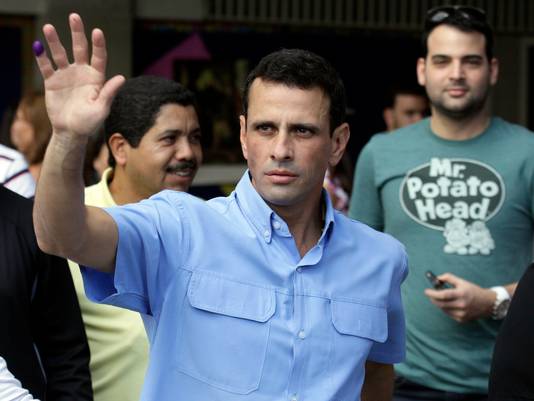
ap venezuela elections 4 3 r536 c534 e1367013802989 In Case You Missed It… Articles Roundup Week of 4/26/13

Courtesy of: Associated Press

This week:  After a controversial election and numerous protests, Nicolás Maduro’s presidency is off to a rocky start; shortly after his inauguration, Maduro shuffles his cabinet, keeping most of Hugo Chávez’s allies and key players; Venezuela’s electoral council and opposition leader Henrique Capriles express widely different expectations for the audit of the contested election; as a result, Capriles announces that the opposition will boycott the election audit because the Electoral Council failed to meet its demand for an examination of the “registers,” which contain voters’ signatures and fingerprints; and Capriles is threatened with jail as the opposition shows government claims of post-election violence to be exaggerated. Venezuela’s opposition accuses the government of engaging in mass arrests of protesters and harassment of government workers suspected of voting against Maduro; the government deals with accusations they exaggerated claims of opposition supporters firebombing Cuban-run neighborhood health clinics; Venezuela’s political climate and unrest worry Pope Francis, who urged politicians to reject any kind of violence and establish dialogue towards a reconciliation; and already with one of the world’s highest murder rates, political violence gets added to the mix of an already crime-ridden Venezuela. The Venezuelan government cuts off Capriles TV speech after he accused the government of robbing the election; Venezuela’s government arrests a US filmmaker, accusing him of plotting post-election instability; Venezuela’s Congressional Speaker, Diosdado Cabello, announces that government employees refusing to recognize Maduro as the legitimate president will not be paid; and Venezuela declares a 90-day electricity emergency amid unrest towards country-wide blackouts.

Maduro’s lousy start, The Economist

HUGO CHÁVEZ has been dead for more than a month, but visitors to Caracas could be forgiven for thinking that Venezuela’s bombastic former president was still alive and in power.

Shortly after narrow election victory, Venezuela’s Nicolas Maduro shuffles Cabinet, Fox News

Newly elected Venezuelan leader Nicolas Maduro has shuffled his Cabinet, putting allies of late president Hugo Chavez in positions to tackle pressing problems including widespread power outages and double-digit inflation.

Opposition, election body differ on Venezuela vote audit, Chicago Tribune

Venezuela’s opposition and electoral authority expressed on Saturday widely differing expectations for an audit of the contested April 14 presidential election, a day after Nicolas Maduro was sworn in to succeed the late Hugo Chavez.

Venezuela opposition to boycott vote audit, USA Today

Venezuelan opposition leader Henrique Capriles Radonski said Thursday his movement will boycott an audit of the election results and push the government to hold a new presidential vote.

Venezuela: Capriles Threatened With Jail As Inquiry Into Election Violence Continues, Fox News Latino

The contested presidential election in Venezuela that saw Hugo Chávez’s successor maintain control of the South American nation has shed light on the deep ideological divide within the country and raised questions over the legitimacy of Venezuela’s state-run media.

Venezuela opposition denounces arrests of protesters, AFP

Venezuela’s opposition Saturday accused the government of President Nicolas Maduro of engaging in mass arrests of protesters and harassing government workers suspected of voting against him.

Venezuelan Govt Targets Disaffected Ex-Supporters, The Associated Press

The razor-close vote to replace late Venezuelan President Hugo Chavez has sparked what opposition leaders and human rights groups say is a government crackdown on public employees who either didn’t back Chavez’s hand-picked successor or failed to show sufficient support for the ruling party.

Venezuela’s Political Climate Worries Pope Francis, Fox News Latino

While he no longer resides in the region, the first pope from South America says he is worried about the political unrest in Venezuela.

Political violence threatens crime-ridden Venezuela, AFP

With one of the world’s highest murder rates, Venezuela’s daily Russian roulette with violent crime now has an added spin: the threat of political violence due to the country’s election impasse.

Venezuela Cuts Off Capriles’s TV Speech Over ‘Robbed’ Election, Bloomberg Businessweek

Venezuela cut off the transmission of a speech by opposition leader Henrique Capriles Radonski yesterday using a system of national broadcasts known as “cadena” after he said this month’s election was “robbed.”

Venezuela Says U.S. Citizen Plotted Unrest, NYTimes.com

An American citizen has been arrested by Venezuelan authorities who said Thursday that he had been taken into custody because he was involved in a plot to destabilize the country after the recent presidential election.

Congress Speaker: Deputies not recognizing Maduro will not be paid, El Universal

During a visit to the state of Anzoátegui, northeast Venezuela, Congress Speaker Diosdado Cabello announced that any deputies failing to recognize Nicolás Maduro as the new president would not be paid.

Venezuela Declares 90-Day Electricity ‘Emergency’, Reuters

President Nicolas Maduro’s government declared a 90-day “emergency” in Venezuela’s electricity sector on Tuesday to speed up infrastructure work and equipment imports needed to prevent politically-contentious power cuts.

 
Aug
29
2012
Posted by
admin
Comments

Venezuela’s Chávez faces new election threat — a run of calamities

In recent weeks, Venezuelan President Hugo Chávez has faced prison riots, a bridge collapse and the country’s most lethal oil-industry disaster. Some wonder if the woes will stick to the Teflon comandante.

The Miami Herald

August 29, 2012

By Jim Wyss | [email protected]

MDG Venezuela President 008 300x180 Venezuelas Chávez faces new election threat — a run of calamities

Courtesy of: Leo Ramirez / AFP

BOGOTA — It’s been a rough month for Venezuelan President Hugo Chávez. In less than two weeks, he has had to deal with a deadly prison riot, a collapsing bridge, flooding, an embarrassing confrontation with steel workers on live TV and the country’s worst oil-industry disaster, which killed at least 41 and still has families digging through the rubble looking for loved ones.

The avalanche of bad news would be hard on any leader, but this train of troubles comes as Chávez, 58, is heading into an Oct. 7 presidential race that polls suggest is getting tighter.

For the last 14 years in office, Chávez has played the roll of an energetic leader with a common touch. Even when his administration had missteps, voters rarely held their charismatic comandante accountable.

But the scale of this month’s calamities might change that dynamic, said Xavier Rodríguez Franco with Entorno Parlamentario, a legislative watchdog group.

“The events the country has had to face recently clearly show a breakdown in the government’s ability to manage,” he said “And that breakdown is dragging down the president’s image.”

Chávez’s days of discontent started Aug. 15 when a vital bridge connecting Caracas to eastern Venezuela collapsed. Four days later, gangs at the Yare I penitentiary confronted each other with guns and explosives leaving 26 dead, including a visiting family member. It was an embarrassment for an administration that has declared prison security one of its top concerns but has been unable to staunch the bleeding. During the first half of this year, 304 inmates have been killed and 572 have been injured, according to the Inter-American Commission on Human Rights, which called on the government to step up efforts to disarm prisoners.

The following day, Chávez traveled to the city of Guyana to hold a live broadcast — carried on all TV and radio stations — with workers of the state-run Sidor steel plant. Presidential cadenas are usually tightly scripted and designed to highlight government achievements, and they’re a key part of Chávez reelection strategy.

That’s why Venezuelans were surprised to see steel workers shout over the president and complain that the government hadn’t renewed their labor contract, which expired over two years ago. Amid the commotion, Chávez’s microphone was cut and the broadcast abruptly ended. It was the first time that anyone could recall a cadena being cancelled mid-transmission.

That the outburst took place in a Chávez stronghold (he won 68.8 percent of the vote in Bolivar state in 2006) only underscored the sense of malaise.

Russ Dallen, managing partner at Caracas Capital Markets financial firm, said Chávez appears to be distracted by his battle with an undisclosed form of cancer — which dates back to at least June 2011 — and which the president claims to have beaten.

“This is not the Chávez we have come to know over the last decade and a half,” he said. “Clearly, his illness has affected him and he’s not the maximum leader he has been in the past. And that’s why you see so many things collapsing, and this time the problems are sticking.”

But all the troubles were overshadowed early Saturday, when a huge fireball erupted at the   refinery, part of the nation’s largest refinery complex. The blast left 151 wounded and homes leveled.

The government said the plant would be operating again within two days, but the fire was only subdued on Tuesday and the administration now says it won’t be operational until Friday.

Critics blame Chávez, who they say has used the state-run oil company PDVSA, which operates the refinery, as a cash-cow for his pet projects even as it neglects maintenance and repairs.

In 2011, the company invested $39.6 billion in popular social programs, including $4 billion in the government’s housing program. But seven out of nine maintenance programs planned for Amuay that year were postponed due to lack of materials, wrote Daniel Kerner, with the New York-based Eurasia Group, citing PDVSA’s 2011 annual report.

The Amuay accident “highlights PDVSA’s significant operational problems stemming from both severe mismanagement and underinvestment,” he wrote. “In recent years, the firm has become a key financing arm for President Hugo Chávez’s social programs limiting PDVSA’s investment capacity in a context where crude production… has steadily declined.”

The man fighting Chávez for the presidency, Henrique Capriles, 40, has called for full investigations into Amuay, the jailhouse riot and the bridge collapse. Earlier this week, he likened the string of problems to a disaster film.

“This isn’t a movie that unfolds chapter by chapter,” he said. “It’s unconscionable that the government’s candidate [Chávez] can irresponsibly and insensibly say that the show must go on.”

For the moment, Chávez is leading most polls. Datanalisis, a closely followed pollster, has Capriles with 34.3 percent of the vote and gaining versus Chávez’s 46.8 percent. Consultores 21, another major polling firm, however, shows Capriles with a thin lead, at 47.7 percent versus Chávez’s 45.9 percent.

It’s too early to tell if August’s woes will move those numbers. But Kerner predicted the Amuay disaster is “probably not a game changer…Chavez still remains favored to win, but the accident could sway some undecided voters.”

Chávez has pledged millions in aid and offered to build thousands of new homes for Amuay residents. He’s also trying to turn the tables, accusing opponents of being “vultures” who want to turn disaster into political gain.

“Just as we see streams of foam putting out the fire in Amuay,” he said this week, “the bourgeoisie is also using disgraceful streams to try to put out our patriotic fire and fervor.”

To read this article on The Miami Herald, please click here.