Courtesy of: Agence France Presse
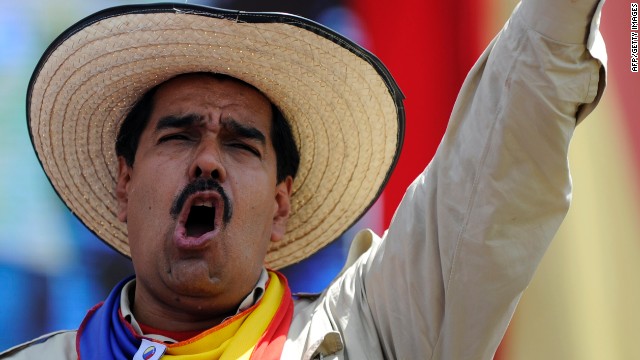
Almost immediately after Venezuela’s partisan electoral authority declared Nicolás Maduro the winner of last month’s presidential election, he and his ruling PSUV party faced a choice that may yet define Venezuela’s future for years to come. Reports of thousands of irregularities in the voting process, including suspicions of fraud, sparked fears about the election’s legitimacy. The actions of Maduro – who first consented to the opposition’s calls for a full and transparent recount, later issued a hasty retraction, and then began a crackdown on peaceful opposition protestors – has only deepened those fears.
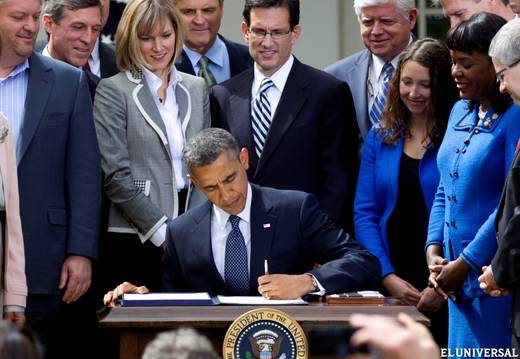
Maduro’s desperation is perhaps well-founded: a poll today found that a majority of Venezuelans believe the country is on the wrong track and, if given the chance, most would now choose Henrique Capriles for president over Maduro. The uncertainty and repression surrounding the Venezuelan election has grown so egregious that President Obama has abstained from recognizing Maduro as the winner. The President observed that the “entire hemisphere has been watching the violence, the protests, the crackdowns on the opposition.” ABC reports:
President Barack Obama avoided recognizing the government of Venezuela during an interview with Univision, explaining that he was concerned about recent “crackdowns” against members of the Venezuelan opposition. He also said that recent reports suggest that basic principles of democracy and human rights are not being fully observed by Venezuela’s government.
Obama and the U.S. State Department are among a growing chorus calling for a full and transparent recount of the Venezuelan election, a chorus that now includes the Organization of American States, former Colombian president Alvaro Uribe, and internationally-respected human rights watchdog groups. Though Maduro may lack Hugo Chávez’s charisma and support among Venezuelans, he evinces the same contempt for the international community. That contempt, combined with Maduro’s increasingly flagrant repression of his own people, mean that recent weeks for Venezuela have been turbulent indeed.
It’s hard to deny that Maduro’s “election” lacks legitimacy, before the eyes of both Venezuelans and the world. The partial audit the government agreed to is viewed as little more than a public relations gesture, and hardly sufficient to investigate the serious voting irregularities that led many to wonder whether Capriles was the election’s true winner.
As those doubts grow, Maduro has flexed the government’s authoritarian muscle to stifle dissent and cow the opposition into obedience. The state-run media – which recently tightened its grip on the airwaves by purchasing the previously-independent TV station Globovision – has dutifully propagandized on behalf of Maduro; the government recently severed the video feed of a Capriles speech, preventing the opposition leader from making his case to Venezuelans.
Such tactics haven’t prevented the opposition from making their voice heard. The din of “Cacerola” protests resounds throughout the country. Capriles has filed an official protest with the country’s Supreme Court which, comprised of Maduro’s political allies, is unlikely to intervene. Maduro and the PSUV have met these peaceful expressions of dissent, however, with strongman tactics. Capriles called off an opposition March after the government issued a veiled-threat of violence against the protestors. Opposition lawmakers have been barred from speaking in the National Assembly. And a bloody brawl in the National Assembly injured 17 opposition lawmakers. Now the government has intimated it may throw Capriles in jail.
Such tactics, though they fly in the face of democracy and human rights, at least demonstrate that Maduro is feeling the pressure. The Economist opined after the election that “without Chávez at the helm, chavismo, a noxious cocktail of populism, incompetence and repression, is a far less potent force.” Nicolas Maduro cannot strong-arm his way to legitimacy. But that hasn’t stopped him trying.