Jan
23
2013
Posted by
admin
Comments

ICYMI: The Missing President

The New York Times
January 22, 2013
By Alberto Barrera Tyszka and Cristina Marcano
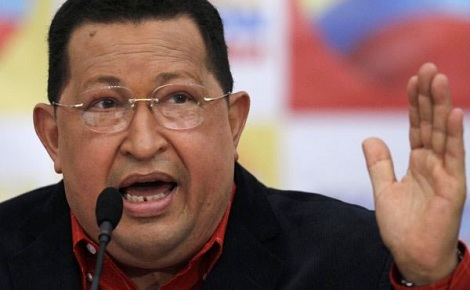
hugo chavez life support coma1 ICYMI: The Missing President

Courtesy of: Associated Press

ON Jan. 10, while Hugo Chávez lay in a hospital bed in Havana, he was symbolically sworn in as Venezuela’s new president in a ceremony here. The crowd that attended his virtual inauguration was moved to tears by a recording of Mr. Chávez’s singing the national anthem. The country is experiencing the very odd circumstance of being both with and without its leader; he is not here, but his voice endures.

From the intensive care unit, the president “continues to perform his duties”; he gives orders and sends kisses to children. This is what his vice president says. According to the Supreme Court, the Congress cannot consider him absent, for no matter how ill he is, only Mr. Chávez himself has the authority to declare himself absent. The opposition is demanding a “fe de vida” — proof that he is still alive, as if he were a kidnapping victim. Day after day, on the street, on Twitter, our president dies and comes back to life. But this is not a magical realist novel.

After 14 years as president, Mr. Chávez controls all public powers: the legislative body, the Supreme Court, the public prosecutor’s office, to say nothing of the oil industry. Of all those who have held office since the end of the military dictatorship in 1958, none has concentrated power quite as Mr. Chávez has.

From the moment he won his first election, he knew that he had not made it to the presidency in order to run a sound government. He had come to change the course of history. In the name of the dispossessed, he revived the ghost of the South American military caudillo, creating a new version of that traditional strongman. He sings ranchera songs on Sunday and negotiates with Iran on Monday. He is a child of the telenovela who invokes the old-fashioned left. As president he deftly combines power with melodrama.

He astutely took advantage of the failure of neoliberalism and the traditional elites, as well as the antipolitical climate at the time, promising to democratize the country’s oil income and eliminate deep social inequalities. And riding the wave of an oil boom, he secured the loyalty of the poor.

But his “21st century socialism” is a populist, patronage-oriented model that depends less on ideology than it does on the price of a barrel of crude. He has managed to revive the illusion of a sustainable society that distributes rather than creates wealth. And thanks to this illusion, he has been able to maintain his ironclad grip on power.

Last October’s elections gave him the chance to complete, “democratically,” 20 years as president. “Veinte años no es nada,” he said — a line from a famous tango song meaning “20 years is nothing.” More than eight million voters seemed to agree with him; probably around the number of people who have benefited from his administration’s social programs, which are called, rather religiously, “missions.” (Though the government says the number is much higher.)

Venezuelans today are less poor than they once were. But they are also far more dependent on the state, and more susceptible to a propaganda machine that attributes this “miracle” to Mr. Chávez. Over the past decade, his government has invested around $400 billion in social spending, an oil-infused luxury that few countries in the region have ever been able to indulge in.

There is one element of the Chávez leadership, however, that is no different from any of Latin America’s other personality-driven authoritarian regimes: its messianic nature. “With Chávez, everything; without Chávez, nothing,” is the government’s official slogan. “We are all Chávez” is its battle cry and love song. Over time, the state has built a powerful industry around the cult of personality. Few Venezuelans will ever forget the moment when Mr. Chávez, in a televised event at a church, implored Jesus Christ for more days on earth. Now, following an uncertain convalescence in Cuba that is being closely monitored by the Castro brothers, the president of Venezuela is already a myth on his way to consecration.

When he does go, many will feel orphaned. He fashioned himself into the axis around which the life of the country revolved, and his unique brand of authority will, without his physical presence, be very difficult to maintain. His absence will create a void in a society that was forced to divide and organize itself in two blocks: for or against Chávez. The propaganda machine that has turned Mr. Chávez into a religious talisman will not necessarily serve to legitimize the many pretenders, including his chosen successor, Vice President Nicolás Maduro, who are waiting to inherit his charismatic legacy.

That legacy, of course, is more than pure messianic zeal. Mr. Chávez will leave behind a country plagued with problems. With deep political divisions. With an appalling level of violence, including around 21,000 homicides last year. With the wild economic distortions that come from having some of the highest inflation on the continent and the cheapest gasoline on the planet. With dwindling productivity, an overvalued currency and an enormous foreign debt load. With unchecked public spending, and still one great dream that has yet to be fulfilled: the illusion of eliminating poverty forever.

To this end, absence might be just what Hugo Chávez needs to save him from his own failure. Myths survive only when they rise above the miseries of reality.

To read this article at The New York Times, please click here.
 
Jan
18
2013
Posted by
admin
Comments

ICYMI: 5 Ways Hugo Chavez has Destroyed the Venezuelan Economy

ABC News
January 17, 2013
By Stephen Keppel

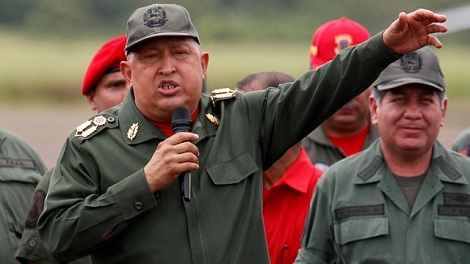
ap chavez military uniform wg ICYMI: 5 Ways Hugo Chavez has Destroyed the Venezuelan Economy

Courtesy of: Associated Press

It is unclear if Venezuelan president Hugo Chavez will make a full recovery from his most recent surgery in Cuba. Whatever happens, he always stirs a lot of passions. Certainly that is the case when thinking of what his lasting legacy in Venezuela will be.

On the left he is seen as a socialist hero who broke the Venezuelan “oligarchy” and defended the country against the “American Empire.” On the right he is the socialist anti-Christ who “brought Afghanistan to South America.” But perhaps one of the simplest ways to judge his reign, is to remove the politics and look closely at his economic record.

Take gross domestic product, or GDP. In that case the record is certainly mixed. There was strong economic growth from 2004 to 2008 but GDP fell in 1999, 2002, 2003, 2009 and 2010. From the time Chávez took office in 1999 to 2011 Venezuela’s economy grew by an average of 2.8% per year. During this same period Latin America as a whole grew by 3.3% per year and Brazil grew by 3.4% per year.

Others will argue that we must judge Chavez on his record of reducing poverty and inequality. According to the UN’s Economic Commission for Latin America, the percentage of the population living under the poverty line in Venezuela fell from 49.4% in 1999 to 27.8% in 2010. That is a pretty good record but there were similar trends across Latin America. In the region as a whole poverty dropped from 43.8% in 1999 to 31.8% in 2010. A few countries, like Peru, Brazil and Panama, faired even better than Venezuela. Poverty rates in Peru dropped sharply from 54.7% in 2000 to 31.3% in 2010—all three have solidly capitalistic economies.

Inequality has declined in Venezuela but it has across other parts of Latin America as well particularly in Brazil, Chile and Colombia.

When you take a closer look at the entire economy, and where Venezuela is headed, the record is not a good one. Here are five major ways that Chavez has really undone the Venezuelan economy:

1. Venezuela has gone from being dependent on oil to being extremely dependent on oil.

Former minister Gerver Torres points out that in 1998 oil represented 77 percent of Venezuela’s exports but by 2011 oil represented 96 percent of exports. That means today only around 4 percent of the goods that Venezuela exports are non-oil products! The Venezuelan economy relies almost exclusively on the price of oil and the ability of the government to spend oil revenues. This will take years to reverse because of item two below.

2. The Chavez government has crippled private businesses and national industry through expropriations and nationalizations.

The Chavez government has expropriated or nationalized numerous companies (no one seems to be able to count them all) involved in various sectors including aluminum, cement, gold, iron, steel, farming, transportation, electricity, food production, banking, paper and the media. The number of private companies in industry has dropped from 14,000 in 1998 to only 9,000 in 2011, according to Torres.

Companies need investment to grow and hire new workers. One of the biggest failures of the Chavez government has been to drive away both domestic and foreign investors. In 2011 Latin America enjoyed a record of more than $150 billion in foreign investment with Brazil receiving $67 billion. Venezuela’s neighbor Colombia received $13 billion while Venezuela received only $5 billion. To avoid expropriation and find investment a number of Venezuelan companies have moved to Colombia, Panama and the United States.

3. The Venezuelan currency is a mess.

The new currency, the Bolivar fuerte, is anything but strong. The Bolivar fuerte has lost nearly two-thirds of its value since it was launched in 2008. Many analysts expect Venezuela will have to go through a painful devaluation sometime this year or next. This will further reduce the value of wages and sharply increase the costs of imports of basic staple goods. Life will get tougher for most Venezuelans but Chavez probably won’t be around to see it.

4. Prices in Venezuela have gone up by 23 percent a year for more than ten years.

Inflation in Venezuela has averaged 23 percent during 1999-2011 compared to a Latin American average of 4.6 percent. Imagine what life would be like if the price of groceries went up 23 percent every year. This craziness combined with stringent price controls has completely distorted the economy, creating black markets and shortages. In 2012 Venezuela will again have one of the highest inflation rates in the world.

5.Under Chavez Venezuela has become one of the most violent countries on the planet.

The murder rate per 100,000 citizens has risen from 25 in 1999 to 45.1 in 2011. This is not an economic stat per se but violence has an economic impact. It is more challenging and dangerous than ever to do business and go to work in Venezuela. When you consider these points, it’s hard to call the economic legacy of Chavez and his band of 21st Century Socialists a good one.

To read this article on ABC News, please click here.


Jan
7
2013
Posted by
admin
Comments

ICYMI: Venezuela’s endgame approaches

Washington Post
January 5, 2013
By Editorial Board

A Venezuelan government statement Thursday said that President Hugo Chavez, who has been secreted inside a Cuban hospital since undergoing surgery on Dec. 11, was facing “complications” from “a severe lung infection.” As has been the case throughout his nearly two-year bout with cancer, details of the strongman’s condition, treatment and prognosis are unavailable. But Venezuelans are bracing themselves for the death of the caudillo who has ruled them — and wrecked their once-prosperous country — over the past 13 years. The United States and its Latin American allies need to prepare, as well.

Mr. Chavez’s critical condition arrived at a critical moment: He is due to be sworn in next Thursday for another six-year term in office. Having won reelection in October after assuring Venezuelans that he was fully cured, the president disappeared soon afterward; in his last appearance before departing for Cuba, he appointed foreign minister Nicolas Maduro as his vice president and political successor. If Mr. Chavez is too ill to attend his inauguration, authorities are saying, they will simply delay it — a stretch of the constitution’s ambiguous wording. But when and if he dies, the constitution is clear: A new election for president should be held within 30 days.

That will be a critical test of Venezuela’s post-Chavez direction. The ruler’s inner circle, which has been gathering around him in Cuba, may consider postponing the election or even calling it off. Their fear — and that of the Castro regime in Cuba — is that a fair vote would be won by opposition leader Henrique Capriles, who lost the October presidential ballot but is more popular than Mr. Maduro. Mr. Maduro is Cuba’s candidate, the successor most likely to ensure continued deliveries of the heavily subsidized Venezuelan oil that is keeping the Communist regime afloat.

That’s why the first responsibility of the United States and Venezuelan neighbors such as Brazil should be to insist that the presidential election be held and that it be free and fair. The State Department rightly made that demand public on Thursday, following recent private contacts between officials of the two governments. The administration should be prepared to respond quickly if Mr. Chavez’s followers or military leaders — some of whom are under U.S. sanction for drug trafficking — attempt a coup.

Whoever succeeds Mr. Chavez will face a catastrophic economic situation. To win reelection, Mr. Chavez spent wildly last year, increasing the budget deficit to 20 percent of gross domestic product; his successor will be forced to order a sharp and painful devaluation. That will only worsen already high inflation and shortages of staple foods. When poor Venezuelans realize that lavish pre-election promises of new apartments and appliances won’t be delivered, anger toward the new leader may swell.

Sadly, the economic pain caused by Mr. Chavez could, after his death, help create a political movement that will revere his memory. Forty years after the death of Juan Peron, Peronism still haunts and holds back Argentina. If Venezuela is to escape a similar curse, Mr. Chavez’s successors will have to balance economic stabilization against the need to build a political system where democracy, and not autocratic populism, can thrive.

To read this article on the Washington Post, please click here.