Sep
30
2010
Posted by
admin
Comments

Former adviser says that Chávez can be defeated in 2012

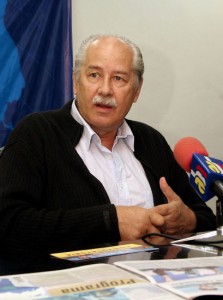
Heinz Dieterich 223x300 Former adviser says that Chávez can be defeated in 2012This article was originally posted by El Universal

Although the ruling United Socialist Party of Venezuela (PSUV) did not reach the 110 seats it needed to have a supermajority at the Venezuelan National Assembly and only won 100,000 votes more than the opposition, government leaders said that they won the legislative elections held last Sunday.

However, some people do not have a positive perception of the results. On the contrary, they warn that President Hugo Chávez can be defeated in 2012, when he is expected to seek a third consecutive presidential term.

One of the analysts who have warned against a bleak outlook for Venezuela’s ruling party is Heinz, a German sociologist and a political analyst residing in Mexico. Dieterich said in an article entitled “Venezuela must change the model or it will collapse like the Cuban model,” that President Chávez has eight months to change the course.

In his article, Dieterich claimed that the Venezuelan Head of State has been unable to “dismantle the opposition electoral group, despite having conditions to do so, such as skyrocketing oil prices, an absolute Executive and legislative power, no opponents at the National Assembly and a fragmented opposition lacking a national project and prominent leaders.”

Dieterich advised Chávez to follow the steps of Cuban President Raúl Castro who is abandoning the 20th century socialism. “Otherwise, the system will collapse,” he warned.

 
Sep
30
2010
Posted by
admin
Comments

The revolution checked

AFP 300x168 The revolution checkedThis article was originally posted by The Economist

AFTER five years in the wilderness, Venezuela’s opposition is back in parliament and in contention. By winning 65 seats in the 165-member, single-chamber National Assembly, in an election on September 26th, the Venezuela Unity coalition dealt a blow to the hopes of Hugo Chávez, the leftist president, of exercising indefinite hegemony. Even worse for the president and his claim to be leading a popular revolution was the fact that the overall vote of 5.4m for the ruling United Socialist Party (PSUV) and its communist allies, was just below that of their opponents (5.7m).

Only blatant gerrymandering of constituencies and an electoral reform that abolished proportional representation allowed Mr Chávez to keep control of the legislature. Even so, he failed to retain the two-thirds majority he had said was vital for his regime’s future. Without it, the government must negotiate appointments to key posts, such as supreme court justices and members of the electoral authority (the CNE). And it cannot pass, or amend, laws which affect constitutional rights. Particularly irksome will be the fact that it may not be able to muster the 99 deputies required to authorise Mr Chávez to rule by decree, as he has been wont to.

In his 11 years in power Mr Chávez has profited from the opposition’s mistakes, which have included an attempted coup in 2002 and an ill-judged boycott of the previous legislative election in 2005. Over that period he has won a dozen national votes (the only exception being a constitutional referendum in 2007). The opposition’s rehabilitation began with a strong showing in big cities in a regional vote two years ago. For the legislative election, its multitude of constituent groups managed to hammer out a united front. Their success increases the chance that they will unite behind a single candidate against Mr Chávez in the presidential election that is due in two years’ time.

Read More

 
Sep
29
2010
Posted by
admin
Comments

Chávez, on the Ropes

This article was originally posted by The New Republic

Sunday’s parliamentary election in Venezuela saw Chávez’s governing United Socialist Party of Venezuela slump to a landslide. Chavistas walked off with 59 percent of the seats in Venezuela’s single-chamber National Assembly on the back of just 48 percent of the vote, all thanks to a well-known list of unfair voting conditions that left the playing field far from level: an aggressively gerrymandered map, massive rural overrepresentation, and blatantly biased election rules approved by a blatantly biased Elections Commission.

Though routed in the seat count, the vote felt like a win—and a coming of age—for opposition activists. Gone are the days when the words “Venezuelan opposition” conjured a hodge-podge of ancien regime holdovers and reactionary cranks. The vote was a milestone in the opposition’s gradual transformation into an organized mass political movement able to credibly challenge Chávez for the allegiance of everyday Venezuelans.

Working in tremendously challenging circumstances against a hyper-empowered petrostate that had put all its resources into the campaign, the opposition’s umbrella Roundtable for Democratic Unity (the unfortunately anagramed M.U.D.) went toe-to-toe with chavismo, coming within 90,000 votes (out of eleven million cast) of matching their tally. (A small anti-Chavez left-wing party got the remaining 3 percent.)

Read More