Venezuela’s Economy: Papering Over the Cracks
Courtesy of: Associated Press
For years, the Venezuelan economy under Chávez has languished. As the rest of the world emerged from the global recession of 2008, Venezuela has continued to struggle. Soaring inflation – topping 27 percent in 2011 and currently at 20.1 percent – has crippled Venezuelans’ purchasing power. Rampant expropriations, price controls and other heavy-handed policies have harmed business and left farmland idle, sapping more than 11 percent from the country’s gross domestic product between 2005 and 2010.
One would have expected such dreary economic news to make it difficult, if not impossible, for the incumbent Chávez to win reelection last year. But Chávez, in addition to leveraging his control of Venezuela’s media, spent recklessly, using oil revenues to keep the country’s economy afloat through the election cycle. It was also reported that Chávez loyalists offered free goods, such as refrigerators, to induce poorer Venezuelans to turn out at the polls for the president. Such measures, however, are akin to economic steroids; they offered an illusory sense of growth during the politically-vital election period, but severe side-effects are not far behind.
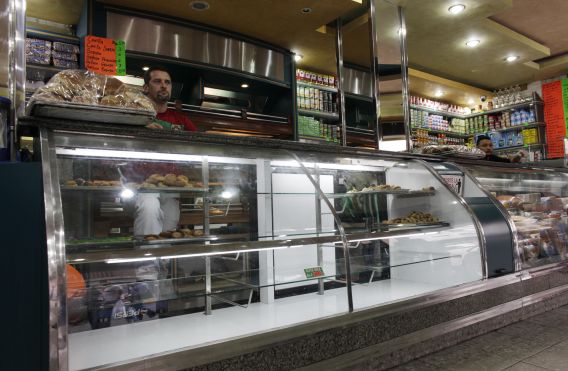
Indeed – as Chávez remains secluded in Cuba – it seems the ruling PSUV are running out of tools to forestall the inevitable reckoning. The nation’s debt continues to mount, leaving the country’s economy ill-equipped to handle any new stress; a recent International Monetary Fund analysis found that Venezuela’s already-high public debt would “balloon” to 145 percent of GDP in the event of a crisis. Expropriations and heavy-handed price controls, meanwhile, are crippling Venezuela’s ability to produce goods domestically. Over the last decade, as Chávez tightened his price controls on goods from flour to chicken to maize, shortages of these staple commodities have tripled. A dearth of flour has prevented Venezuelan bakeries from making bread. The Wall Street Journal reported Sunday that “the worst food and consumer-goods shortages in nearly four years are making buying flour and other goods such as meat, sugar, cooking oil and toilet paper into a harrowing ordeal. Even medicines, like asthma inhalers, are hard to come by.”
After years of unsustainable policies, the Venezuelan economy still has far to fall. The price of oil has risen threefold over the last decade, hiding the underlying weakness of the nation’s public finances. If and when oil prices dip, Venezuela’s debt crisis would worsen. Chávez spent the run-up to the election siphoning off PDVSA oil revenues into an off-budget discretionary fund. But now, in a tacit acknowledgement of the economy’s weakness, much of this revenue will be re-directed back into the economy. Also, foreign Minister Jaua is now asking China for more loans to staunch the economic pain felt throughout Venezuela.
Meanwhile, unchecked inflation has crippled the value of Venezuela’s currency, the Bolivar. This has made foreign goods ludicrously expensive, even as shortages force Venezuelan people to rely ever more on imports. Economic analysts continue to predict that the government will be forced to devalue Venezuela’s currency in order to support oil revenues. This measure, however, will weaken the Bolivar still further, making imports more costly, eroding living standards and fueling Venezuela’s already sky-high inflation rate.
With the continuing uncertainty surrounding Chávez’s health – and the potential for a new election should he be unable to return – analysts expect the government to delay this devaluation for at least several months longer. In the end, however, years of government mismanagement mean that the Venezuela’s abysmal economic fundamentals cannot be concealed for much longer. As they say, what goes up must come down. The Chávez government has pumped Venezuela with spending, relying on borrowed money and unsustainable oil prices. Meanwhile, the foundation of the nation’s economy – her infrastructure and domestic industry – continues to crumble. Chávez’s cancer may yet claim his life, but the Venezuelan people will remain to feel the pain his policies have wrought.