Chávez uses the power of his government to give himself an edge
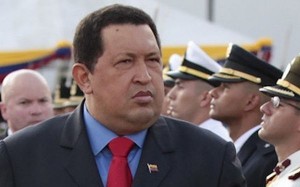
Courtesy of: Reuters / Miraflores Palace
Facing what has become the closest electoral campaign of his life, Hugo Chávez is using the full force of the government, including its near-monopoly on the media, to give him an extra edge ahead of the October 7 vote.
Two new polls are showing opposition candidate Henrique Capriles narrowing the gap with Chávez, with one poll even showing the two candidates in a virtual tie. The opposition, with Capriles at the helm, is clearly the strongest it has ever been. And with a significant percentage of the population still undecided, the race is still very much up in the air.
Apparently concerned with the latest polls, Chávez has begun to take advantage of the government’s broad authority to aid his campaign. Just this month the opposition accused Chávez of using the police to block a campaign rally and preventing Capriles’ supporters from entering a Caracas slum. The stand-off, which the Chávez campaign blamed on Capriles, ended in violence and three people were injured. It is just the latest chapter in Chávez’s electoral manipulations.
As questions swirl about his health, Chávez appears in public at a rate drastically less than in previous elections. When he does appear, however, he often uses mandatory national broadcasts – known as “cadenas” – to put himself in front of the electorate, including several times before of the official start of the campaign. Official campaign rules limit political broadcasts to three minutes, but Venezuela’s National Electoral Council is powerless to curtail the use of these cadenas. On multiple occasions, Chávez has taken advantage of this privilege, talking for hours on all of the nation’s networks. Using his government’s authority over the media, he is able to promote his campaign to Venezuelans in a way Capriles cannot hope to match.
Meanwhile, he has worked to suppress the few voices in the media that do not provide him a loyal echo chamber. Two weeks ago his government – using its heavily controlled jurists on Venezuela’s Supreme court – attempted to shut down Globovision, the largest, and one of the only remaining, independent television stations left in the country. The Supreme Court ruled that its assets could be seized as a penalty for not paying a fine, which was still being appealed in a lower court. Globovision quickly paid the fine, as the asset seizure would have virtually forced the station out of existence otherwise, but the government’s intention was clear. Globovision is not the first anti-Chávez station to be threatened. This case evoked memories of RCTV, a station that aired coverage critical of Chávez and was shut down for its transgressions more than five years ago.
In addition to leveraging his control of the media, the Chávez administration has also taken measures to suppress turnout of likely opposition sympathizers. It was announced, for instance, that no voting center will be opened in Miami, home of 23,000 Venezuelans, most of them supporters of the opposition. Expatriate voters in Miami will now have to travel more than 600 miles to New Orleans to cast their vote.
This is nothing new. In fact just yesterday, Human Rights Watch released its second report on Venezuela in the past four years, again levying harsh criticism of the Venezuelan government for consolidating power in the executive branch, eroding human rights protections, and using its authority in the courts and the media to intimidate, censor and prosecute its critics.
Considered separately, each these actions tips the electoral scales slightly in Chávez’s favor. Taken together, they constitute a consistent, multifaceted effort to use every resource at the government’s disposal to ensure that Hugo Chávez and his party retain power after the fall election. With his government in near-total control of the media and the near-ubiquity of the president’s image throughout the country, those resources are indeed considerable. In a race as tight as Venezuela’s is shaping up to be, even the slightest edge can make the difference between victory and defeat. And Chávez’s built-in advantages are anything but slight.