Oct
17
2012
Posted by
admin
Comments

REPORT: CHÁVEZ EXPROPRIATES 1,168 COMPANIES IN A DECADE; JAUA SAYS THERE’S MORE TO COME

agropatria1210 REPORT: CHÁVEZ EXPROPRIATES 1,168 COMPANIES IN A DECADE; JAUA SAYS THERES MORE TO COME

Courtesy of: Jack Bocaranda / AVN

During the last 13 years, Hugo Chávez has earned his reputation as a fierce opponent of private industry. Even as inflation soared and Venezuelans experienced shortages of even the most basic goods, Chávez held true to his socialist ideology, nationalizing huge swaths of the nation’s economy – from farming to oil production to the media. A report from the analysis firm Conindustria indicates that from 2002 to 2012 Chávez’s government nationalized 1,168 private companies. From the seizure of private oil operations to the expropriation of millions of hectares of farmland to the takeover of vacation homes on Los Roques, Chávez has shown that no sector of the economy is beyond his grasp.

However, the pace of expropriations slowed drastically in the months before the election. It seemed that even Chávez recognized his crusade did not represent sound economic policy. The trend began late last year, when Chávez slowed the rate of expropriations and began striking deals with companies he once derided – part of an effort to prop up Venezuela’s economy in an election year.

But now, having been granted the political cover of a new six-year term, Chávez has vowed to deepen his socialist revolution. A reinvigorated opposition can challenge the president on many fronts, but on his bread and butter policy of expropriations, Chávez will likely have free rein. Former Vice President Elias Jaua said in an interview last week that Chávez plans to take full advantage of that power. He told media that the “strategic expropriation” of companies is again on the agenda for Chávez’s next term. Since that time, Jaua has been replaced by Foreign Minister Nicolas Maduro and now stands as a candidate for Governor of Miranda state against Henrique Capriles.

Economists agree that Chávez’s policies have made Venezuela one of the hardest countries on the world in which to do business.  And Venezuela’s people have felt the consequences: foreign direct investment has fallen to less than $1 billion per year from $3.9 billion the year before Chávez took office. Meanwhile, government policies have kept arable farmland idle, forcing Venezuela to raise imports by more than 400 percent to make up for the losses.

Unfortunately for Venezuelans, the situation seems unlikely to improve in the immediate future.
 
Oct
12
2012
Posted by
admin
Comments

In Case You Missed It… Articles Roundup Week of 10/12/12

colgate 300x196 In Case You Missed It… Articles Roundup Week of 10/12/12

Stock Photo

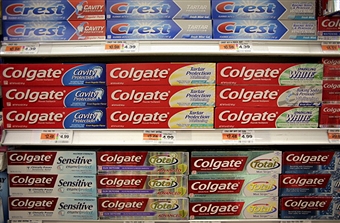
Sunday’s reelection of Chávez disappointed many Venezuelans, but, with gubernatorial elections in December, Henrique Capriles and the opposition still may pose a threat to Chávez’s political aims in the future. Meanwhile, Chávez hails his reelection as evidence of Venezuela’s “perfect” democracy, despite the unfair playing field. Chávez also criticizes U.S.-Syria policy in his first press conference after the election, while vowing to deepen his socialist revolution in Venezuela. Yet his victory spurs further emigration as Venezuelans predict more economic woes. On Wednesday, Chávez named Foreign Minister Nicolas Maduro as his new Vice President to replace Elias Jaua. And with the end of 2012 only three months away, the Venezuelan inflation rate is expected to rise to 21 percent by the end of the year. Meanwhile, Chávez’s reelection raises worries among manufacturers from Coca-Cola to Colgate, with the threat of currency devaluation looming.

Chavismo Wins, Venezuela Loses, The Wall Street Journal

It was around 9 p.m. in Caracas on Sunday when opposition presidential candidate Henrique Capriles Radonski tweeted his followers: “Calm, prudence, patience. Today was a great historic day. The people spoke.” Chávez also used his first press conference following his reelection to criticize U.S. Syria policy.

Venezuelan opposition candidate Capriles may still pose future threat to Chavez, The Washington Post

CARACAS, Venezuela — His loss in Sunday’s presidential election was resounding, but in conceding defeat before tearful followers, Henrique Capriles hinted at an active political future that may yet pose a challenge to President Hugo Chavez’s self-proclaimed socialist revolution.

Venezuela’s Hugo Chavez wins 3rd term, vows to deepen socialist revolution, NBC News

CARACAS, Venezuela — President Hugo Chavez scored a comfortable election victory that could extend his rule to 20 years and vowed to deepen his self-styled socialist revolution after a bitterly fought race against a youthful rival who has galvanized Venezuela’s opposition.

Venezuela’s Chavez hails “perfect” democracy, mocks tyrant image, Reuters

(Reuters) – An ebullient President Hugo Chavez on Tuesday hailed his comfortable re-election as evidence of Venezuela’s “perfect” democracy and mocked his foes’ depiction of him as a dictator.

Venezuela’s Chavez criticizes US over Syria policy, Kansas City Star

In his first press conference since winning reelection Sunday, President Hugo Chávez said he was willing to work with the opposition even as he doubles down on his socialist reforms.

Chavez Victory Spurs Exodus as Venezuelans Foresee Economic Woes, Bloomberg Businessweek

Juan Ibarra, a 35-year-old surgeon from Caracas, is preparing to emigrate after Venezuelan President Hugo Chavez won another six-year term on Oct. 7.

Venezuela’s Chavez names Maduro vice-president, Reuters

(Reuters) – Venezuelan President Hugo Chavez named Foreign Minister and former bus driver Nicolas Maduro as his new vice president on Wednesday in a Cabinet shake-up following his comfortable re-election.

Inflation rate estimated at 21% ending 2012, El Universal

On Tuesday, the Central Bank of Venezuela (BCV) published the results of the performance of the National Consumer Price Index (NCPI) in September, resulting in a monthly variation of 1.6% for an accrued amount of 11.5% and annualized inflation at 18%.

Colgate: not toasting Chavez’s return, Financial Times

How do you toast the victory of Hugo Chávez, Venezuela’s socialist president, who last Sunday won another six-year term, reconfirming him as one of Latin America’s most commanding political figures?

 
Oct
11
2012
Posted by
admin
Comments

After Sunday, What’s Next?

514473580 After Sunday, Whats Next?

Courtesy of: Luis Acosta / AFP / Getty Images

In the aftermath of Sunday’s vote, which saw Hugo Chávez elected to his fourth term as president, several things have become clear. Henrique Capriles, leading a unified and energized opposition, was the toughest challenger Mr. Chávez has ever faced. The Chávez government wielded its control of Venezuela’s media relentlessly, preventing Capriles’ message of unity to find pragmatic solutions to everyday problems from gaining any traction on the airwaves. Others have rightly pointed out the bias in Venezuela’s electoral authority, the CNE. Despite the unlevel playing field, Capriles, who doggedly marched through more than 250 towns, succeeded in turning nearly half the country to his cause.

Even though one’s initial impression of Sunday’s vote may yield a dreary sense of “more of the same,” the coming years promise to be crucial for Venezuela. Chávez’s victory brings with it none of the certainty of past triumphs. For one, the president’s cancer still looms over Venezuela’s future: despite his repeated denials, many believe that Chávez remains terminally ill. Given that Venezuela’s constitution stipulates that a new election be held if a president dies in the first four years of his term, the country’s rejuvenated opposition may have another chance to make its case before Venezuelans. Regardless of the president’s health, December’s gubernatorial and April’s mayoral elections give the opposition an opportunity to make further gains against Chávez’s socialist project.

And that opposition still has much to fight for. Chávez, ever the ideologue, is poised to direct his government to take over more of the private economy. The 2012 campaign has weakened Chávez’s political support, but it is unlikely to have shaken his commitment to his socialist project. After a few quiet months in the run-up to the election, we may see the pace of expropriations tick up again. In fact, just two days after Chavez’s election victory, Vice President Elias Jaua confirmed that the expropriation policy will indeed continue.

Venezuela’s stagnating economy may be in for a crushing blow, meanwhile, as Chávez’s election-year borrowing-and-spending may well lead to a currency devaluation. This borrowing, along with high global oil prices, has thus far papered over the cracks in Venezuela’s anemic economy. As Chávez poured millions into his populist reelection effort, he failed to address the fundamental weaknesses in the nation’s economy: food shortages, electrical outages and a crumbling public infrastructure.

But what goes up must come down: the poorly-managed state oil company PDVSA has continually operated under capacity; as prices fall, Venezuela’s leaders’ failure to plan for the future will redound upon the nation’s people. The fatal refinery explosion in Amuay is but a recent illustration of the consequences of PDVSA’s mismanagement.

Meanwhile, a fresh six-year term will shield Chávez from political consequences of the corruption within his government. Former judge Aponte Aponte shocked Venezuelans and, indeed, the hemisphere with his revelation that the government fed instructions to the nation’s judiciary. With Chávez no longer facing the public scrutiny of a campaign, the incentives for such corruption will only increase.

For those in the U.S. policy community, engagement in the future of Venezuela remains essential. Chávez, to be sure, is unlikely to curb Venezuela’s relationship with allies like China, Russia or Iran, or to liberalize Venezuela’s trade policy toward the United States. But the twin pressures of a possibly-fatal illness and a collapsing economy mean that, for Chávez’s Venezuela, the reckoning has yet to come.