Wall Street Journal
December 17, 2012
By Kejal Vyas
Courtesy of: Associated Press
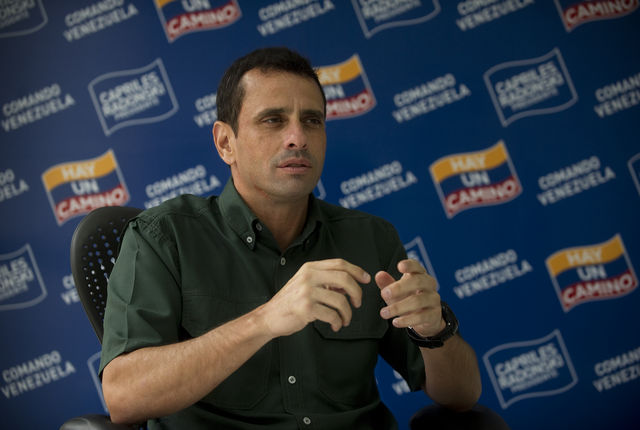
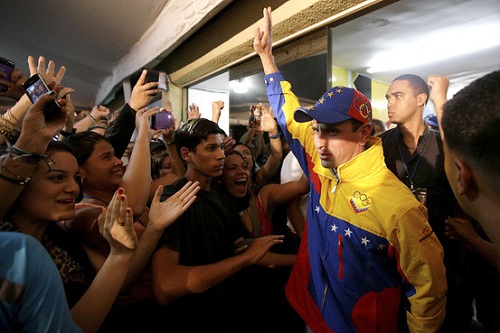
CARACAS—Henrique Capriles held on to his governorship in state elections Sunday, solidifying his place as the opposition’s most likely candidate if President Hugo Chávez’s illness forces a new race for Venezuela’s presidency.
The center-left Mr. Capriles, who lost to Mr. Chávez in a presidential race in October, has pledged to maintain nearly all of the current president’s social programs, but says he wants to run them more efficiently.
The opposition suffered a blow in the state polls Sunday, winning only three of the country’s 23 governor seats and losing four they had held before the vote.
“This has been a total victory” for Mr. Chávez’s ruling party, Miguel Perez Pirela, host of a pro-government political program, said on state television as the president’s supporters celebrated.
Despite its strong performance, the ruling party remains at a crossroads because of the health problems facing Mr. Chávez, the charismatic leftist leader who has dominated Venezuelan politics for 14 years.
The 58-year-old former army officer was re-elected in early October and announced a recurrence of his cancer a week ago, raising uncertainty about his future at the helm of the oil-rich South American country of 29 million people. Venezuela’s constitution requires new elections to be called within 30 days if a president dies or is incapacitated.
With his victory Sunday, Mr. Capriles has emerged as the strongest likely opposition candidate in a possible presidential vote. Analysts had said a loss in the Miranda state governor’s race would have been a devastating blow to his political future after his unsuccessful run against Mr. Chávez in October.
The 40-year-old governor won just over 50% of the votes in the state race Sunday, fighting off a challenge from former Vice President Elias Jaua—whom Mr. Chávez had handpicked to run against Mr. Capriles. Mr. Jaua took 46% of the vote.
“I feel happy for the people of Miranda, but in the rest of the country we didn’t achieve what we set out for,” Mr. Capriles said late Sunday at his campaign headquarters in Caracas.
A week ago Mr. Chávez tapped his longtime ally and vice president, Nicolas Maduro, as his preferred successor to lead his self-styled “socialist revolution.” Analysts are at odds over how Mr. Maduro, who has never been tested in an election, would fare against the opposition.
Mr. Capriles lost to Mr. Chávez by about 11 percentage points in the Oct. 7 presidential vote—but polls show Mr. Capriles winning if he were to face off against the president’s top allies. The governor has run a hectic door-to-door campaign during much of this year in a bid to attract voters from Mr. Chávez’s traditional strongholds in slums and the countryside.
Still, Sunday’s election results are “overall a negative for the opposition’s chances in any potential presidential election that could occur in the months ahead,” said Bret Rosen, a Latin America strategist at Standard Chartered. He said the ruling United Socialist Party of Venezuela, or PSUV, won more states than analysts had expected.
Venezuelan authorities said Mr. Chávez continued recovering from his operation in Cuba over the weekend. Few details about his condition have been released.
The president was “of full mental capacity” and was already “giving instructions and governing,” Science Minister Jorge Arreaza, who is also Mr. Chávez’s son-in-law, said from Havana in a phone call aired on state television.
However, government officials said throughout the week that Mr. Chávez’s recovery could take time, and asked Venezuelans to understand if he were unable to return before Jan. 10, when he is scheduled to be sworn in for his next six-year term.
Mr. Chávez has never said what kind of cancer he faces. He said on Dec. 8 that there had been a recurrence of malignant cells that required him to undergo surgery in Havana last week, his fourth operation for the illness since June 2011. He has also received several rounds of chemotherapy and radiation treatment.