Apr
23
2013
Posted by
admin
Comments

Amid Accusations of Fraud, Venezuela’s Officials Allow Vote Audit

gty capriles vote wg e1366725586108 Amid Accusations of Fraud, Venezuela’s Officials Allow Vote Audit

Courtesy of: Getty Photos

Political uncertainty was reignited in Venezuela last week after electoral authorities stunned the country by announcing Hugo Chávez’s handpicked successor as the winner of the election, but with a razor-thin margin of victory. The underperformance of Nicolás Maduro – combined with daily protests, allegations of fraud, international pressure and the numerous economic and social problems within the country – have descended Venezuela into significant tension and uncertainty.

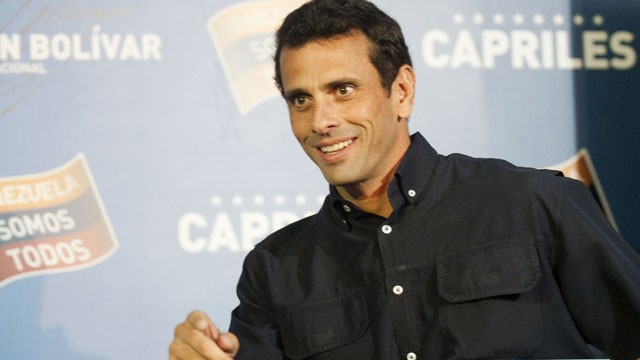
Citing irregularities in the election process, opposition leader Henrique Capriles refused to recognize the election’s validity, demanding a full manual recount of the votes. Numerous international actors, including the United States, Spain and the Organization of American States sided with the opposition, declaring the recount an important and necessary step to instill confidence in the results. Denied the recount at first, opposition supporters around the country banged pots and pans in a traditional sign of protest. A large march to the Election Council was canceled, however, after Maduro ominously vowed to come down with a “firm hand” on opposition supporters.

After days of protests – and just hours before Nicolás Maduro’s swearing-in – the government announced on Friday that it would allow a full “audit” of the vote. Venezuela uses electronic voting machines to record votes that provide a printed receipt which is placed into a sealed ballot box. As is protocol, electoral authorities initially audited 54 percent of the electronic votes. Now, they have conceded to audit the remaining 46 percent. Though the expanded audit is not a full manual recount as originally requested, Capriles accepted the election authority’s ruling. The audit will involve counting the paper ballots in 12,000 voting machines at random stations to ensure they are consistent with the machine-tallied results.

Capriles has cited significant evidence for why a full recount must be undertaken. The opposition has asserted that among the irregularities, there were 535 malfunctioning voting machines, election monitors were forcibly removed from 286 centers and 564 centers evidenced government-assisted voting. Even more peculiar was that Maduro received more votes than Chávez in 1,176 polling stations, with some precincts seeing Maduro surpass the beloved leader by nearly 1,000 percent. In addition, more than 100,000 Venezuelans who turned 18 in the past six months were not given an opportunity to register to vote, while more than 500,000 Venezuelans living in exile have been denied voter registration. Given that Capriles only lost by approximately 200,000 votes, verification of fraud in any of these instances could reveal information that may reverse the final results or necessitate a partial repeat of the election.

The audit is expected to begin sometime this week, but will likely take approximately one month to complete. However, despite the Election Council’s decision to review the results, Maduro was formally sworn in on Friday. Analysts compared the event to a rally held in January on the day Chávez was to be sworn in, but unable to attend. Despite their leader’s absence, tens of thousands of people showed up to take the oath of office on his behalf. Maduro did not enjoy such treatment, however. While thousands of people showed up on Friday to welcome their new president, the crowd was a far cry from the one in January – another clear example that he lacks the charisma and popularity of “el Comandante.”

On Sunday, Maduro went even further, announcing his new cabinet. He showed little variation from Chávez, recycling former ministers into new positions and bringing current and former military officers to top administrative jobs. The greatest surprise was the change in the leadership of the Finance Ministry. Jorge Giordani, a declared Marxist and Chávez long-time ally who is often credited as the architect of the socialist economic policies and controls, will retain his post as planning minister but will no longer oversee the Finance Ministry.

Though tensions simmered after the Election Committee vowed to audit the results, both camps have yet to agree on its true meaning. While Maduro builds his government and begins to instill orders, a near majority of the country hopefully awaits the recount, desperately hoping for a new day in Venezuela.

 
Jun
10
2012
Posted by
admin
Comments

Venezuela opposition floods streets in support of presidential candidate

Leader Hugo Chávez vowed to flood the streets with supporters as hundreds of thousands turned up in Caracas to rally for his rival.

The Miami Herald
June 10, 2012
By Jim Wyss | [email protected]

capriles 300x218 Venezuela opposition floods streets in support of presidential candidate

Courtesy of: AP / Fernando Llano

CARACAS — In an impressive show of force that closed down much of the capital and overflowed the central plaza with supporters, Venezuelan presidential candidate Henrique Capriles, 39, registered his candidacy on Sunday.

As hundreds of thousands of people congregated in downtown Caracas, Capriles vowed to unseat President Hugo Chávez on Oct. 7 and unite a nation that has become increasingly polarized.

“There are not two Venezuelas, there is only one,” Capriles told cheering crowds before he registered with the National Election Council. “Power shouldn’t be used to divide but unite.”

On Monday, Chávez will get to measure his political strength, vowing to flood the city with “a sea” of followers when he registers his candidacy. The event will also give the president an opportunity to dispel rumors and showcase his recovery from an undisclosed form of cancer that has hounded him for almost a year.

Capriles was the governor of Miranda State, part of greater Caracas, until Wednesday, when he turned the position over as required by law. During his four years in the gubernatorial office, he won praise for being an energetic and dedicated leader who would say he was always too busy to have a wife or family. He has also won high marks for reaching across the political divide to work with Chávez supporters.

Capriles, who is still running behind in most polls, has tried to assure disgruntled Chávez backers that they have a different option.

“I’m not the enemy of anyone,” Capriles said. “I am an enemy of problems. I’m an enemy of violence. I’m an enemy of a country that has everything it needs to get ahead but has a government that won’t let it.”

His conciliatory tone has helped win him support from unlikely sectors.

Flying above the crowd Sunday were the flags of Bandera Roja and Vanguardia Popular, leftist political parties that have lost faith in Chávez.

“Chávez was the great hope for our cause, but we’ve given up on him because he has turned his back on the people even as he claims to be the voice of the people,” said Dick Guanique, 56, the secretary general of Bandera Roja, or Red Flag, a communist party. “It’s not that we’re enthusiastic about Capriles, but we think he’s the only way out of a regime that’s become authoritarian.”

In February, a coalition of opposition parties that formed to end Chávez’s 13-year presidential run held their first primary in February. Capriles won that race by almost a million-vote margin, and his five primary rivals have become some of his biggest cheerleaders.

“Today, we’re seeing the fruits of our decision to unite behind the person who will be the president of all Venezuelans,” said Leopoldo López, the former mayor of Chacao, who had been one of Capriles’ chief competitors early in the race.

On Sunday, Chávez said that he would use his candidacy registration to present a national plan for his next six years in office. The government also declared Monday a bank holiday, and Chávez invited followers from all over the country to crowd into the city.

“From what I’m told, Caracas is going to overflow,” Chávez said on TV. “I don’t know where we’re going to fit all the people.”

To read the original article from The Miami Herald, please click here.

 
Sep
3
2010
Posted by
admin
Comments

Election official: Chavez breaking campaign rules

This article was originally posted by The Associated Press

An electoral official accused President Hugo Chavez and his allies of breaking campaign laws by using state-run media to berate rivals and praise friends ahead of this month’s legislative elections.

Vicente Diaz, one of the National Election Council’s five directors, said Chavez is violating legislation prohibiting elected officials from using their posts to promote candidacies. Chavez has ignored the law, which also bans the use of state media and public funds for campaigning purposes, Diaz said.

“We must investigate because (the president) is insulting other candidates … through the use of state media,” Diaz told a news conference.

Diaz is the council’s only director who is sympathetic to the opposition’s complaints. The council’s other four directors, including its president, are former members of the ruling party or widely perceived as pro-Chavez, and none of them have raised concerns over the alleged violations.

The five directors were appointed by the predominantly pro-Chavez National Assembly in 2006.

Read More