Courtesy of: AFP
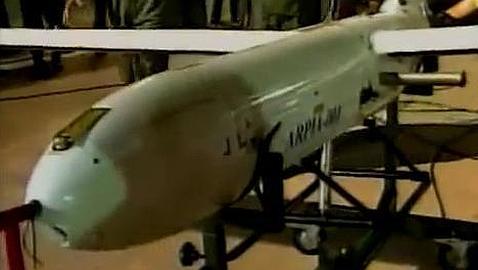
Hugo Chávez is making major investments into Venezuela’s military capacity, and it is raising new questions about his choice of allies and the aims of his military stockpiling. Last week, he announced the production of assault rifles in a joint venture with Russia, which comes on the heels of the revelation that he is building unmanned aerial vehicles with help from Iran.
Always the showman, Chávez made the announcement of a joint venture with Russia in a three-hour television broadcast from the factory where they are being assembled, proudly displaying the new weapons. He said they are for “internal defense,” but the announcement will likely increase U.S. concerns about his government and its role in the South America.
A Spanish daily newspaper has reported that U.S. prosecutors in New York are investigating Iran’s sale of unmanned aircraft to Venezuela. The report details the convoluted payments that kept the deal hidden as well as increased collaboration between the two countries’ militaries. Officials are investigating to ensure that Iran is not using these arms deals to set up a military command in Latin America.
Though the vehicles involved are not advanced enough to pose a threat to the United States, the transaction is another chapter in the close relationship between Venezuela and Iran. Iranian president Mahmoud Ahmadinejad recently announced plans to visit Venezuela after the upcoming Rio +20 conference, and just last month Venezuela and Iran signed a joint agreement to build an off-shore oil platform. Moreover, Venezuela continues to buy oil tankers from Iran. And while most of the West has trade sanctions on the Middle-Eastern nation, Venezuela carries on sending supplies to and signing business deals with Iran.
Venezuela’s military agreement with Russia is not new either. The country’s imports from Russia are on the rise, mostly because of increased military purchases. In global matters, President Hugo Chávez has stood with Russia on many of its most controversial decisions. Recently, he announced his solidarity with Russia in support of the current Syrian government, who Venezuela has continued to supply with oil, despite the recent violence that has taken place.
Regardless of the military capacity that this deal provides, it is another clear rejection of American diplomatic goals. Chávez continues to show that his foreign policy is predicated on showing the world that he can, and will, do business with countries regardless of their ideology, human rights record, or political system. Moreover, he’s shown a special affinity for nations that the United States views warily.