Mar
8
2013
Posted by
admin
Comments

In Case You Missed It…Articles Roundup Week of 3/8/13

hugochavezobit e1362779431348 In Case You Missed It...Articles Roundup Week of 3/8/13

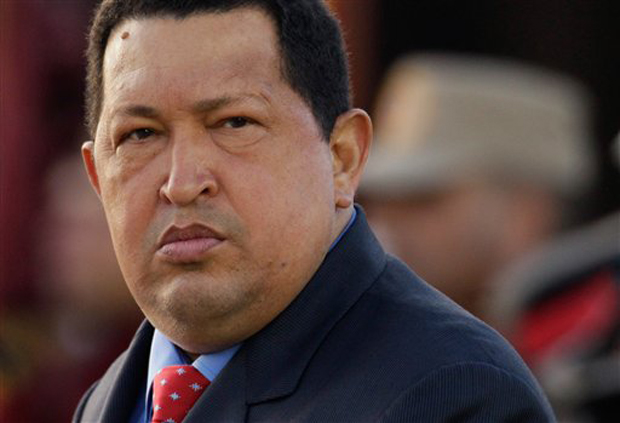
Courtesy of: Associated Press

This week: Nicolás Maduro announced Tuesday that President Hugo Chávez had succumbed to cancer, leaving behind a sharply divided country; with Chávez’s passing and subsequent funeral comes the question of his contradictory legacy, highlighted by his socialist policies; undoubtedly, Chávez will be remembered as a leader who transformed and shaped Venezuela; as Venezuela adjusts and evaluates its economy under Chávez, it becomes clear that his socialist agenda fell short of his promises; and like other socialist leaders, Chávez will be embalmed and put on permanent display inside a military museum. With Chávez’s death and upcoming elections, Venezuela’s interim leader Maduro is thrust into the spotlight; with Chávez gone, the U.S. reacts cautiously, weighing the prospects for a diplomatic thaw; a transition in Venezuela opens the path for eventual investment and expertise opportunities from oil companies; and Cuba mourns Chávez’s passing, while worrying about what the future may hold for the Cuba-Venezuela relationship. Finally, concern emerges over armed Chávez supporters poised to defend the revolution; the Venezuelan government plans to expel a U.S. Embassy official for allegedly meeting with military officers and planning to “destabilize the country”; Brayan Villarreal, a pitcher for the Detroit Lions, says his family was attacked in their home near Caracas; and the homicide rate in Venezuela between January and February reveals escalating violence in the country.

Chávez Dies, Leaving Sharp Divisions in Venezuela, The New York Times

President Hugo Chávez of Venezuela died Tuesday afternoon after a struggle with cancer, the government announced, leaving behind a bitterly divided nation in the grip of a political crisis that grew more acute as he languished for weeks, silent and out of sight, in hospitals in Havana and Caracas.

On Eve of His Funeral, Debating Chávez’s Legacy, The New York Times

Heads of state from around Latin America flocked to Venezuela for the funeral on Friday of Hugo Chávez, a tribute to the undiminished drawing power of the charismatic leftist leader, although perhaps not to the lasting influence of his socialist-inspired policies.

Obituary: Hugo Chavez – socialist showman who transformed Venezuela, Reuters

At two defining moments of his rule, Venezuela’s theatrical leader Hugo Chavez took a small silver crucifix from his pocket and held it above his head.

Venezuela’s Economy Under Chavez, by the Numbers, The Wall Street Journal

Many Venezuelans, mainly among the poor, are intensely mourning the passing Tuesday of President Hugo Chávez, whom they viewed as their “champion”, a father figure who after 14 years in power is taking on near saint-like meaning for them.

Like Lenin and Mao, Hugo Chavez’s embalmed body to be put on permanent display in Venezuela, Washington Post

Vladimir Lenin, Mao Zedong, Ho Chi Minh, and now Hugo Chavez.

Venezuela’s interim leader thrust into spotlight, CNN

He began his career as a bus driver in Caracas, and then rose through the ranks to become a member of Venezuelan President Hugo Chavez’s inner circle.

U.S. Hopes Chavez’s Passing Could Smooth Relations with Venezuela, TIME

U.S. officials are cautiously optimistic that the death of Venezuela’s Hugo Chavez could improve relations between the two countries, but they aren’t holding their breath.

Chavez Death Could Open Up Venezuela Oil, Wall Street Journal

The death of Hugo Chavez may have plunged Venezuela into political uncertainty. But oil markets have remained calm so far.

Cubans mourn Venezuela’s Chavez, worry about the future, Reuters

In many cities and towns, people filed through government-arranged memorials to pay tribute to the man who poured oil and money into the island nation to help revive its economy after a near-collapse in the 1990s.

The Wild Card in Venezuela: Armed Chavistas, ABC News

The banner just inside the poor neighborhood in western Caracas reads, “Loyal to Comandante Chavez.” The guard at the gate ensures no one enters without permission — not even the police.

Venezuela to expel U.S. Embassy official, Associated Press

Venezuela’s vice president, Nicolas Maduro, says the government of President Hugo Chavez plans to expel a U.S. Embassy official for meeting with military officers and planning to destabilize the country.

Brayan Villarreal’s family attacked, ESPN

Brayan Villarreal’s family home in Venezuela was attacked by three armed robbers who threatened to kidnap his relatives in the future, his agent told ESPNDeportes.com.

Number of homicides in Venezuela hits 2,576 in January-February, El Universal

Venezuela’s homicide rate in the first two months of the year dropped one percent with respect to the same period in 2012, according to figures recorded by the Scientific, Criminal and Forensic Investigation Agency (Cicpc).
 
Mar
7
2013
Posted by
admin
Comments

ICYMI: Venezuela’s Economy Under Chavez, by the Numbers

Wall Street Journal
March 6, 2013
By Charles Roth

 ICYMI: Venezuela’s Economy Under Chavez, by the Numbers

Courtesy of: TalCual

Many Venezuelans, mainly among the poor, are intensely mourning the passing Tuesday of President Hugo Chávez, whom they viewed as their “champion”, a father figure who after 14 years in power is taking on near saint-like meaning for them.

In their name, the charismatic Mr. Chávez implemented what he called “21-Century Socialism,” which in practice involved nationalization of broad swaths of the economy, especially in “strategic sectors” such as all the important oil industry — Venezuela sits atop the world’s largest oil deposits — telecommunications and power. He expropriated more than 1,000 businesses, sundry farmlands and urban properties, often without compensation, arguing that the seizures were justified either because the owners were in various ways corrupt or the seizures would improve the lots of the poor, usually both. In the process, he engaged in class warfare, demonizing the country’s middle- and upper classes as the “Squalid Ones.”

In his push to build a socialist system Mr. Chávez — who had Venezuela’s armed forces adopt the motto, “Country, Socialism or Death” — greatly ramped up government spending off the back of historically high oil revenues and a massive increase in national external debt, which went from around $28 billion during his first year in power to around $90 billion currently. Much spending has gone into subsidized food, housing, health, education and other welfare programs that have no doubt to varying degrees benefited the poor.

But a look at the available data — and it’s limited, as Venezuela hasn’t held an Article IV consultation with the International Monetary Fund in 87 months and has stopped reporting a number of standard indicators — the economy hasn’t exactly produced a socialist paradise.

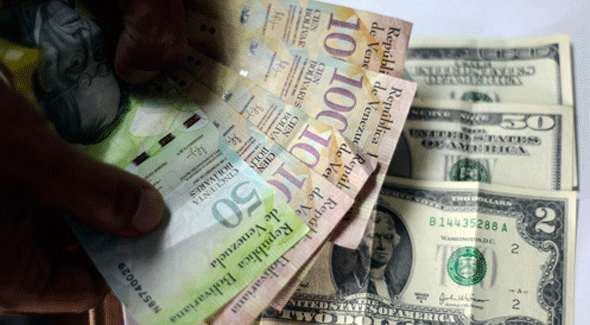
Heavy government spending has fueled rampant inflation, which averaged an annual 22% during Mr. Chávez’s tenure. Its anticapitalist rhetoric and broad state intervention into the economy have led to a dearth of investment. Gross fixed capital formation declined to 18% of gross domestic product in 2011, from 24% in 1999, according to the World Bank. Net inflows of foreign direct investment stood at 2.9% of GDP during that same year, his first in office, nearly double the 1.7% in 2011. Capital flight from Venezuela intensified as Mr. Chávez pursued more interventionist policies, including capital controls and a fixed official exchange rate that — if you can get it — offers dollars at a quarter of the exchange rate that the greenback fetches in the black market. Stock market capitalization of companies listed on the Caracas Stock Exchange has gone from a paltry 7.6% of GDP in 1999 to a minuscule 1.6%.

Rather than pursue policies that might stimulate investment, the government’s response to shrinking productive capacity and high inflation has been price caps. The result? Shortages of food and other basic necessities, periodic electric brown- and blackouts, and far fewer jobs: the labor force participation rate has dropped from 52% to 46% in the Chávez era.

In countries less blessed with natural resources, Mr. Chávez might have been forced to be more welcoming of private-sector investment. But Venezuela’s oil bounty permitted his pursuit of highly unorthodox policies and inefficient use of resources. Yet not without cost to its oil industry.

Venezuela’s oil production has fallen to around 2.5 million barrels a day from about 3.2 million, according to most industry estimates. Downstream refinery accidents have increased sharply amid a lack of investment and upkeep, with one last year at the Amuay complex proving among the most deadly the energy industry has seen. Energy-rich Venezuela has since been importing more fuels. Still, prices for the country’s crude have risen about 10-fold during Mr. Chávez’s time in office, enabling him to borrow and spend aggressively.

That has helped the economy grow, albeit at a lackluster annual average of 3% since 1999. GDP per capita rose to an estimated $11,131 last year, from $4,132 in 1999, according to the IMF, but there are no data available on income distribution, which by all accounts still displays high disparities among the population. Venezuela is also now far more dependent on oil revenues that it was when Chávez first took office: Oil now accounts for about 95% of all exports, compared to about 80% in 1999, and represents nearly two-thirds of fiscal revenue, versus about half 14 years ago.

It’s well known that inflation and basic necessity shortages hit the poor the hardest, as does crime, which has skyrocketed in Venezuela. According to InSight Crime, an American University-sponsored think tank in Washington DC, the country has seen a sharp rise in violence, “with murder rates doubling or tripling over a decade, according to different figures.” For the first time in several years, the government reported homicide data, noting over 16,000 murders last year. But the Venezuelan Observatory of Violence, a local non-government organization that tracks crime, put the number at nearly 21,700, for a national homicide rate of 73 per 100,000, more than double the 31 per 100,000 in Colombia, which is fighting two guerilla insurgencies.

It remains to be seen whether the next government will be able to manage the economic distortions and social problems that continue to plague Venezuelans. Snap elections must be called within a month, Mr. Chávez’s vice president, Nicolás Maduro, is expected to win.

“Vice-President Maduro is perceived as close to the Cuban regime and committed to the revolutionary ideals spearheaded by President Chávez,” wrote Goldman Sachs economist Alberto Ramos in a research note. “However, like virtually every other senior figure of Chavismo, Mr. Maduro lacks the charisma and broad popular support enjoyed by President Chávez.”

Mr. Maduro has vowed to maintain the “revolutionary” policies of Mr. Chávez. Given the many economic and social challenges facing Venezuela’s poor, it remains to be seen whether populism alone will, from now on, be enough.

To read this article at the Wall Street Journal, please click here.

 
Mar
4
2013
Posted by
admin
Comments

In Chávez’s Absence, the Government Seeks to Dissipate Opposition with Fear

iX2qiGY5WWjk e1362422860756 In Chávez’s Absence, the Government Seeks to Dissipate Opposition with Fear

Courtesy of: Agence France Presse

As is well documented, the Venezuelan government’s record on human rights has been substandard at best. For years, human rights watchdogs have criticized the government for consolidating power in the executive branch and using that power to intimidate, censor and prosecute those who criticize the president or his regime. During Hugo Chávez’s prolonged absence, these problems have only gotten worse.

Fears that Chávez’s declining health will force a new presidential election in the coming months has the United Socialist Party of Venezuela (PSUV) party concerned. Both of Chávez’s likeliest successors lack the charisma and deep popular support the president enjoys, prompting many within the government to wonder whether the movement will survive without its strong leader. A slumping economy has further exposed the government’s failures, and the PSUV has continually sought to change the subject.

Knowing of this – and of the PSUV’s penchant for strongman tactics – it is hardly surprising that there has been significant harassment of Venezuela’s opposition in the past month.

For example, the government has stepped up accusations that three opposition lawmakers were involved in corruption, in a clear attempt to demoralize, fracture and damage the reputation of the opposition. Leaders of the ruling PSUV have threatened to jail those involved and have pledged to pursue further investigations into the alleged financial irregularities.

The attacks weren’t limited to these lesser known lawmakers. Just this week, Chávez’s chosen successor, Vice President Nicolás Maduro, launched a scathing assault on the opposition’s charismatic leader, Henrique Capriles. Capriles was in the United States visiting his sister and her family, who live in New York. Maduro alleged – without any evidence – that Capriles himself owns a lavish high-rise in New York City, and accused Capriles of engaging with Venezuelan expatriates in a plot to destabilize the country. He boasted to a friendly audience that he was “tracking the movements” of Capriles. Capriles called the accusations false, and suggested that Maduro was trying to distract Venezuelans from the damage wrought by a currency devaluation, rampant violence and escalating shortages – not to mention the continuing secrecy surrounding Chávez’s battle with cancer.

“It seems ridiculous to me, with all the problems that there are in Venezuela, that this is what the government is talking about,” Capriles told the New York Times.

Last week, Venezuelan prosecutors brought influence peddling charges against Leopoldo López, a prominent opposition leader, economist and former mayor of the Chacao Municipality of Caracas. He is accused of accepting donations from Venezuela’s state-run oil company in 1998, donations that were purportedly authorized by his mother, Antonietta Mendoza de Lopez, who was a PDVSA administrative employee at the time. Government officials allege the funds were used to form the now popular First Justice Party. Arguing the charges are politically motivated, López denies any wrongdoing.

Of course, if it’s corruption they are after, the PSUV need look no further than itself: under their rule, Venezuela is considered the most corrupt nation in Latin America by Transparency International.

According to Luis Vicente León, analyst and head of the renowned Datanálisis polling firm, the point of these measures is to make the country believe there is a strong government in place despite Chávez’s absence. He expects a series of symbolic actions against key players of the opposition, to instill fear in society and dissuade others from speaking out against Chavismo.

Attacks against the media have become a clear example of this intimidation strategy. Globovisión, the last television network in Venezuela openly critical of the government, was not among the list of stations to be included when the country transitions to a new digital TV signal. The decision will likely drive the station off the air at that time. The government has refused to offer an explanation for the exclusion. Similarly, the website analisis24.com and its Twitter account have been blocked in Venezuela after publishing a series of pictures of Chávez and his daughters in Cuba.

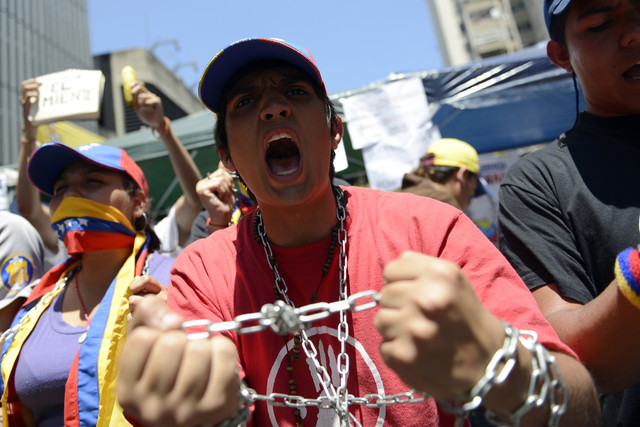
Most troubling thus far, however, were the attacks against students during a peaceful demonstration. Frustrated after not hearing from President Chávez for 80 days, about 120 students gathered in front of the Executive Directorate of the Judiciary to demand answers from the government about the true health of their president. They were received instead by members of the military, who wielded ​​ batons and fired pellets, injuring four of them. Once again, the government has offered no justification for these attacks on its own citizens.

Though there has been no word on whether Chávez will ever return to power, it is clear that the regime fears the uncertainty that would follow if he passes. After 14 years under the strong leadership of Hugo Chávez, PSUV faces the difficult task of convincing Venezuela it is capable of governing without him. The dire economic situation in the country shows that they have much to prove on that front. Yet thus far, fear, intimidation and the suppression of free speech appear to be their only solutions.