Oct
26
2012
Posted by
admin
Comments

In Case You Missed It… Articles Roundup Week of 10/26/12

gold In Case You Missed It… Articles Roundup Week of 10/26/12

Courtesy of: El Universal

Last Sunday, former Venezuelan Vice President Elias Jaua visited Fidel Castro in Cuba, stating he “is doing very well” amidst speculation over his health. Despite Venezuela’s withdrawal from the Inter-American Court on Human Rights, it continues to hear human rights cases against the government; now that the Venezuelan presidential race is over, the pace of housing construction has slowed remarkably in Caracas. Meanwhile, Venezuela’s crime rate soars as Caracas has become one of the hemisphere’s most violent cities amid declining poverty; NGOs call for a debate on the government’s proposed cable TV regulation, which would restrict content and limit government criticism on cable networks in Venezuela. Recently, the World Bank’s “Doing Business” report ranked Venezuela 180 out of 185 countries among those most difficult for investment; the IMF confirms gold sales made by Venezuela’s central bank in August, leaving bullion reserves at 362.05 tons; the opposition criticized electoral authorities for allowing pro-Chávez candidates to switch voting districts to run in different states in the December gubernatorial elections. Lastly, a resolution by the Venezuelan Ministry of Education establishes education councils charged with bringing up “a new citizenship” in Venezuela’s youth. The councils have been criticized as being used by representatives of Chávez’s party to deepen his socialist revolution within the educational system.

Castro ‘doing very well,’ Venezuelan politician says, CNN

Havana (CNN) — Fidel Castro “is doing very well,” Venezuela’s former vice president said Sunday, showing reporters a snapshot of the former Cuban leader that he said was taken the day before. Speculation has surged over Castro’s health in recent weeks.

Despite Venezuela’s withdrawal, IACHR still hears cases against it, El Universal

If the government was under the impression that by initiating its withdrawal from the Inter-American Court on Human Rights that organization would cease their probes into cases involving Venezuela, it was wrong, as evidenced by the fifteenth ruling against the nation.

Sluggishness of housing works, El Universal

The frenzied pace of most government works is now in the past after the presidential election, as verified in a tour by El Universal. The construction pace plunged in a complex of more than one thousand dwellings on the Los Leones bridge, La Paz, west Caracas.

Venezuela crime soars amid declining poverty, Al Jazeera

Caracas, Venezuela – With some 19,336 murders last year, Caracas has become one of the western hemisphere’s most violent cities and one particular criminology expert had a front row seat the other day, experiencing the overwhelming insecurity first-hand when robbers stuck a gun in his face as he rode home on the bus.

NGO calls for debate on cable TV regulation in Venezuela, El Universal

Representatives from several organizations belonging to the NGO Monitor Legislativo (Legislative Monitor) discussed the upcoming Venezuelan legislative agenda.

Spending Jumps 33% in Venezuela’s 2013 Budget Proposal, Fox Business

Mr. Giordani presented to Venezuela’s national parliament the annual budget proposal, which set expenditures at VEF396.4 billion bolivars, or just over $92 billion at the official exchange rate.

Venezuela among the countries with more obstacles to investments, El Universal

Venezuela is among the countries featuring more obstacles for opening a business, according to a study prepared by the World Bank entitled “Doing Business 2013.”

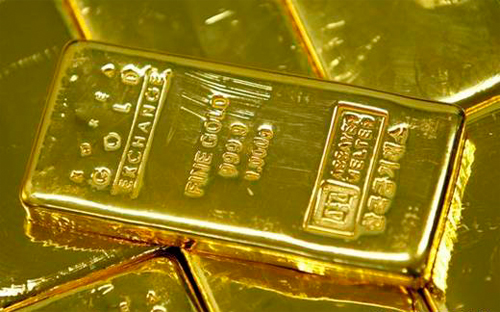
IMF confirms gold sales made by Venezuela’s central bank in August, El Universal

Venezuela sold 3.73 tons of gold bars in August, thus leaving its bullion reserves at 362.05 tons, according to figures disclosed by the International Monetary Fund (IMF), Reuters reported on Thursday.

Venezuela opposition criticizes movement of pro-Chavez candidates between voting districts, Fox News

CARACAS, Venezuela – Venezuelan opposition leaders complained Thursday that electoral authorities allowed some candidates allied with President Hugo Chavez to switch voting districts and run in different states in December’s gubernatorial elections.

Minister: education councils aim to bring up “the new citizen” in Venezuela, El Universal

Resolution 058 of the Venezuelan Ministry of Education provides for the establishment of education councils in the basic education subsystem. Such councils intend to bring up “a new citizenship,” which involves providing “integral education for the new man and woman, for the new republican,” according to Venezuelan Minister of Education Maryann Hanson.

 
Aug
10
2012
Posted by
admin
Comments

Who’s Next Venezuela: The Final Potential Successor

Possible Leader of the Transition: José Vicente Rangel

jose vicente rangel Who’s Next Venezuela: The Final Potential Successor

Courtesy of: AVN

Although his age and recent absence from the political stage may eventually disqualify him, writer, leftist intellectual and former Venezuelan Vice President José Vicente Rangel has nonetheless found his name among those being considered as possible successors.

Rangel’s experience in politics goes back as far as 1948, when he was exiled for opposing the coup that overthrew President Rómulo Gallegos. He has spent his life in and out of politics, serving in Congress and running for president three times, in 1973, 1978, and 1983. Between his political forays he also worked as a journalist and lawyer.

Under Chávez, he has served as Minister of Foreign Affairs, Minister of Defense, and even replaced Diosdado Cabello as Vice President in 2002, a position he held until 2007.

After five years out of the political world, Rangel again rose to prominence when he was named to Chávez’s six-member Council of State, along with Elias Jaua, in May. This is the same body that Chávez originally entrusted with removing Venezuela from the Inter- American Commission on Human Rights (IACHR). The Council has still yet to be officially formed, inviting questions as to why Chávez announced it in the first place. Many speculate that it was intended to manage the internal transition of power in the event of Chávez’s death.

In the weeks after being named to the Council, Rangel assumed his role with gusto, repeating Chávez’s attacks on the IACHR and showing that he, even at age 83, still has the energy necessary for politics. The appointment also showed that Rangel remains one of Chávez’s closest confidantes. As an “elder statesman” of Venezuelan leftist politics, Rangel may be well-suited to quell fractiousness within the PSUV and manage any transition of power. Analysts suggest that Chávez will benefit from Rangel’s vast political experience and network of contacts, solidifying the theory that the president views Rangel as an invaluable advisor, and not a potential successor.

Rangel’s age and semi-retired status makes likelihood of him taking over Chávez’s job a long shot. If he does, it will certainly not be a permanent appointment. But considering his clout within the PSUV, and the vote of confidence Chávez recently gave him, we can be sure he will play a crucial role in a PSUV attempt to hold on to power after Chávez’s death.

 
Jul
5
2012
Posted by
admin
Comments

Who’s Next Venezuela: Another Potential Successor

Over the past several months, What’s Next Venezuela has reported on the uncertainty surrounding Hugo Chávez’s health, including the speculation about who will take Chávez’s place on the ballot should he be unable to stand for re-election on October 7. We continue examining potential successors today, with a profile of Foreign Minister Nicolás Maduro.

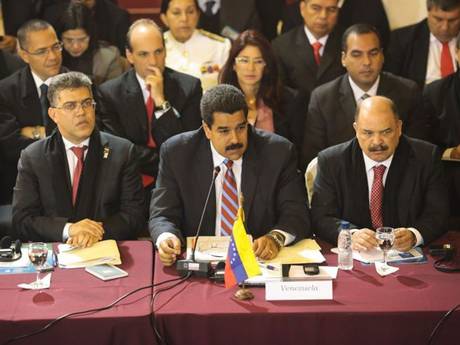
Nicolás Maduro, Foreign Minister

Nicolas Maduro Who’s Next Venezuela: Another Potential Successor

Courtesy of: AVN

From lowly beginnings as a bus driver for political campaigns, Nicolas Maduro has risen to power and influence as the Foreign Minister in Hugo Chávez’s administration and a leading candidate to succeed the president.

Since June 2011, around the time Venezuelans first learned of Chávez’s cancer, Maduro has emerged as one of Chávez’s closest officials and advisors, both in Cuba and in Venezuela, and the one in charge of announcing the president’s messages to the Venezuelan public. He took a leading role after Chávez announced his intent to leave the Inter-American Commission on Human Rights (IACHR), voicing accusations against the IACHR and making headlines while Chávez received treatment in Cuba. Speculation intensified earlier this year as rumors swirled that Chávez was poised to name Maduro as Venezuela’s new Vice President.

That Chávez trusts Maduro with his most important assignments is corroborated by a Wikileaks cable which suggests Maduro may be at the top of the list because of his fierce loyalty to Chávez. The two have a long history, going back to the founding of the PSUV and Maduro’s work on Chávez’s 1998 presidential campaign. Maduro has already spent six years as chancellor, an unprecedentedly long spell in Chávez’s administration.

The leaked e-mail also asserts that Maduro is a more pragmatic leader than others in the PSUV, which might be necessary to keep the party from fracturing during the transition. It may help him to prevent infighting within the PSUV, which could cause serious problems in addition to any opposition challenges the transition leader will face.

Moreover, through the foreign ministry, Maduro has become the darling of Havana, establishing strong ties with the Castros. This may be critical, as recent news stories have shown that maintaining the relationship between Venezuela and the Castros will be a key expectation of any Chávez successor.

He has popular appeal as well, and charisma that technocrat Elias Jaua lacks. He has fared better than other PSUV members in polls when pitted against opposition candidate Henrique Capriles, although he would still have to make up a significant gap in just a few short months. Meanwhile, Maduro’s profile within Venezuela has continued to grow as he routinely appears both in pictures and videos next to the president, both in Cuba and during the recent announcement of Chávez’s signature new labor law.

However, several things indicate that Maduro may not be the chosen one. Many argue that although he has gained international approval needed to be president, he has not done the same within his own party. He is also untested in close elections; his only electoral victory was in a 2005 legislative race in which he ran unopposed.

In fact, many analysts believe that Maduro’s best shot at the presidency came last year when Chávez first got sick. He quickly took charge of the leadership of Venezuela. Now it appears that he is slated to run for governor of Carabobo, a state now run by a member of the MUD. Maduro himself has even denied that he is being considered as a successor to Chávez.

For his part, Maduro argues that the majority of Venezuelans will reelect Chávez on October 7. Should Chávez’s health take a turn for the worst, however, we may yet learn if he is as trusted as the Wikileaks cable claims.