This blog entry was first published by vheadline.com, and its author explains how Polar is a staple in Venezuela´s family lives.
In another inversion of leftist determinism, an attempt by Chavez’ embattled administration to expropriate Venezuela’s largest remaining private company was thwarted earlier this month, in part due to organised opposition by employees looking to protect both their jobs and their hard-won working conditions.
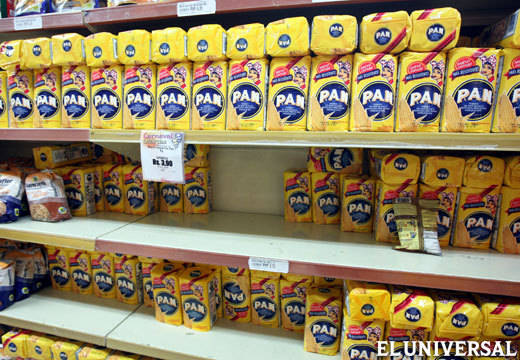
Empresas Polar is as central to Venezuelan capitalism as Coca Cola or Ford are to the American version. Its principal product is Polar Light, a tastelessly diluted beer — served ice cold, much to the delight of the overheated Venezuelan — but they also make Maltin (a fizzy malt drink which is possibly the nation’s favorite soft drink) and Harina Pan (maize flour, from which the staple foods of the arepa and empanada are made), amongst other things. Their products are to be found in every Venezuelan home, and are consumed on a daily basis by pretty much every single Venezuelan. Moreover, the bizarre logo (a polar bear on an ice cap, somewhat incongruous in the Caribbean tropics) also benefits from a visual ubiquity — on t-shirts, at sporting events and advertising billboards — that is matched only by the various red logos of chavismo. Add on the fact that one of Polar’s biggest clients is Mercal, the state-subsidized food market, and the mutual hostility between the nation’s two most powerful bosses suddenly becomes somewhat inevitable.
In the last few months, in the now familiar fashion of the chavista administration, moves were made to prepare for a state seizure of the assets of Venezuela’s largest remaining private company. In April, a warehouse was closed down by the military in Barquisimeto, Lara state, with all the products being seized to be distributed by PDVAL — a state programme in which petrol dollars are used to distribute foodstuffs and basic goods throughout the country. Chavez accused the company of hoarding its products in order to enforce shortages and price inflation, while Polar replied that it had found its business operations compromised and undermined by the electricity crisis (industry has been subject to strict power rationing, with many being fined for “over-consumption”). The raid brought a sense of deja vu to those who remembered the anti-chavista business lockout of 2003, in which a Polar warehouse was amongst those seized by the government.
After the Barquisimeto raid came the verbal threats, with Chavez warning Lorenzo Mendoza, Polar’s multimillionaire owner, “don’t provoke me … stay quiet and don’t get mad,” on live TV, before claiming he “wasn’t afraid” to nationalise the company. Venezuelans — who had already seen a series of supermarkets nationalised this year under the same rubric — prepared to watch another company change name and…well, little else really.
However, the Polar workers had done their maths. As a result of the seizure in Lara, 450 workers had lost their jobs, and justifiably, the rest of the 30,000-strong Polar workforce was similarly perturbed. Even those who wouldn’t lose their jobs following nationalization had cause for concern as to the recognition of their collective contracts and right to union affiliation (after all, as one chavista infamously said in defense of firing union activists in a state-run factory, “under socialism, there are no unions”). A long tradition of workplace struggle within Polar factories had granted workers “the best benefits in the country,” in the words of one worker in El Tigre, Anzoategui state, and it looked likely the cash-strapped state would slash their gains, prioritising shoring up the near-nonfunctional PDVAl (more on that later).
As government inspectors suddenly started to perform all manner of spot checks on Polar factories and warehouses, searching for a legal pretext with which to execute seizure, demonstrations were organized by workers, and most major towns saw ‘caravanas’ (motorised processions of tooting horns) of Polar workers in their private cars. Their slogan was “SI SE PUEDE,” an audacious challenge to the government’s strength. In the end, on 12 June, the Polar workers were proved right, as the government was forced to retreat, suddenly calling reports of a planned government expropriation of Polar “totally false and irresponsible … a right wing tactic,” etc, etc and confirming that it would not happen after all.
Of course, the workers’ protests were not the sole cause of the government’s capitulation. Simultaneous to the workers’ protests — and a considerable level of public outcry over the Polar question — the state had become wrapped up in yet another crisis that ultimately proved to be fatal for their plans. Having spent much of 2010 raging against the hoarding of foodstuffs that should be in people’s homes, it suddenly emerged that — with figures being constantly revised upwards to account for reports emerging from all corners of the Bolivarian Republic — over 120,000 tonnes of products have gone rotten and been disposed of while under PDVAL supervision in the last month alone. In a country with widespread shortages which PDVAL is supposed to combat, if that food had been delivered onto plates, it is estimated that in the same time period, it would have fed more than 17 million people (out of a national population of 26 million)!
The hypocrisy of Chavez’ crusade against the wastefulness of private Venezuelan industry — his carrot for the stick of Polar’s nationalization — was laid bare for all to see, and another defeat was inflicted on the beleaguered chavista regime.
So what next then, now that the Polar workers’ contracts are safe — for the time being, at least? Well, even though they’re in a better position under Polar than under the state, that’s no reflection on the generous character of the elitist Mendoza. Throughout the expropriation saga (or “soap,” as one commentator called it), a group of former Polar employees have been demonstrating, demanding payment of the much-vaunted benefits. Indeed, at one point, the government attempted to piggyback on the struggles of Polar workers against their company as an argument for nationalization, to no avail.
The culture of workers’ struggle — regardless of the color of their boss’ shirt, or the logo it carries — will have to continue in order to maintain their conditions.
Moreover, the endemic inefficiency of PDVAL — in a time of chronic food shortages and an almost unpredecedently grave economic crisis — has been proven, once and for all.
A system in which some 70% of foodstuffs are imported (largely thanks to the collapse of the national agricultural economy), only for 70% of it to be rendered inedible, cannot claim to have the people’s best interests at heart.
In another inversion of leftist determinism, an attempt by Chavez’ embattled administration to expropriate Venezuela’s largest remaining private company was thwarted earlier this month, in part due to organised opposition by employees looking to protect both their jobs and their hard-won working conditions.
Empresas Polar is as central to Venezuelan capitalism as Coca Cola or Ford are to the American version. Its principal product is Polar Light, a tastelessly diluted beer — served ice cold, much to the delight of the overheated Venezuelan — but they also make Maltin (a fizzy malt drink which is possibly the nation’s favorite soft drink) and Harina Pan (maize flour, from which the staple foods of the arepa and empanada are made), amongst other things. Their products are to be found in every Venezuelan home, and are consumed on a daily basis by pretty much every single Venezuelan. Moreover, the bizarre logo (a polar bear on an ice cap, somewhat incongruous in the Caribbean tropics) also benefits from a visual ubiquity — on t-shirts, at sporting events and advertising billboards — that is matched only by the various red logos of chavismo. Add on the fact that one of Polar’s biggest clients is Mercal, the state-subsidized food market, and the mutual hostility between the nation’s two most powerful bosses suddenly becomes somewhat inevitable.
In the last few months, in the now familiar fashion of the chavista administration, moves were made to prepare for a state seizure of the assets of Venezuela’s largest remaining private company. In April, a warehouse was closed down by the military in Barquisimeto, Lara state, with all the products being seized to be distributed by PDVAL — a state programme in which petrol dollars are used to distribute foodstuffs and basic goods throughout the country. Chavez accused the company of hoarding its products in order to enforce shortages and price inflation, while Polar replied that it had found its business operations compromised and undermined by the electricity crisis (industry has been subject to strict power rationing, with many being fined for “over-consumption”). The raid brought a sense of deja vu to those who remembered the anti-chavista business lockout of 2003, in which a Polar warehouse was amongst those seized by the government.
After the Barquisimeto raid came the verbal threats, with Chavez warning Lorenzo Mendoza, Polar’s multimillionaire owner, “don’t provoke me … stay quiet and don’t get mad,” on live TV, before claiming he “wasn’t afraid” to nationalise the company. Venezuelans — who had already seen a series of supermarkets nationalised this year under the same rubric — prepared to watch another company change name and…well, little else really.
However, the Polar workers had done their maths. As a result of the seizure in Lara, 450 workers had lost their jobs, and justifiably, the rest of the 30,000-strong Polar workforce was similarly perturbed. Even those who wouldn’t lose their jobs following nationalization had cause for concern as to the recognition of their collective contracts and right to union affiliation (after all, as one chavista infamously said in defense of firing union activists in a state-run factory, “under socialism, there are no unions”). A long tradition of workplace struggle within Polar factories had granted workers “the best benefits in the country,” in the words of one worker in El Tigre, Anzoategui state, and it looked likely the cash-strapped state would slash their gains, prioritising shoring up the near-nonfunctional PDVAl (more on that later).
As government inspectors suddenly started to perform all manner of spot checks on Polar factories and warehouses, searching for a legal pretext with which to execute seizure, demonstrations were organized by workers, and most major towns saw ‘caravanas’ (motorised processions of tooting horns) of Polar workers in their private cars. Their slogan was “SI SE PUEDE,” an audacious challenge to the government’s strength. In the end, on 12 June, the Polar workers were proved right, as the government was forced to retreat, suddenly calling reports of a planned government expropriation of Polar “totally false and irresponsible … a right wing tactic,” etc, etc and confirming that it would not happen after all.
Of course, the workers’ protests were not the sole cause of the government’s capitulation. Simultaneous to the workers’ protests — and a considerable level of public outcry over the Polar question — the state had become wrapped up in yet another crisis that ultimately proved to be fatal for their plans. Having spent much of 2010 raging against the hoarding of foodstuffs that should be in people’s homes, it suddenly emerged that — with figures being constantly revised upwards to account for reports emerging from all corners of the Bolivarian Republic — over 120,000 tonnes of products have gone rotten and been disposed of while under PDVAL supervision in the last month alone. In a country with widespread shortages which PDVAL is supposed to combat, if that food had been delivered onto plates, it is estimated that in the same time period, it would have fed more than 17 million people (out of a national population of 26 million)!
The hypocrisy of Chavez’ crusade against the wastefulness of private Venezuelan industry — his carrot for the stick of Polar’s nationalization — was laid bare for all to see, and another defeat was inflicted on the beleaguered chavista regime.
So what next then, now that the Polar workers’ contracts are safe — for the time being, at least? Well, even though they’re in a better position under Polar than under the state, that’s no reflection on the generous character of the elitist Mendoza. Throughout the expropriation saga (or “soap,” as one commentator called it), a group of former Polar employees have been demonstrating, demanding payment of the much-vaunted benefits. Indeed, at one point, the government attempted to piggyback on the struggles of Polar workers against their company as an argument for nationalization, to no avail.
The culture of workers’ struggle — regardless of the color of their boss’ shirt, or the logo it carries — will have to continue in order to maintain their conditions. Moreover, the endemic inefficiency of PDVAL — in a time of chronic food shortages and an almost unpredecedently grave economic crisis — has been proven, once and for all.
A system in which some 70% of foodstuffs are imported (largely thanks to the collapse of the national agricultural economy), only for 70% of it to be rendered inedible, cannot claim to have the people’s best interests at heart.
 This