Feb
13
2012
Posted by
admin
Comments

In Case You Missed It… Articles Roundup from Primary Election

In a special roundup of coverage from Sunday’s primary elections…Numerous news sources report on Henrique Capriles Radonski’s landslide victory in the first-of-its-kind opposition primary, winning with a large majority (62 percent) of the vote.  Primary turnout exceeded expectations, as approximately 3 million Venezuelans showed up at the polls, sending a clear message of strength to Hugo Chávez ahead of the October 7 general election. Reports discuss the unprecedented commitment to unity by the opposition.

Chávez Opponent Surges in Venezuela, The Wall Street Journal
An intense young governor, part of a new generation of Venezuelan politicians, will be facing off against an ailing President Hugo Chávez after winning a landslide primary victory Sunday.

Venezuela’s Capriles seeks to unseat Chavez, Reuters
Venezuela’s opposition primary winner Henrique Capriles exuded confidence on Monday that he can unseat President Hugo Chavez and end 13 years of socialism that foes say has left the OPEC nation in crisis.

Chavez’s challenger vows to unite Venezuela, Associated Press via CBS News
Now that Henrique Capriles has easily won Venezuela’s first-ever opposition presidential primary, he’s not just up against any other incumbent. The young governor will have to defeat a veritable political phenomenon.

Venezuelan Primary Turnout May Augur Chavez’s Biggest Test, Bloomberg
President Hugo Chavez may face his toughest challenge in 13 years of power after Venezuelans turned out in large numbers to give a landslide victory to Henrique Capriles Radonski in an opposition primary.

And in the blue corner…, The Economist
MORE than a few supporters of the opposition to Hugo Chávez, Venezuela’s president, awoke on February 13th feeling the need to pinch themselves. The results of the open primary elections the night before, designed above all to pick a candidate to frustrate Mr Chávez’s bid for re-election in October, exceeded all expectations.

Venezuela opposition aims for rich electoral reward, BBC News
It was the politest of election campaigns. Well-mannered television debates ended with the candidates raising each other’s hands in victory, and applauding their competitors’ contributions. Long-standing political differences were glossed over as six (and then five, as one withdrew) ambitious politicians competed for a single prize – the chance to compete for the Venezuelan presidency against Hugo Chavez.

Boost for Capriles’ hope to challenge Chavez, The Financial Times
Venezuelan government officials sought to play down a resounding victory for Henrique Capriles Radonski in opposition primary elections, as a turnout of 3m for Sunday’s poll raised hopes he could successfully challenge President Hugo Chavez in elections later this year.

Carlos Ponce: Venezuela Election – Hope is in the Air, Fox News Latino
The impossible challenge for the Venezuelans to built a “Unitarian” opposition to Mr. Hugo Chávez  it is not an utopian goal anymore. The totalitarian and authoritarian regime from Mr. Chávez finally has a young and active contender.

Venezuela’s opposition unites around Capriles. Can he beat Chavez?, The Christian Science Monitor
A record turnout of nearly 3 million people voted in Venezuela’s opposition presidential primary yesterday, selecting Henrique Capriles Radonski as the candidate.

After winning Venezuela primary vote, youthful governor faces tough contest against Chavez, The Associated Press
Now that Henrique Capriles has easily won Venezuela’s first-ever opposition presidential primary, he’s not just up against any other incumbent. The young governor will have to defeat a veritable political phenomenon.

Henrique Capriles, Winner of Venezuela Opposition Primary, Will Face Hugo Chavez, Fox News Latino
Venezuelan President Hugo Chávez officially has an opponent for October’s elections. Youthful state governor Henrique Capriles coasted to victory in the country’s first-ever opposition presidential primary Sunday, campaigning on a center-left platform that some compare to Brazilian leader Luiz Inácio “Lula” da Silva.

Henrique Capriles, Chavez Challenger, Wins Venezuela’s Opposition Presidential Primary, The Associated Press
Youthful state governor Henrique Capriles won Venezuela’s first-ever opposition presidential primary Sunday by a wide margin, emerging as the single candidate who will try to end President Hugo Chavez’s 13 years in power.

Venezuela Bonds Rally as Capriles Wins Presidential Primary: Caracas Mover, Bloomberg
Venezuelan bonds rallied after opposition candidate Henrique Capriles Radonski scored more than 60 percent of the vote in a nationwide primary, a landslide win that analysts said could strengthen his bid to unseat President Hugo Chavez in October elections.

Pérez to Capriles: You are going to be Venezuela’s next president, El Universal
Pablo Pérez, the governor of the state of Zulia, said that the Venezuelan people showed that they have no fear, because 2,900,000 people cast their vote in the opposition primaries on February 12. He acknowledged Henrique Capriles Radonski’s victory. “To Henrique Capriles Radonski, my friend, as I told you since I enrolled as a candidate: My friend, you are going to be Venezuela’s next president.”
 
Feb
13
2012
Posted by
admin
Comments

In Primary, Capriles Meets Expectations, Voters Exceed Them

As expected, Henrique Capriles Radonski won Venezuela’s first-ever presidential primary yesterday, garnering 62 percent of the vote. However, Venezuela’s voters exceeded expectations, as nearly three million of the nation’s 18 million registered voters participated in the election. Opposition officials were characterizing a turnout of two million voters as successful. Long lines formed at polling stations throughout the country, even in neighborhoods that have traditionally been strongholds of President Hugo Chávez.

After more than 1.8 million Venezuelans cast their vote in support of the Governor of Miranda, Capriles addressed a crowd of thousands outside his campaign headquarters on Sunday night. In a show of unity rare in modern Venezuelan politics, Capriles’s four rivals eased any doubt that the opposition would fracture by joining him on stage at the victory celebration.

His unity-focused victory speech remained consistent with campaign rhetoric from recent months.

“I aim to be the president of all Venezuelans,” the young governor of Miranda state told the crowd. “It isn’t the time of lefts or rights. It’s the time of all Venezuelans…In union there’s strength!”

Capriles, who is considered a moderate, promised to salve ills such as 27 percent inflation and one of the highest murder rates in Latin America. The enormity of the turnout suggests mounting frustration by Venezuelans, as the country remains plagued by these and other issues, such as high unemployment and excessive poverty.

He has committed to keeping the more popular of Chávez’s anti-poverty policies while gradually repealing some of his most contentious measures, including price controls and the expropriation of private sector companies.

Internationally, Capriles has indicated he will keep Venezuela away from alliances with controversial governments such as Iran and Syria. He professed respect for the “modern left” of Brazil’s political system, which has combined activist social programs with a respect for private enterprise to lift tens of millions of citizens out of poverty.

Capriles supporters expressed hope that Sunday’s results will herald a victory in the fall. “Venezuela needs to change,” said community organizer Lelia Sutil. “We can beat Chávez if we lose our fear,” Alexis Fernandez of Petare explained. Perhaps the most ringing endorsement, however, came from the primary runner-up Pablo Pérez, who told Capriles, “My friend, you are going to be Venezuela’s next president.”

Despite a unified opposition and the better-than-expected turnout, Capriles will face an uphill battle against Chávez this October. The president controls most of Venezuela’s media and has already ramped up government spending to try and ensure a victory. Nevertheless, commentators believe that the litany of problems facing the nation have left the president in his weakest political position in years.

Michael Shifter, president of the Washington-based Inter-American Dialogue, summed up the political landscape: “Chávez has never been more vulnerable, and the opposition never more united… But the question is whether it will be enough to defeat Chávez.”

Capriles and the opposition have nine months to answer that question.

 
Feb
3
2012
Posted by
admin
Comments

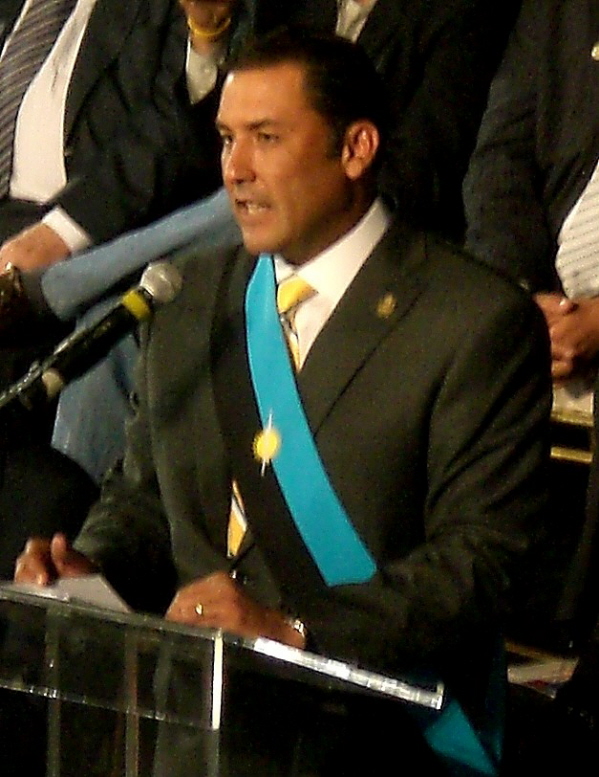
Meet the Candidates: Pablo Pérez Álvarez

 Meet the Candidates: Pablo Pérez Álvarez

Today, as part of What’s Next Venezuela’s “Meet the Candidates” series, we introduce Venezuelan opposition candidate Pablo Pérez Álvarez.

An attorney, public servant and elected official, Pablo Pérez, the current Governor of the State of Zulia, is running as the candidate of the Un Nuevo Tiempo (A New Era) party in the upcoming opposition primaries in Venezuela.

Pérez’s political career began in 1995 under Manuel Rosales, the then-mayor of Maracaibo where he held various municipal positions. Later, when Rosales was elected Governor of Zulia, Pérez held several governmental posts at the state level, including serving as personal secretary to Governor Rosales.

In 2004, Pérez ran for mayor of Maracaibo as a member of Un Nuevo Tiempo. He was defeated in a close race by Gian Carlo di Martino, who was aligned with President Chávez. Four years later, Pérez was elected Governor of Zulia, Venezuela’s oil-rich and most populous state, with nearly 54 percent of the votes. As governor, Pérez has spent much of his time in the field, meeting with Chávez supporters and the city’s poor.

Besides the support Pérez enjoys from UNT, the leading opposition political party in Zulia, he also has garnered the backing of the two traditional “old establishment” political parties in Venezuela – Acción Democrática (AD) and COPEI. Perez is a strong proponent of greater decentralization in the country, where power is redistributed from the central government to state governments. He also advocates for PDVSA, the state oil company, to focus on oil production, and divesting itself from all the other duties the current government has imposed on it, such as managing food stores and importing products to Venezuela. He also says he would attempt once gain to impose presidential term limits.

In the polls ahead of the February 12 elections, Pérez finds himself in second place behind Miranda Governor Henrique Capriles. His ability to win the election will largely fall on the ability of UNT, AD, and COPEI to mobilize their core voters. All three parties are known for having an effective political operation; the question remains whether it is as large as it has been in the past. While Pérez represents a new generation of politicians in Venezuela, some believe that the support he enjoys by many in the “old guard” of opposition politics may hurt his chances, as he may be seen as a candidate of the past political establishment.

Leading into the elections, Pérez has established a platform focused on:

  • Using the proceeds of oil sales to establish social programs, especially at universities, through the creation of merit-based scholarships and the implementation of a rightful social security systems for professors;
  • Recovering unused spaces and misused funds to guarantee the security and quality of services provided in hospitals throughout the country;
  • Reducing impunity and imposing an effective crime prevention system through education, job creation and the forming of civil security committees;
  • Liberating political prisoners and allowing political exiles to return home;
  • Decentralizing the government and restoring power to local governments;
  • Reestablishing term limits;
  • Ending expropriations.

Click here to learn more about Pablo Pérez on his website.