Aug
2
2013
Posted by
admin
Comments

In Case You Missed It…Articles Roundup Week of 8/2/13

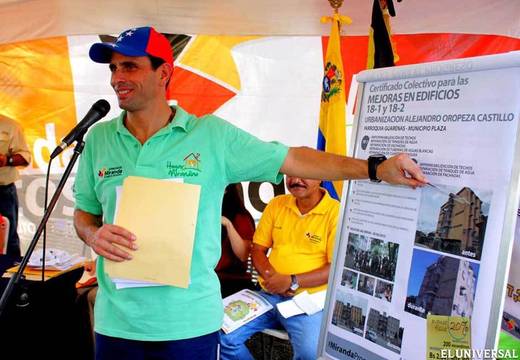
caprilesguarenas guatire.520.360 e1375469944950 In Case You Missed It…Articles Roundup Week of 8/2/13

Courtesy of: El Universal

This week: The Venezuelan government tightens its control over the media as authorities freeze the assets of “El Nacional” owner Miguel Henrique Otero; Otero then accuses the government of trying to intimidate and silence his paper; pro-government deputies in Venezuela revoke the immunity of opposition lawmaker Richard Mardo and drum up “corruption” charges; Henrique Capriles responds by accusing the PSUV of “trashing” the Venezuelan constitution. An Economic Survey conducted by the Economic Commission for Latin America and the Caribbean shows that inflation takes a bigger toll on Venezuela’s poor than in any other Latin American country; daily sales of U.S. dollars to the private sector sink 13 percent as the cost of government imports and foreign debt payments take money from the private sector; Venezuela’s strong currency controls create opportunities for illegal profiteering schemes. A poll conducted by the Venezuelan Data Analysis Institute (Ivad) reveals that today 45.1 percent of Venezuelans would vote for Capriles, while only 39.3 percent would choose Maduro; former ambassador Otto Reich files a lawsuit against three Venezuelan businessmen for bribery; seven U.S. Senators introduce a bill condemning violence against the opposition in Venezuela.

Venezuela Freezes Assets of Opposition Newspaper Editor, Wall Street Journal

Venezuelan authorities have frozen the assets of Miguel Henrique Otero, the editor and owner one of the country’s largest opposition-leaning newspaper, the attorney general’s office announced Saturday.

Editor: Venezuela Government Trying to Silence Us, Associated Press

The head of one Venezuela’s last two nationally circulating opposition newspapers accused the leftist government on Monday of trying to intimidate and silence it.

Pro-gov’t deputies lift immunity of opposition lawmaker Richard Mardo, El Universal

During the regular session held at the Venezuelan Parliament on Tuesday, pro-government legislators lifted the parliamentary immunity of opposition legislator Richard Mardo on corruption accusations filed by Parliament’s Speaker Diosdado Cabello and endorsed by the president of the Comptrollership Committee of the Parliament, Pedro Carreño, both ruling party legislators.

Capriles: Deputies trashed the Constitution by revoking Mardo’s immunity, El Universal

During a public event at a local community, Venezuelan opposition leader Henrique Capriles Radonski brought out the issue of opposition Legislator Richard Mardo and his parliamentary immunity –revoked– in Parliament, and stated that the “circumstantial majority in Parliament trampled on the Constitution and the decision of the Supreme Tribunal of Justice.”

Venezuela the only country where inflation lashes the poor the most, El Universal

Fairer distribution of national income has not been enough to solve the imbalance of the Venezuelan economy, which lashes the most vulnerable sector of society: the poor.

Daily US dollar sale to the private sector down 13%, El Universal

Claiming that the Venezuelan private sector was sold USD 125 million on a daily basis for ordinary imports in the first half of the year via both the Latin America Integration Association (Aladi) and the Unified System for Regional Compensation (Sucre), Armando León, member of the board of directors of the Central Bank of Venezuela, rejected allegations that authorities sold a lower amount of foreign currency with respect to the same period last year.

Venezuelan gov’t sucks up the dollars required by the private sector, El Universal

The minutes of meetings recording the decisions made by the Central Bank of Venezuela’s Board of Directors; the bank’s balance of payments; and the performances of both the Transaction System for Foreign Currency Denominated Securities (Sitme) and the Ancillary Foreign Currency Administration System (Sicad) are all cut pieces that are to be fitted together into a big jigsaw puzzle wherein foreign currency availability for the private sector is plummeting.

Venezuela central bank to sell $180 mln in forex auction, Reuters

Venezuela’s central bank said on Friday it would auction $180 million under its revamped currency exchange system known as Sicad, part of an effort to boost the flow of dollars to the economy and ease product shortages.

How Venezuelan Used ‘Scrape’ to Make Six Times Her Salary, Bloomberg

Venezuela’s currency controls are turning trips abroad into profitable junkets. A 27-year-old trade analyst from Caracas said she earned six times her monthly salary by traveling in April to Lima, where a business swiped her credit card and gave her $1,600 cash, charged at the official exchange rate of 6.3 bolivars per dollar.

Poll shows 45.1% of Venezuelans would vote Capriles, El Universal

Regardless of the outcome of the presidential election held in Venezuela last April 14, a survey conducted by the Venezuelan Data Analysis Institute (Ivad), Government Management, and Political Situation, showed that 45.1% of Venezuelans would vote Henrique Capriles over 39.3% who said would vote Nicolás Maduro.

Presumed corruption in Pdvsa and CVG aired in the United States, El Universal

The New York District Court admitted last Tuesday a racketeering and defamation lawsuit filed by US former ambassador Otto Reich against the partners of Derwick Associates in relation to contracts for the installation of electrical system executed with state-run oil holding Petróleos de Venezuela, electricity utility Corpoelec and the Venezuelan Guayana Corporation.

Suit Alleges Graft in Venezuelan Contracts, Wall Street Journal

A former top U.S. diplomat filed a lawsuit against three young Venezuelan businessmen whom he accuses of bribing senior Venezuelan officials in exchange for contracts worth hundreds of millions of dollars. The suit puts a spotlight on a group of executives who the diplomat, Otto Reich, and other critics say have made fortunes from links to Venezuela’s self-proclaimed socialist government.

US senators condemn political violence in Venezuela, Global Post

Seven US senators from both parties introduced a bill condemning violence against the opposition in Venezuela, calling for dialogue after a contested election.
 
May
8
2013
Posted by
admin
Comments

Nicolás Maduro off to an inauspicious start as Venezuela’s dubiously-elected president

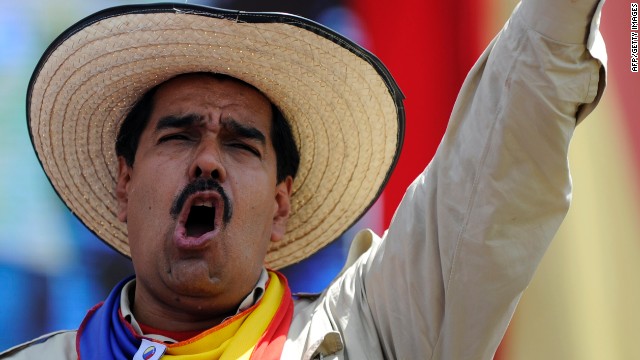
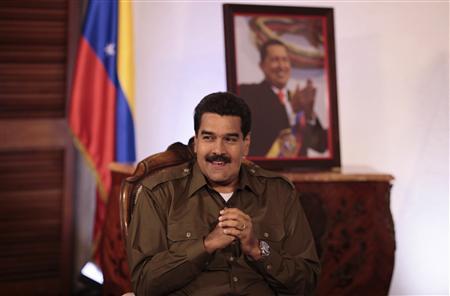
Nicolas Maduro e1368042661461 Nicolás Maduro off to an inauspicious start as Venezuela’s dubiously elected president

Courtesy of: Agence France Presse

Almost immediately after Venezuela’s partisan electoral authority declared Nicolás Maduro the winner of last month’s presidential election, he and his ruling PSUV party faced a choice that may yet define Venezuela’s future for years to come. Reports of thousands of irregularities in the voting process, including suspicions of fraud, sparked fears about the election’s legitimacy. The actions of Maduro – who first consented to the opposition’s calls for a full and transparent recount, later issued a hasty retraction, and then began a crackdown on peaceful opposition protestors – has only deepened those fears.

Maduro’s desperation is perhaps well-founded: a poll today found that a majority of Venezuelans believe the country is on the wrong track and, if given the chance, most would now choose Henrique Capriles for president over Maduro. The uncertainty and repression surrounding the Venezuelan election has grown so egregious that President Obama has abstained from recognizing Maduro as the winner. The President observed that the “entire hemisphere has been watching the violence, the protests, the crackdowns on the opposition.” ABC reports:

President Barack Obama avoided recognizing the government of Venezuela during an interview with Univision, explaining that he was concerned about recent “crackdowns” against members of the Venezuelan opposition. He also said that recent reports suggest that basic principles of democracy and human rights are not being fully observed by Venezuela’s government.

Obama and the U.S. State Department are among a growing chorus calling for a full and transparent recount of the Venezuelan election, a chorus that now includes the Organization of American States, former Colombian president Alvaro Uribe, and internationally-respected human rights watchdog groups. Though Maduro may lack Hugo Chávez’s charisma and support among Venezuelans, he evinces the same contempt for the international community.  That contempt, combined with Maduro’s increasingly flagrant repression of his own people, mean that recent weeks for Venezuela have been turbulent indeed.

It’s hard to deny that Maduro’s “election” lacks legitimacy, before the eyes of both Venezuelans and the world. The partial audit the government agreed to is viewed as little more than a public relations gesture, and hardly sufficient to investigate the serious voting irregularities that led many to wonder whether Capriles was the election’s true winner.

As those doubts grow, Maduro has flexed the government’s authoritarian muscle to stifle dissent and cow the opposition into obedience. The state-run media – which recently tightened its grip on the airwaves by purchasing the previously-independent TV station Globovision – has dutifully propagandized on behalf of Maduro; the government recently severed the video feed of a Capriles speech, preventing the opposition leader from making his case to Venezuelans.

Such tactics haven’t prevented the opposition from making their voice heard. The din of “Cacerola” protests resounds throughout the country. Capriles has filed an official protest with the country’s Supreme Court which, comprised of Maduro’s political allies, is unlikely to intervene. Maduro and the PSUV have met these peaceful expressions of dissent, however, with strongman tactics. Capriles called off an opposition March after the government issued a veiled-threat of violence against the protestors. Opposition lawmakers have been barred from speaking in the National Assembly. And a bloody brawl in the National Assembly injured 17 opposition lawmakers. Now the government has intimated it may throw Capriles in jail.

Such tactics, though they fly in the face of democracy and human rights, at least demonstrate that Maduro is feeling the pressure. The Economist opined after the election that “without Chávez at the helm, chavismo, a noxious cocktail of populism, incompetence and repression, is a far less potent force.” Nicolas Maduro cannot strong-arm his way to legitimacy. But that hasn’t stopped him trying.

 
Mar
15
2013
Posted by
admin
Comments

In Case You Missed It… Articles Roundup Week of 3/15/13

s1.reutersmedia.net  In Case You Missed It… Articles Roundup Week of 3/15/13

Courtesy of: Reuters

This week: Three days after Hugo Chávez’s death, Vice President Nicolás Maduro is sworn in as interim president; the National Electoral Council decides on April 14 as the date for the special election to choose a new president to complete Chávez’s term; Maduro hopes the sympathy vote will carry him to victory; opposition leader Henrique Capriles announces his bid for president, accusing Maduro and the rest of Chávez’s government of exploiting the late president’s death; and Capriles challenges Maduro to a debate. With Chávez gone, the possibility of pro-democracy reforms in Venezuela is renewed; the Venezuelan people remains divided over Chávez; the Venezuelan economy, and the Bolívar especially,, continue to struggle; Venezuela’s central bank announces it will auction U.S. dollars to try and counter the black market; Venezuela’s oil production continues to fall steadily. The owner of Globovisión, the last independent television station in Venezuela, is coerced into selling his station, raising concerns about the further erosion of media freedoms; a Venezuelan woman is arrested for tweeting criticism of the government; the U.S. kicks out two Venezuelan diplomats after Maduro removed U.S. diplomats from Venezuela; and Maduro announces Chávez will not be embalmed like other communist leaders, as was originally suggested.

Venezuela’s vice president sworn in as interim president, CNN

Vice President Nicolas Maduro was sworn in Friday as acting president of Venezuela in a ceremony held in the National Assembly in Caracas, three days after the death of President Hugo Chavez.

Venezuelan Election Set for April, The New York Times

Venezuela will hold a special election on April 14 to choose a new president to complete the term of Hugo Chávez, the charismatic socialist who died last week after a battle with cancer.

Venezuela’s presidential campaign: A man after his own heart, The Economist

WHEN Hugo Chávez announced in December that his cancer had returned, he put to rest all doubts about whom he wanted to succeed him as Venezuela’s president.

Henrique Capriles Announces Presidential Bid Saying the Government is Exploiting the Death of Hugo Chavez, Fox News Latino

Following days of speculation opposition leader Henrique Capriles announced Sunday evening he will challenge Nicolas Maduro in Venezuela’s upcoming presidential election.

Opposition leader wants to debate Venezuela’s Maduro, Reuters

Venezuela’s opposition leader challenged acting President Nicolas Maduro on Thursday to “stop lying” and have a debate, adding that he was sorry if he had caused offense during the increasingly bitter run-up to an April 14 election.

On Venezuela, Latin America’s democrats must come out of hiding, Miami Herald

In the days and weeks ahead in a post- Hugo Chávez Venezuela, there may be political turmoil and perhaps even violent unrest.

In Venezuela, divisions over Chávez extend from parliament to the dinner table, Christian Science Monitor

Mourning Hugo Chávez supporters lined streets outside the military academy for a fourth straight day today, but few were grieving just a few miles away.

Venezuela: On the Death of Chávez and the Ailing Bolivar, The Huffington Post

Although Hugo Chávez, the socialist presidente of Venezuela, has finally met his maker, the grim reaper is still lingering in Caracas.

Venezuela to auction dollars to counter black market: reports, Reuters

Venezuela’s central bank may auction U.S. dollars in a second official currency exchange mechanism designed to improve the supply of greenbacks and counter black market trading, newspapers said on Friday.

Dwindling Production Has Led to Lesser Role for Venezuela as Major Oil Power, The New York Times

President Hugo Chávez relished using Venezuela’s oil wealth to project power internationally, nudging OPEC to raise oil prices when he could, showering allies like Cuba and Nicaragua with subsidized oil shipments, and mocking the United States while selling it his crude.

Venezuela Takes Out Another Critic, The Wall Street Journal

The owner of Venezuela’s only independent television station, Globovision, announced on Monday that he has found a buyer and will exit the business.

Venezuelan official says woman arrested for posting ‘destabilizing messages’ on Internet, The Washington Post

Venezuela’s justice minister says a woman has been arrested for posting what he called “destabilizing messages” on a social networking site.

U.S. kicks out two Venezuelan diplomats, The Washington Times

The Obama administration revealed Monday that it had kicked two Venezuelan diplomats out of the United States, offering a clear signal that U.S.-Venezuelan relations are unlikely to warm quickly after the death last week of Venezuelan President Hugo Chavez.

Hugo Chavez not embalmed in time; won’t join communists on permanent display, Examiner

On March 13, acting Venezuelan President Nicolas Maduro announced the body of deceased former President Hugo Chavez will not be on permanent display as previously declared because of a delay in embalming the communist leader’s remains, according to BBC News.