Mar
14
2013
Posted by
admin
Comments

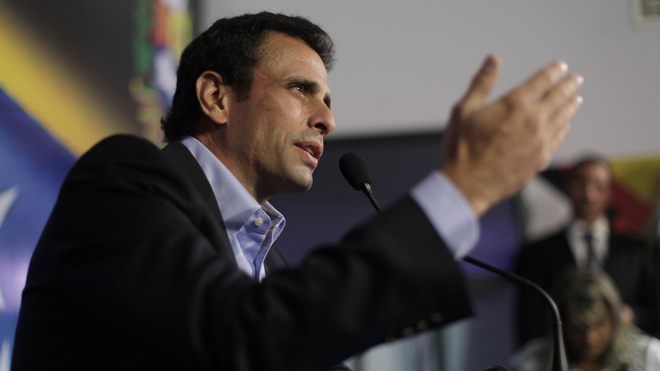
Capriles Prepares for a Tough Fight Against the Memory of Chávez

31013 capriles1 e1363269277543 Capriles Prepares for a Tough Fight Against the Memory of Chávez

Courtesy of: Associated Press

On Monday, interim president Nicolás Maduro and opposition leader Governor Henrique Capriles formally registered as candidates for Venezuela’s special presidential election, to determine who will succeed the late Hugo Chávez. The former vice president Maduro was sworn in just three days earlier – merely three days after the government announced Chávez’s death.

Even by the standards of an electoral system already skewed to the PSUV’s benefit, April’s special election is hardly a fair fight. The candidates are only permitted to campaign during an official 10-day campaign period from April 2-11, but the timing of the April 14 election already sets the opposition at a distinct disadvantage. While both candidates are prohibited from campaigning until April 2, Maduro has been riding the wave of grief over Chávez’s death to bolster his own image. Currently, state-run TV is saturated with 24/7 coverage of Chávez’s life and legacy, and the government has bused in thousands of supporters to wait in hour-long lines to view his casket. In addition, like Chávez, Maduro has not been timid about using his “cadena” powers, which require mandatory national broadcasts at the discretion of the president. Similar to Chávez, Maduro has made these a daily occurrence; even using one to take the oath of office in front of Chávez’s casket. While the official campaign will not begin for weeks, Maduro’s presence on the airwaves is virtually ubiquitous.

Although the campaign period officially ends on April 11, the days in between are fraught with symbolism that is sure to benefit Maduro. April 13 – the day before the election – is the anniversary of Chávez’s return to power after the April 11, 2002 coup that briefly ousted him from power. In the years following, the anniversary has been marked with widespread celebration by Chavistas – led by Chávez himself. This year will likely see that celebration further intensified – allowing Maduro to carry out de facto campaign events through official government celebrations of Chávez’s memory.

Capriles has spent much of his political career criticizing the Chávez administration for its expropriations, centralization of power, and corruption. He is currently serving as the Governor of Miranda, one of the largest states in Venezuela—the latest stage in his fast political rise. At the age of 26, he became the youngest elected member of the National Congress before winning two consecutive mayoral elections in Baruta, a division of the Greater Caracas municipality. Last year, he became the first candidate in 14 years to unite the opposition parties and seriously challenge Chávez in the October presidential election. Capriles traversed Venezuela for months, seeking to rally Venezuelan’s behind his vision for the country’s future. Although he lost the election, his quest was hardly unsuccessful: Capriles won an unprecedented 44 percent of the vote (over 6 million people).

Meanwhile, Maduro has risen far from his origins as a bus driver, becoming Chávez’s Vice President and handpicked successor. As a former Foreign Minister, he strengthened the Venezuelan government’s ties with Cuba and with the Castros. During Chávez’s absence in June 2011 and last winter, he worked to shore up his power as acting president and his political clout within the PSUV. Maduro lacks Chávez’s charisma and popularity, a weakness he has sought to counteract by currying favor with the late president and the Cuban government through a fierce commitment to PSUV’s principles of socialism.

The presidential campaign has not even officially begun, but Capriles has already been subjected by his rival to a malicious smear campaign. In a speech responding to Capriles’ candidacy, Maduro called him a “fascist” and used racist and homophobic slurs against the governor, a descendant of Polish Jews who escaped the Holocaust. The Venezuelan government is also threatening the opposition candidate with legal action for the defamation of Chávez and his family after Capriles raised questions about the government’s lack of transparency regarding the circumstances of the former president’s death.

Capriles has taken a tougher tone against Maduro than he did against Chávez in last year’s presidential election. Capriles has accused Maduro of exploiting Chávez’s memory for political gain. Indeed, Capriles’ chance at victory will likely hinge on his ability to demonstrate to Venezuelans that Maduro is not Chávez’s “second coming,” but is instead a lifelong political operative and puppet of the Castros, wholly complicit in the PSUV government’s economic mismanagement.

With only 10 days to campaign, Capriles will be fighting an uphill battle. Maduro will leverage every facet of Chávez’s finely-tuned political machine to secure a victory: at his disposal are a formidable (and corrupt) voter turnout program, unobstructed access to government resources, and the hysterical grief of Chávez’s devoted followers. It is little surprise that Maduro has already christened his campaign the “Comando de Campaña Hugo Chávez Frías” (Hugo Chávez Campaign Command). The month ahead will combine elements of a political rally and funeral march, as Maduro looks to ride a wave of Chávez sympathy and nostalgia into power.

Nevertheless, Capriles has defeated Chávez’s top deputies before. Just two months after his strong showing against Chávez in the presidential elections, Capriles held on to his Miranda governorship against Chávez’s close friend and former Vice President, Elías Jaua. He originally defeated Diosdado Cabello, the current head of the National Assembly, to first assume the governorship of Miranda in 2008. Capriles will capitalize on his youthful energy and the strong support of his base to do everything possible to obtain a victory.
 
Mar
11
2013
Posted by
admin
Comments

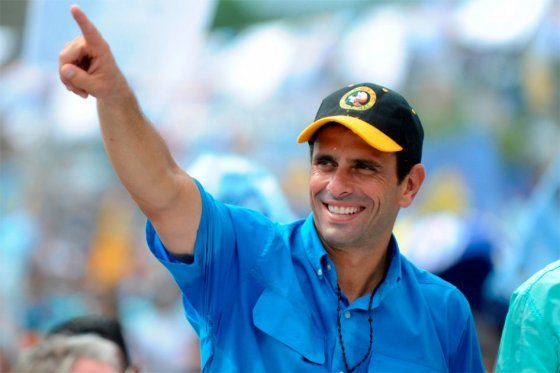
ICYMI: Venezuela Opposition Leader Capriles to Run Again

Wall Street Journal
March 10, 2013
By Ezequiel Minaya

6c728791bba8150e6d126b707b7f2d5d e1363036562600 ICYMI: Venezuela Opposition Leader Capriles to Run Again

Courtesy of: Agence France Presse

CARACAS—Venezuela opposition leader Henrique Capriles, who challenged the re-election bid of former President Hugo Chávez last fall, announced Sunday his candidacy in snap elections set over the weekend for April 14 to replace the late president.

The 40-year-old governor of Miranda, Venezuela’s second most-populous state, will be pitted against acting President Nicolás Maduro, who was tapped by Mr. Chavez as his preferred successor before his death last week. Mr. Capriles blasted his rival in remarks broadcast on state television, accusing Mr. Maduro of lying to the country about the timing of the death of the president—who hadn’t mad a public appearance since December—and using the loss for political gain. “Nicolás lied to this country,” Mr. Capriles said, referring to the acting president by his first name. “You submitted the country to a lie. I don’t play with death, I don’t play with pain.”

Mr. Capriles, who some analysts say was nonconfrontational during much of his run against the notoriously combative Mr. Chávez, has taken a tougher tone with Mr. Maduro from the outset. “Are those tears sincere?” he asked of Mr. Maduro, who has paid several emotional tributes to Mr. Chávez since his death March 5.

In a fiery televised response to the governor, Mr. Maduro, standing in front of a framed photo of the late leader, called his counterpart “miserable” and said he was trying to incite violence.

“He has committed the biggest error in his history,” Mr. Maduro said of Mr. Capriles. He also noted that Mr. Chávez’s family holds the right to take legal action against the governor for his comments, without offering details.

“Now if all of these [opposition parties] come out to back this serious offense, well, that’s a declaration of war,” Mr. Maduro said. He insisted however that the country had to maintain peace.

Mr. Capriles, a law graduate and former national legislator, lost to Mr. Chávez in Oct. 7 elections by 11 percentage points, capturing 44% of ballots. Though unsuccessful, Mr. Capriles posted the best showing ever against Mr. Chávez, who succumbed to complications linked to his battle with cancer of nearly two years.

No opinion surveys have been released tracking a possible Maduro-versus-Capriles contest since the death of Mr. Chávez at age 58. But a poll last month by local pollster Hinterlaces showed Mr. Maduro, who many expect to benefit from a sympathy vote amid the passing of his mentor Mr. Chávez, beating Mr. Capriles 50% to 36%, with the remainder undecided.

Election authorities have designated only 10 days for campaigning, a short time frame that likely favors Mr. Maduro, who is backed by the formidable electoral machine of the ruling United Socialist Party of Venezuela, or PSUV. The candidates have both planned to visit the national election board on Monday to make their decisions official. Mr. Capriles added that he will launch a tour of the country on Tuesday.

During the heated presidential contested last year, the opposition coalition of roughly 30 parties that backed Mr. Capriles, known by its Spanish acronym MUD, filed more than a 100 complaints with election authorities accusing Mr. Chávez of skirting electoral norms with lengthy appearances on state broadcasters and using public workers as part of his campaign, among other allegations. Venezuela’s National Electoral Council, seen by many as aligned with the PSUV, declined to open an investigation into the Chávez camp and responded to only a handful of MUD complaints.

A youthful sports-fan, Mr. Capriles has described himself as a center-left lawmaker who draws inspiration from the “new left” policies of former Brazilian President Luiz Inácio Lula da Silva. Detractors of Mr. Capriles have accused him of aping the populist style of Mr. Chávez to disguise allegedly far-right leanings.

Mr. Capriles endured a barrage of near-daily attacks from state media and government officials during last year’s presidential run, including accusations that he was both a Zionist agent and a neo-Nazi sympathizer. Mr. Capriles, a practicing Catholic, has Jewish ancestors, some of whom fled Europe during the Holocaust.

Venezuelan law calls for new elections within 30 days if the presidency is vacated within the first four years of a six-year term. In his final public appearance in December, Mr. Chávez backed the 50-year-old Mr. Maduro as Venezuela’s next leader if a new vote was required.

Mr. Chávez never revealed the exact type of cancer he suffered. During the president’s three months out of the public eye, Mr. Maduro and other government officials insisted on various occasions that Mr. Chávez was showing improvement and remained at work.

Mr. Maduro, a former bus driver and union organizer, was foreign minister for six years beginning in 2006 before being named vice president last year. He is considered a hard-line Chávez loyalist. He has, nonetheless, been praised by fellow diplomats for being an approachable representative of a government that is often provocative and strident in its anti-U.S. sentiment. Mr. Maduro, who delivered an emotional eulogy for Mr. Chávez on Friday, took the oath of office hours after the funeral services and named the late president’s son-in-law, Science and Technology Minister Jorge Arreaza, as vice president.

Many analysts doubt, however, that Mr. Maduro can match the outsize personality and charisma that helped Mr. Chávez dominate Venezuelan politics for 14 years. And it remains to be seen how Mr. Maduro will perform in a high-profile election, having had most of his political posts coming by way of appointment. Mr. Capriles, in contrast, is a veteran of several prominent showdowns, including an upset victory to capture the Miranda statehouse in 2008 over incumbent Diosdado Cabello, an influential Chávez ally who is now president of the National Assembly.

To read this article at the Wall Street Journal, please click here.

 
Mar
4
2013
Posted by
admin
Comments

In Chávez’s Absence, the Government Seeks to Dissipate Opposition with Fear

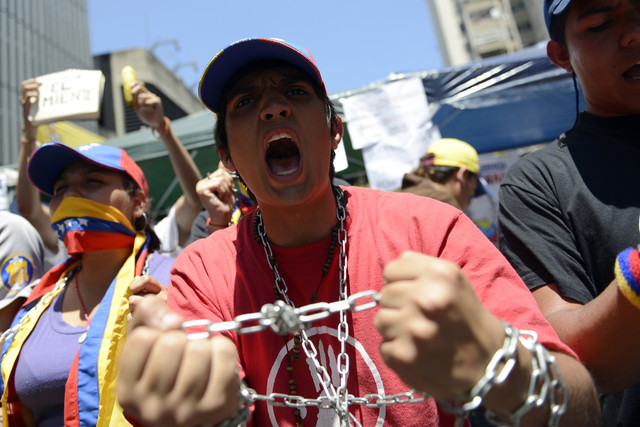
iX2qiGY5WWjk e1362422860756 In Chávez’s Absence, the Government Seeks to Dissipate Opposition with Fear

Courtesy of: Agence France Presse

As is well documented, the Venezuelan government’s record on human rights has been substandard at best. For years, human rights watchdogs have criticized the government for consolidating power in the executive branch and using that power to intimidate, censor and prosecute those who criticize the president or his regime. During Hugo Chávez’s prolonged absence, these problems have only gotten worse.

Fears that Chávez’s declining health will force a new presidential election in the coming months has the United Socialist Party of Venezuela (PSUV) party concerned. Both of Chávez’s likeliest successors lack the charisma and deep popular support the president enjoys, prompting many within the government to wonder whether the movement will survive without its strong leader. A slumping economy has further exposed the government’s failures, and the PSUV has continually sought to change the subject.

Knowing of this – and of the PSUV’s penchant for strongman tactics – it is hardly surprising that there has been significant harassment of Venezuela’s opposition in the past month.

For example, the government has stepped up accusations that three opposition lawmakers were involved in corruption, in a clear attempt to demoralize, fracture and damage the reputation of the opposition. Leaders of the ruling PSUV have threatened to jail those involved and have pledged to pursue further investigations into the alleged financial irregularities.

The attacks weren’t limited to these lesser known lawmakers. Just this week, Chávez’s chosen successor, Vice President Nicolás Maduro, launched a scathing assault on the opposition’s charismatic leader, Henrique Capriles. Capriles was in the United States visiting his sister and her family, who live in New York. Maduro alleged – without any evidence – that Capriles himself owns a lavish high-rise in New York City, and accused Capriles of engaging with Venezuelan expatriates in a plot to destabilize the country. He boasted to a friendly audience that he was “tracking the movements” of Capriles. Capriles called the accusations false, and suggested that Maduro was trying to distract Venezuelans from the damage wrought by a currency devaluation, rampant violence and escalating shortages – not to mention the continuing secrecy surrounding Chávez’s battle with cancer.

“It seems ridiculous to me, with all the problems that there are in Venezuela, that this is what the government is talking about,” Capriles told the New York Times.

Last week, Venezuelan prosecutors brought influence peddling charges against Leopoldo López, a prominent opposition leader, economist and former mayor of the Chacao Municipality of Caracas. He is accused of accepting donations from Venezuela’s state-run oil company in 1998, donations that were purportedly authorized by his mother, Antonietta Mendoza de Lopez, who was a PDVSA administrative employee at the time. Government officials allege the funds were used to form the now popular First Justice Party. Arguing the charges are politically motivated, López denies any wrongdoing.

Of course, if it’s corruption they are after, the PSUV need look no further than itself: under their rule, Venezuela is considered the most corrupt nation in Latin America by Transparency International.

According to Luis Vicente León, analyst and head of the renowned Datanálisis polling firm, the point of these measures is to make the country believe there is a strong government in place despite Chávez’s absence. He expects a series of symbolic actions against key players of the opposition, to instill fear in society and dissuade others from speaking out against Chavismo.

Attacks against the media have become a clear example of this intimidation strategy. Globovisión, the last television network in Venezuela openly critical of the government, was not among the list of stations to be included when the country transitions to a new digital TV signal. The decision will likely drive the station off the air at that time. The government has refused to offer an explanation for the exclusion. Similarly, the website analisis24.com and its Twitter account have been blocked in Venezuela after publishing a series of pictures of Chávez and his daughters in Cuba.

Most troubling thus far, however, were the attacks against students during a peaceful demonstration. Frustrated after not hearing from President Chávez for 80 days, about 120 students gathered in front of the Executive Directorate of the Judiciary to demand answers from the government about the true health of their president. They were received instead by members of the military, who wielded ​​ batons and fired pellets, injuring four of them. Once again, the government has offered no justification for these attacks on its own citizens.

Though there has been no word on whether Chávez will ever return to power, it is clear that the regime fears the uncertainty that would follow if he passes. After 14 years under the strong leadership of Hugo Chávez, PSUV faces the difficult task of convincing Venezuela it is capable of governing without him. The dire economic situation in the country shows that they have much to prove on that front. Yet thus far, fear, intimidation and the suppression of free speech appear to be their only solutions.